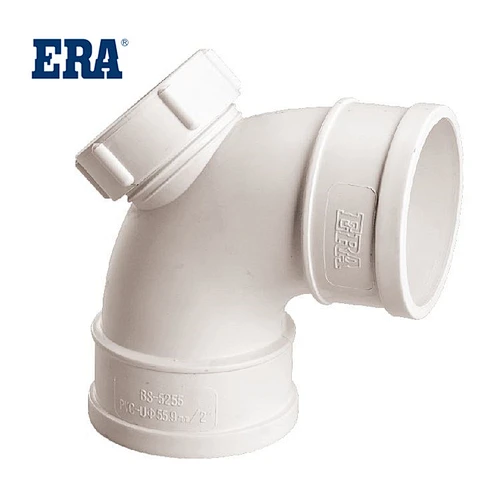
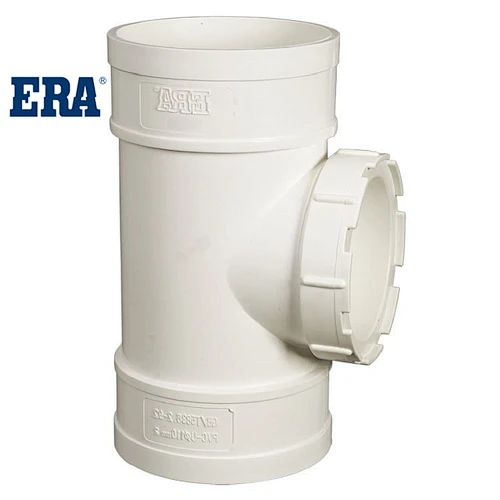
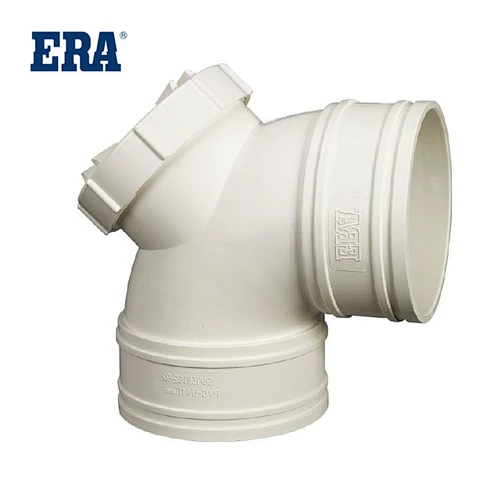
Advantages of PVC water pipes
1. It has good tensile and compressive strength, but its flexibility is not as good as other plastic pipes.
2. Low fluid resistance: The wall of PVC-U pipes is very smooth, and the resistance to fluid is very small. Its roughness coefficient is only 0.009, and its water transport capacity can be increased by 20% compared to cast iron pipes of the same diameter and 40% compared to concrete pipes.
3. Excellent corrosion resistance and drug resistance: PVC-U pipes have excellent acid resistance, alkali resistance, corrosion resistance, and are not affected by moisture and soil acidity. No anti-corrosion treatment is required during pipeline laying.
4. Good water tightness: The installation of PVC-U pipes, whether connected by adhesive or rubber rings, has good water tightness.
5. Anti bite: PVC-U tubes are not a source of nutrition and therefore are not susceptible to rodent erosion. According to experiments conducted by relevant institutions, it has been proven that mice will not bite on PVC-U pipes.
Disadvantages of PVC water pipes
PVC pipes are not as flexible as other plastic pipes.
Poor thermal stability and impact resistance, both hard and soft PVC are prone to brittleness during use. It can cause harm to the human body.
PVC water pipes can only be used for water supply and drainage, and cannot be used for hot water
The connection of PVC water pipes cannot be done using hot melt process, only PVC adhesive can be used for connection
New Development, New Hope
New Era, New Materials: The 21st century is a dynamic and colorful era, where new materials play an increasingly important role. Materials are the foundation of industrial development, and excellent materials can provide solid manufacturing and innovation foundation for industrial production, effectively promoting the birth, growth, and maturity of new technologies and techniques. With the help of new materials, industries such as automobiles, intelligent robots, 3D printing, medical and health care, construction, and 3C have achieved significant improvements. To support China's "Made in China 2025" initiative and enhance the comprehensive strength of cutting-edge technology in our society, the Ministry of Industry and Information Technology (MIIT) has introduced relevant application norms and policies for new materials to promote the integration of new material development with other fields of application and accelerate the implementation of "production-academia-research" in various industries. According to data released by MIIT on new materials, the development momentum of China's new material industry is good, and it is expected that the total output value of the industry will reach 10 trillion yuan by 2025; by 2035, China's overall strength in the new material industry will rank among the top in the world, and the development system of the new material industry will be basically established. However, in terms of the current development status of China's new material industry, there are problems such as slow transformation of overall old and new momentum, arduous task of strict control over new capacity addition, low industry profit margins, financing difficulties, and intensified international trade frictions. The plastics industry is also deeply influenced by new materials. So how can related companies gain a share in such a large market?
According to industry insiders, the plastics industry can enhance itself by developing new materials from the following aspects:
Firstly, promote the research and application of new materials in the plastics industry. Implement seamless connection between upstream and downstream enterprises, focus on demand, improve the construction of the new material system in the plastics industry, achieve integration of production, learning, and research, overall improve industrial technology and scientific and technological level, and simultaneously realize industrial economic value. Making research results industrialized is one of the ports that the new material industry must break through at present.
Secondly, implement industrial scale. Through mergers and acquisitions, capacity indicator trading, and other methods to achieve intensive and large-scale development of the new material industry, transform from "small, low, and disordered" to "large, high, and orderly", accelerate the exit of uncompetitive production capacity, and prevent the risk of overcapacity. This can also deepen the industrial chain and improve product utilization rate, achieving true high-end and technological advancement of related industries.
Thirdly, integrate the "Internet +" model. Through information, computer, big data, cloud computing, and other technologies, optimize the design and research of related new materials, streamline product production processes, integrate industrial resources, improve efficiency, reduce operating costs, etc. Enterprises should establish information sharing platforms, upgrade relevant computer software or replace integrated systems, cooperate with high-quality Internet companies and vocational and technical colleges to enhance their technology and capabilities in this regard.
Fourthly, establish a healthy and standardized development environment. Continue to implement standardized management of industrial standards, establish authoritative industry organizations, formulate relevant industrial standards and indicators, form scientific and reasonable production and testing basis, guide industry development. Relevant government departments should timely update and release information, use policies to guide markets and enterprises, and avoid problems such as price bubbles or prolonged significant fluctuations.
Fifthly, strengthen cooperation. Win-win cooperation is the theme of global economic development. Relevant enterprises should actively establish good cooperative relationships with domestic and foreign associations, organizations, and institutions to avoid political and economic marginalization of enterprises in their development paths; establish friendly business relationships with automobiles, 3C, healthcare, and other industries to expand market share; establish mutual assistance relationships with peer enterprises to complement each other's strengths and improve together. In summary, enterprises should implement the government's plans for the development of new materials industries, follow the general deployment of the State Council on accelerating the cultivation and development of strategic emerging industries, do a good job in standardizing the new material industry, establish and improve a new material industry standard system, promote the development of new materials industries, create new materials and technologies that can meet the needs of the plastics industry development, and implement them in production lines.
After years of development, China's plastic products industry has achieved remarkable accomplishments. According to data from the National Bureau of Statistics, in 2021, China's plastic product output reached 80.04 million tons, a year-on-year increase of 5.27%. This production figure indicates that China has become the world's largest producer and consumer of plastics, boasting the biggest plastic market globally. Historically, the development of China's plastic industry can be divided into five stages: the birth stage (1949-1957), the development stage (1957-1978), the high-speed development stage (1978-2000), the leapfrog development stage (2001-2010), and the strategic development stage (from 2011 to present). These stages reflect the rapid growth of China's plastic industry in terms of technology, production capacity, and market size. The East China region is the main concentration area for plastic product output in China, accounting for 46.2% in 2021. Following closely are the South China, Central China, and Southwest China regions, with respective shares of 20.4%, 12.6%, and 10.9%. Moreover, the number of registered enterprises related to plastic products surged from 231,000 in 2016 to 1,107,500 in 2021, with an annual compound growth rate of 36.82% during this period—further proving the vigorous development of China's plastic product industry.
The South China region holds an important position in China's plastic products industry, with a production share of 20.4%. However, looking at specific provinces, Guangdong Province is one of the major producers of plastic products in China, with a significant proportion of the national output. Additionally, Guangxi Zhuang Autonomous Region and Hainan Province are also major areas for plastic product manufacturing. Overall, although the production share of plastic products in South China does not reach that of East China, it still occupies an important portion of the national plastic products industry. With future technological advancements and changes in market demand, the plastic product industry in South China is expected to continue its robust growth momentum. Furthermore, looking at the growth in enterprise numbers, from 2016 to 2021, the number of registered enterprises related to plastic products in China rapidly increased from 231,000 to 1,107,500, with an average annual compound growth rate of 36.82% during this period. This data further proves the vigorous development of China's plastic product industry.
However, despite the rapid development of China's plastic products industry, it still faces some challenges. For example, the issue of structural oversupply of low-end products remains prominent, price wars have compressed profit margins, there is a shortage of high-tech content products that meet demand, and quite advanced technical products still need to be imported. Additionally, due to the rise of international trade protectionism and the normalization of technical barriers and trade frictions, export-oriented companies face increased difficulty and risk in exporting their products. Nevertheless, benefiting from rising upstream raw material prices, the domestic plastic product market has rebounded from its downturn. In the future, with the development trend of "substituting plastic for steel" and "substituting plastic for wood," the market prospects for the plastic products industry will be even broader. The downstream application fields of the plastic products industry will also continue to expand, which will drive upstream enterprises to increase research and development efforts and launch new products to adapt to market developments, thereby bringing greater development space to the entire industry.
Overall, China's plastic products industry still has tremendous potential and opportunities for future development but must also address various challenges to achieve higher quality and more sustainable growth.
PVC has many applications in engineering systems.
At present, PVC pipes are mainly used for building water supply and drainage, electrical wiring, chemical anti-corrosion, agricultural drainage and irrigation, urban water supply and drainage, communication engineering, etc. Among them, drainage pipes account for 50%. Domestic PVC pipes have achieved success in the promotion and application of building drainage. In urban water supply pipelines, 5 million meters of UPVC pipes have been laid, with a maximum diameter of 630 millimeters.
The advantages of PVC in engineering systems are very obvious. Firstly, its material is lightweight, making it very convenient for handling, loading and unloading, and construction, which can save labor. Secondly, PVC pipes have excellent acid, alkali, and corrosion resistance, making them very suitable for use in the chemical industry. In addition, PVC pipes have smooth walls, low fluid resistance, and a roughness coefficient of only 0.009, which is lower than other pipes. Under the same flow rate, the pipe diameter can be reduced. Furthermore, PVC pipes have high water pressure resistance, external pressure resistance, and impact resistance, making them suitable for piping engineering under various conditions. In addition, PVC pipes also have excellent electrical insulation performance and are suitable for protective sleeves of wires and cables. Finally, PVC pipes and fittings have been confirmed through dissolution experiments to not affect water quality, making them the best pipes for tap water piping.
However, although PVC pipes have many advantages in engineering systems, there are also some controversies. For example, some people are concerned about the toxicity of vinyl chloride monomers in PVC pipes (although the actual content is below PPM), as well as issues with lead salts and other harmful additives. These are all factors to consider when choosing PVC pipes.
PVC pipes do have many advantages in engineering systems. Firstly, the material of PVC pipes is lightweight, making it very convenient for handling, loading and unloading, and construction, which can save a lot of labor. Secondly, PVC pipes have excellent acid, alkali, and corrosion resistance, making them highly suitable for the chemical industry. In addition, the walls of PVC pipes are smooth, with low fluid resistance and a roughness coefficient of only 0.009, indicating a high water transport capacity. Furthermore, PVC pipes have high water pressure resistance, external pressure resistance, impact resistance, and can adapt to various piping engineering conditions. Especially, PVC pipes also have excellent electrical insulation performance and are suitable for protective sleeves of wires and cables. Finally, it has been proven through dissolution experiments that PVC pipes and fittings do not affect water quality and are very ideal materials for tap water piping.
However, despite the many advantages of PVC pipes, there are also some controversies and issues. For example, some people are concerned about the toxicity of vinyl chloride monomers in PVC pipes (although the actual content is below PPM), as well as issues with lead salts and other harmful additives. These are all factors to consider when choosing PVC pipes. Meanwhile, it should be noted that PVC is not as flexible as other plastic pipes. It is worth mentioning that although PVC pipes are non flammable, high-strength, weather resistant, and have excellent geometric stability, they are a rigid material commonly used in building applications. Therefore, when using PVC pipes, it is necessary to choose the most suitable PVC according to specific engineering requirements and environmental conditions.
The development trend of China's plastic products industry can be seen from three aspects: output, number of enterprises, and technological development.
Firstly, from the perspective of production, China's plastic product production is expected to reach 77.7 million tons in 2022, a year-on-year decrease of 4.3%; By 2023, this number is expected to increase to 81 million tons, a year-on-year increase of 4.2%. Despite fluctuations in production, the overall trend still shows steady growth.
Secondly, from the perspective of the number of enterprises, from 2016 to 2021, the registered number of plastic product related enterprises in China increased rapidly from 231000 to 1107500, with an average annual compound growth rate of 36.82%. This data reflects the rapid development and broad market prospects of China's plastic products industry.
Finally, from the perspective of technological development, China's plastic products industry is gradually achieving technological innovation and upgrading. For example, in the import of primary shaped plastics, due to breakthroughs in some domestic technologies, the quantity of imported plastics has shown a downward trend. In addition, facing the"dual carbon"goal, China's plastic industry is actively seeking a path of green, low-carbon, and circular transformation and development.
Overall, China's plastic products industry will face more challenges and opportunities in the future, requiring continuous technological innovation and transformation and upgrading to achieve higher quality and more sustainable development.
Tighter policies lead to a reduction in price differentials
At present, the high prices of raw materials and waste plastic scraps are mainly due to policy tightening and resource reduction. With the passage of time, the price of waste plastics is highly likely to continue to rise. When the price difference between old and new materials gradually narrows and the price difference is not significant, processors are likely to abandon waste plastics and switch to processing with new materials. In the future, plastic new materials or processing enterprises will mainly choose their target audience.
Of course, some people also suggest that there may be an increase in the number of approved enterprises in the later stage. However, this year's environmental protection policies are still a key focus, and strengthening management is an inevitable trend. The increase in approval in the later stage is very likely to be a means for the government to stabilize the sensitive and transitional period of industries.
Replacing Home Workshop Production with Park based Production
With the adjustment of market economy and macroeconomic control by the national government, it is expected that relevant markets and enterprises will adopt park based production under government regulation in order to stabilize the plastic related market.
This measure will help to scale up China's local waste plastic processing industry; Provide excellent environmental quality for industrial development and production; Improve industrial organization management; Standardize production indicators and safety; Establish a sound environmental protection system, production control system, and business management system. At the same time, industrial park production will also improve the transformation and upgrading process of local manufacturing, reduce environmental pollution, beautify the local environment, eliminate fire safety hazards for residents, and build a harmonious and healthy local life.
Previously, there were reports announcing the new definition of waste plastic standard products in China, but the quantity is limited, and industry shrinkage is inevitable. Enterprises and local governments across the country should actively organize relevant matters, accelerate the integration of relevant industries, and allow waste plastics and related industries to settle in industrial parks, so as to scale and standardize industrial operations, create a good living environment, optimize the local economic industry chain, and achieve sustainable and healthy development of the local economy.
FAQ:
1.What is your MOQ?
Our MOQ is usually 5 CTNS.
2.What is your delievery time?
The time of delievery is around 30-45days.
3.What is the shipping port?
We ship the goods via Ningbo or Shanghai port.
4.What is your payment terms?
We accept 30% T/T in advance,70% in the period of shipment or 100% L/C.
5.How should I contact you?
You can contact us with Trade Manager or send us an email by click Contact Supplier bottom.
6.What is the location of your company?
Our company is located in the Taizhou Zhejiang Province,China.
If you would like to have a visit, you are much welcome.
7.How about the samples?
We could send you the samples ,most samples are free to send to most places in China.If sent to other countries,transport fee shoule be paid by you.
8.Why choose us?
1 Genuine produces with excellent quality and competitive price.
2 Cooperating with the customers all over the world and knowing the markets very well.
3 ERA is a listed company. Everything can be rest assured working with us.
4 After- Services will be highly-satisfied. Any problems and feedbacks will be answered in a short of time.
Our Services:
1. Any inquiries will be replied within 24 hours
2. Professional manufacturer.
3. OEM is available.
4. High quality, standard designs, reasonable&competitive price, fast lead time.
5. Faster delivery: Sample will be prepared in 2-3days.
6. Shipping: We have strong cooperation with DHL, TNT, UPS, MSK, China Shipping, etc.
7. You can also choose your own shipping forwarder.


 English