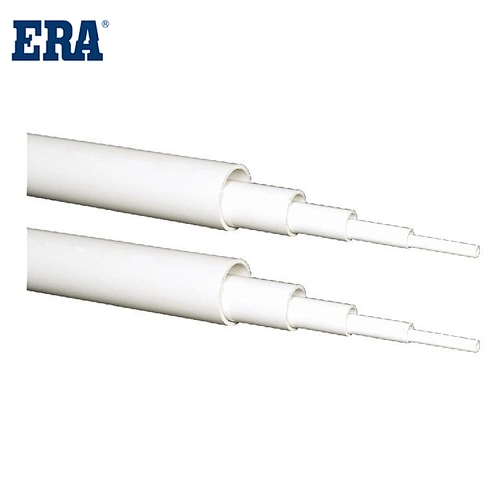
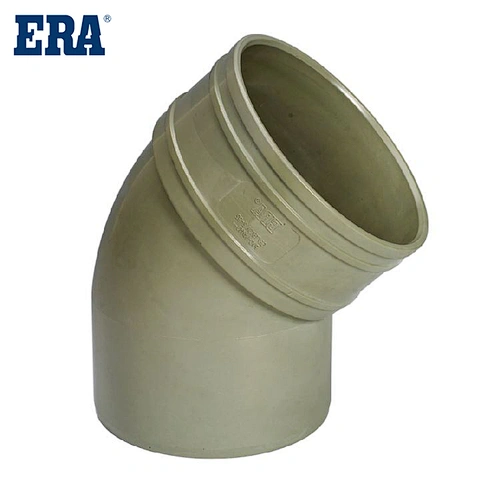
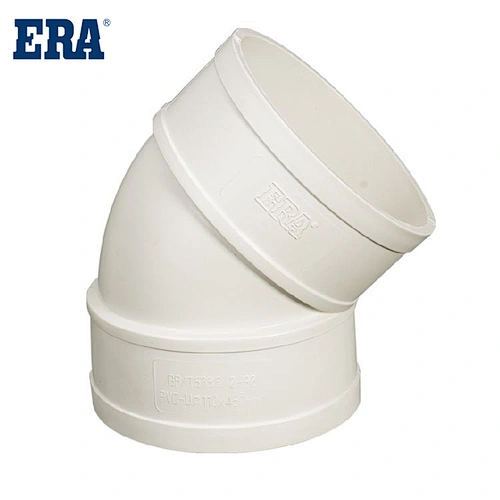
PVC PIPES AND FITTINGS FOR DRAINAGE
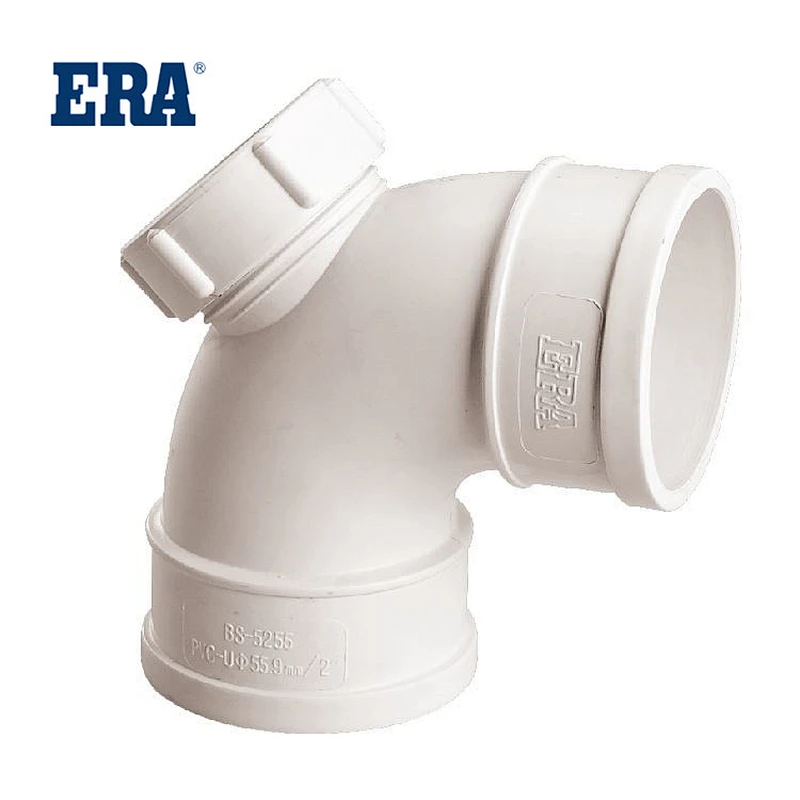
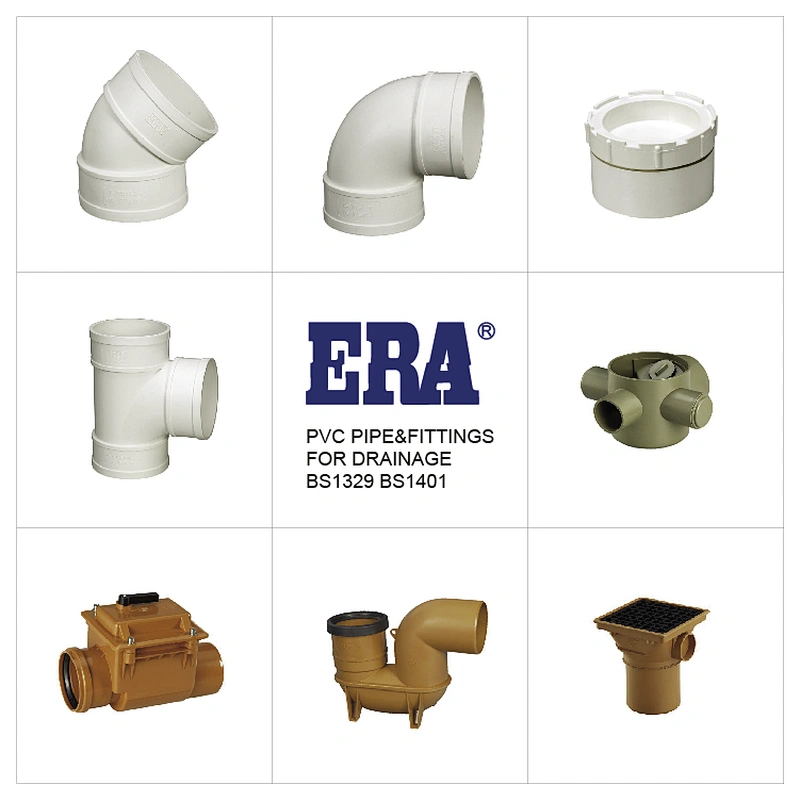
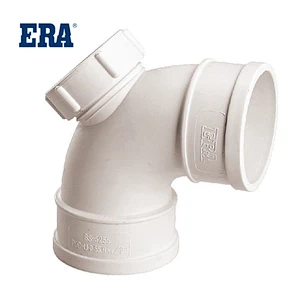
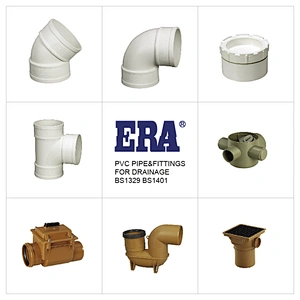
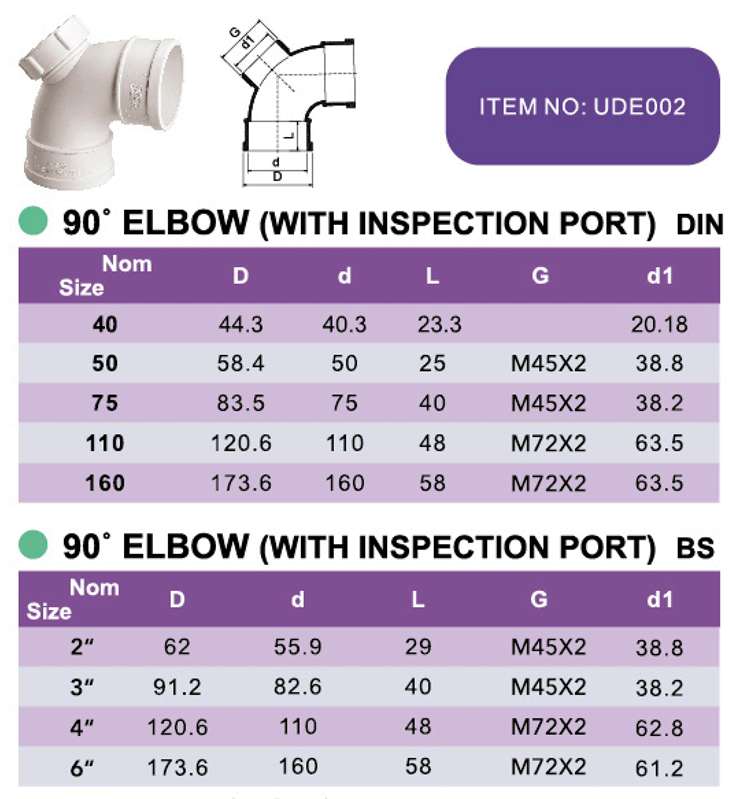
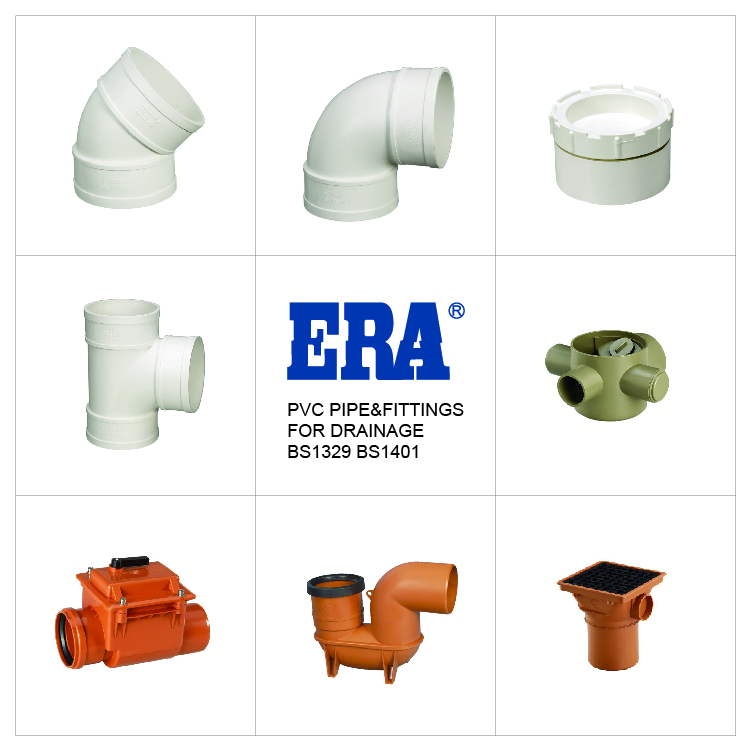
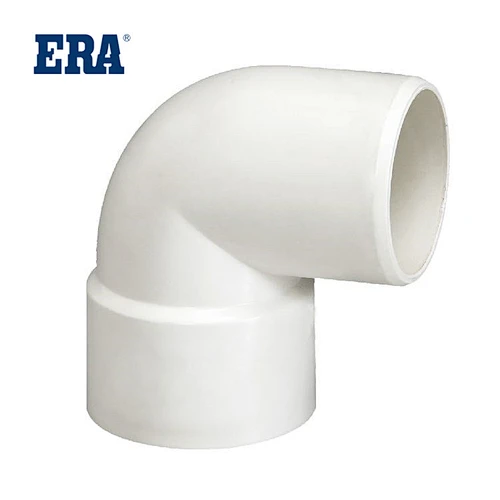
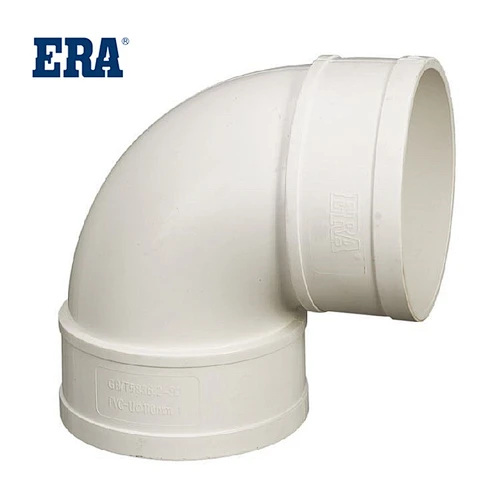
PVC PIPE SYSTEM DRAINAGE FITTINGS 90° ELBOW DIN/BS STANDARD BS1329 BS1401System:
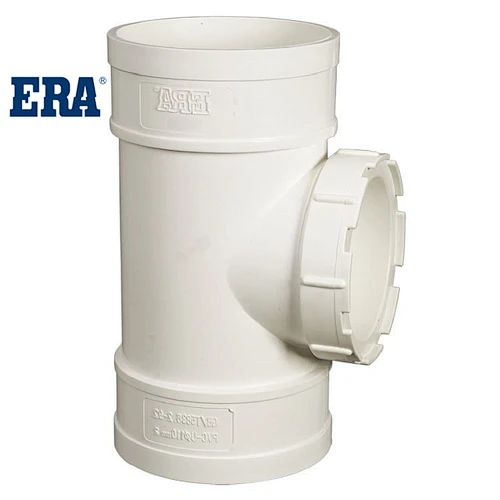
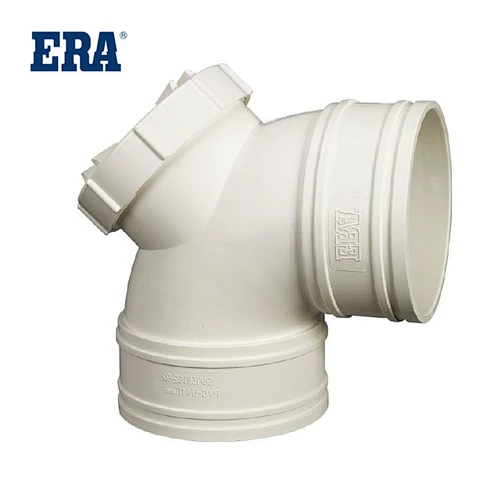
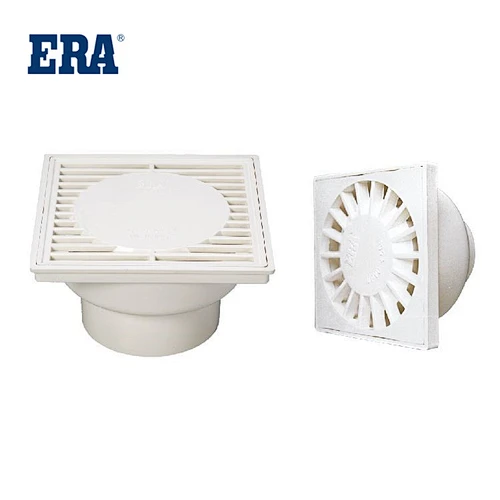
PVC DRAINAGE PIPES & FITTINGS System
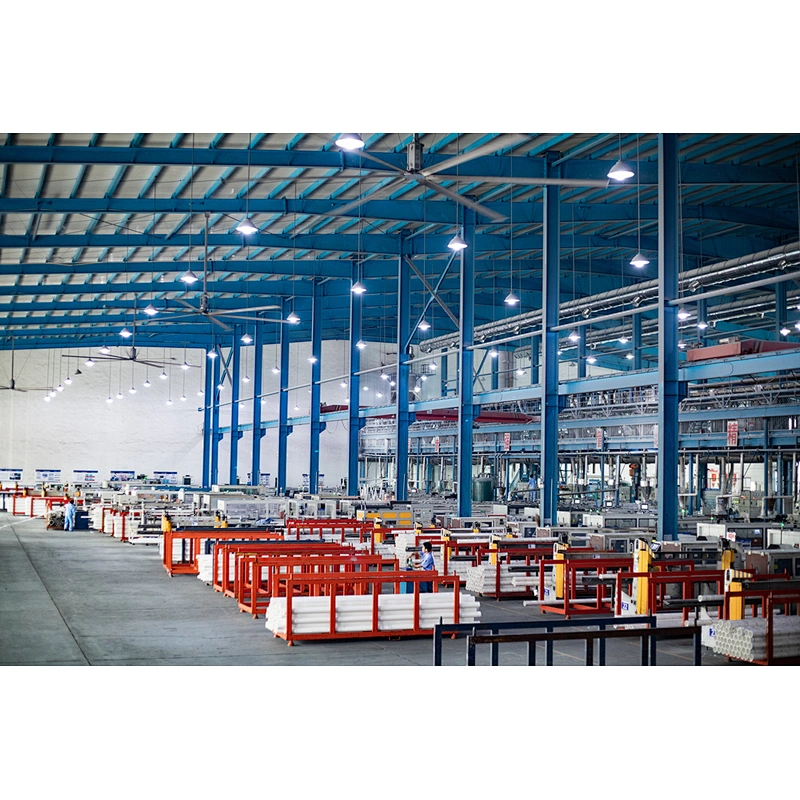
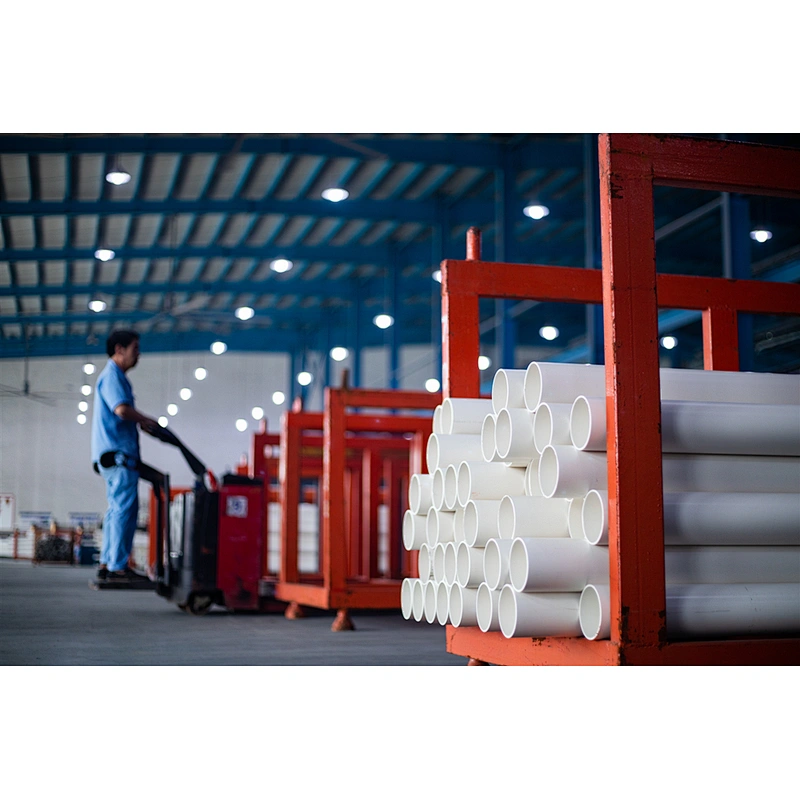
PVC pipe drainpipe is sanitary grade polyvinyl chloride (PVC) resin as the main raw material, adding an appropriate amount of stabilizer, lubricant, filler, colorant and so on through plastic extruder extrusion molding and injection molding machine, through cooling, curing, shaping, inspection, packaging and other processes to complete the production of pipes and fittings.
Specification:
| Model Number | UDE002 | Material | PVC |
| Description | 90° ELBOW | Size | 40-160,2''-6'' |
| Standard | BS1329、BS1401 | Color | WHITE、GREY |
| Brand | ERA | Temperature | 0-40 |
| Connection | glue welding | Certificate | / |
Main Products:
The drainage pipes are usually made of pvc and cast iron. pvc drain pipe is made of Pvc resin as raw material. Compared with cast iron pipe, its weight is only one tenth of cast iron pipe. It is simple and convenient to install, and the cost is lower. Pvc pipe also has the advantages of high hardness, good tensile strength, good aging resistance, good acid and alkali resistance, good flame retardant and so on.
Advantages of pvc drain pipe
1. PVC drainage pipes have good tensile and compressive strength, but their flexibility is not as good as other plastic pipes.
2. The pipe wall of PVC drainage pipe is very smooth, so the resistance to water flow is very small. Its water transport capacity is 20% higher than that of cast iron pipes of the same diameter, and the water transport effect is very good.
3. Moreover, PVC drainage pipes are also very corrosion-resistant and chemical-resistant. They have good acid and alkali resistance, are not affected by moisture and soil pH, and have a long service life.
4. PVC drainage pipes also have good water tightness. This type of pipe can maintain good water tightness regardless of whether it is connected by bonding or rubber rings.
What is the pressure state of a regular drainage system?
Firstly, ordinary drainage systems usually refer to gravity drainage systems, which rely on gravity to allow water to flow naturally without the need for external power. In this case, the pressure inside the pipeline should be close to atmospheric pressure, that is, in a state of no pressure. However, users may not be very clear about these terms, so it is necessary to explain them clearly.
Then, it may be necessary to answer separately, such as stress state, flow mode, application scenarios, advantages and disadvantages, etc. This structure is clearer and easier for users to understand. At the same time, it is important to avoid using overly technical terms, or if used, provide a brief explanation.
Additionally, users may want to know why conventional drainage systems use gravity instead of pressure, or what is different about pressure systems. At this point, you can compare the difference between gravity drainage and pressure drainage to help users better understand the different pressure states.
We also need to consider the potential deep needs of users. For example, they may be designing a drainage system and need to understand the impact of pressure conditions on the design, or they may encounter drainage problems and want to know the reasons. At this point, it is necessary to cover some key points, such as the situation of full pipe flow, or pressure changes that may be caused by improper design, such as air resistance or water hammer phenomena.
It is necessary to confirm the accuracy of the information source, for example, the pressure of the gravity drainage system is indeed close to atmospheric pressure, while the pressure drainage system is a full pipe flow with pump pressure. It is also necessary to mention application scenarios, such as gravity systems for household and urban sewage, and pressure systems for complex terrain or long-distance transportation.
Ordinary gravity drainage systems (such as domestic sewage drainage and rainwater gravity drainage) usually rely on the self gravity flow of water, and the pressure inside their pipelines is as follows:
The part of the pipeline filled with water: Due to the gravity of water, a certain head pressure may be generated, but it usually does not form a positive pressure higher than atmospheric pressure.
The part of the pipeline that contains air (especially the upper part of the riser or the connection of the ventilation pipe): usually close to atmospheric pressure and does not produce significant positive or negative pressure.
Therefore, under normal circumstances, ordinary drainage systems are usually close to atmospheric pressure or slightly lower than atmospheric pressure. Ordinary drainage is mainly suitable for general ground drainage, gravity discharge of sewage inside buildings, gravity discharge of rainwater, etc.
1. Gravity drainage system (non pressure drainage system)
Pressure state:
Non pressure flow: Water mainly flows naturally by gravity, and the pipeline is not completely filled (non full pipe flow). The liquid surface is in contact with air, and the pressure is close to atmospheric pressure (gauge pressure is 0).
Local pressure changes: Local positive or negative pressure may occur at pipeline bends, interfaces, or blockages, but overall there is still no pressure.
Flow characteristics:
The water flow rate is determined by the slope, roughness, and flow rate of the pipeline.
The design needs to ensure self-cleaning flow rate (to prevent sedimentation), and the slope usually needs to meet the specifications.
Application scenarios:
Urban sewage pipe network, internal drainage of buildings, rainwater discharge, etc.
Advantages and disadvantages:
Advantages: No need for external power, low energy consumption, and simple maintenance.
Disadvantage: Due to the limitation of terrain slope, long-distance or complex terrain requires deep buried pipelines.
2. Pressure drainage system (pressurized drainage system)
Pressure state:
Full tube pressurized flow: The pipeline is completely filled with water, driven by a pump or high-level potential energy, and the internal pressure is higher than atmospheric pressure (positive pressure).
Pressure range: usually from tens of kilopascals to hundreds of kilopascals (determined by pump head and pipeline resistance).
Flow characteristics:
High flow velocity can overcome terrain elevation differences or long-distance transportation.
Avoid pressure fluctuations such as cavitation and water hammer.
Application scenarios:
Sewage treatment plant lifting pump station, mountain or underground drainage, industrial wastewater transportation, etc.
Advantages and disadvantages:
Advantages: Flexible adaptation to complex terrain without relying on natural slopes.
Disadvantages: Relying on pump stations, high energy consumption, requiring explosion-proof pipes and pressure control.
3. Pressure changes under special circumstances
Gas blockage (gas lock): Gas accumulation in pipelines may cause local negative pressure, hindering water flow.
Water hammer effect: When the valve quickly closes or the pump suddenly stops, the pressure fluctuates violently, which may damage the pipeline.
Siphon phenomenon: Under specific conditions (such as full pipe flow and outlet lower than inlet), negative pressure siphon may form.
summarize
Ordinary drainage systems usually refer to gravity drainage systems, which have a pressure state close to atmospheric pressure and rely on natural slope flow.
The pressure drainage system requires manual pressurization and is suitable for special terrains or long-distance water transportation.
When designing, it is necessary to select the system type based on the scenario and consider the impact of pressure fluctuations on pipeline safety.
What is' negative pressure 'drainage?
Negative Pressure Drainage, Also known as a vacuum drainage system, it is a drainage method that uses vacuum technology (negative pressure environment) to collect and transport sewage or wastewater. Unlike traditional gravity drainage or pressure drainage, its core is to create negative pressure (below atmospheric pressure) inside the pipeline through a vacuum pump, and use the pressure difference to drive the water flow. Here is a detailed analysis:
1. Working principle
Negative pressure formation: By using a vacuum pump to create negative pressure (usually -0.5 to -0.8 bar, which is 50% to 80% lower than atmospheric pressure) in the pipeline network, a pressure difference is formed.
Sewage suction: When the user end (such as toilet, sink) discharges water, the sewage is quickly sucked into the pipeline under negative pressure and flows towards the vacuum collection tank.
Collection and transportation: Sewage is temporarily stored in vacuum tanks, and after reaching a certain amount, it is pressurized by pumps and transported to treatment facilities or gravity pipelines.
2. System composition
Vacuum pump station: the core equipment that maintains negative pressure in pipelines.
Vacuum pipeline: a sealed pipeline network that is resistant to negative pressure and prevents gas leakage.
Vacuum interface valve: a valve that controls the entry of sewage into the pipeline (only open during drainage).
Collection tank: temporarily store sewage to balance system pressure.
Control unit: Monitor pressure, flow rate, and valve status to ensure stable system operation.
3. Core Features
No gravity slope required: The pipeline can be laid horizontally, vertically, or around obstacles, adapting to complex terrain.
Small diameter and shallow burial depth: The diameter of the pipeline is usually 50-100mm (traditional gravity pipes require over 200mm), and the burial depth is only 0.5-1 meter.
Water saving: High speed negative pressure water flow can reduce the amount of flushing water (such as toilets only requiring 1-2 liters of water).
Leak and Pollution Prevention: Fully sealed system to prevent sewage leakage or odor diffusion.
4. Application scenarios
Complex terrain areas: mountains, islands, underground spaces (such as subways, tunnel drainage).
Distributed sewage treatment: low-density areas such as rural areas, scenic spots, and temporary camps.
Special environment: areas with high environmental protection requirements (to prevent groundwater pollution), water scarce areas (water conservation needs).
Industrial sector: places that require leak prevention, such as chemical plants and nuclear power plants.
5. Comparison of advantages and disadvantages
| Advantages | Disadvantages |
| Flexible adaptation to complex terrain, reducing earthworks | High initial investment (requiring vacuum pump station and control equipment) |
| Convenient pipeline installation and low maintenance cost | Dependent on continuous power supply (vacuum pump requires 24-hour operation) |
| Water conservation and environmental protection, reducing the risk of leakage | Regular maintenance of valves and sealing systems is required |
| Suitable for decentralized and small-scale drainage | High traffic scenarios may lack efficiency |
6. Typical cases
Qinghai Tibet Railway: Some stations adopt negative pressure drainage systems due to the inability to deeply bury pipelines in frozen soil.
Rural sewage treatment: Some villages in Europe use negative pressure systems to collect domestic sewage from dispersed households.
Urban renewal project: The underground pipelines in old urban areas are complex, and the negative pressure system avoids large-scale excavation.
7. Comparison with Gravity/Pressure Drainage
| Characteristic | Gravity drainage | Pressure drainage | Negative pressure drainage |
| Driving method | Gravity natural flow | Pump pressurization push | Vacuum negative pressure suction |
| Diameter requirement | Large diameter (anti clogging) | Medium diameter | Small diameter |
| Slope dependence | Strict slope must be maintained | No slope required | No slope required |
| energy consumption | not have | High (continuous pumping) | Medium (intermittent operation of vacuum pump) |
| Applicable scenarios | Conventional terrain | Long distance/high lift | Complex terrain/dispersed drainage |
8. Technical challenges
High sealing requirements: Leakage of pipelines or valves can damage negative pressure environments.
Gas liquid mixed flow control: It is necessary to prevent gas blockage or water flow fluctuations.
Optimization of energy consumption for vacuum pumps: It is necessary to balance negative pressure maintenance and power consumption.
Summary: Negative pressure drainage is an efficient, flexible, and environmentally friendly drainage technology, especially suitable for scenarios where traditional gravity systems are difficult to implement. Although the initial cost is high, its advantages of water conservation, leak prevention, and adaptability to complex terrain make it widely applicable in decentralized sewage collection, special engineering, and ecologically sensitive areas.
Negative pressure drainage is a drainage method that utilizes the principle that the pressure inside the pipeline is lower than atmospheric pressure to promote water flow discharge. The core mechanism is to create a"negative pressure"(below atmospheric pressure) inside the pipeline, which accelerates the flow of water and improves drainage efficiency. Common negative pressure drainage systems include siphon drainage systems and vacuum drainage systems.
Siphon drainage system: (Negative pressure usually not lower than -0.08 MPa)
A siphon drainage system is a system that utilizes the principle of siphoning to create negative pressure and rapidly drain water in a small diameter and high flow rate manner. The system relies on the water flow itself to carry away the air inside the pipeline, forming a stable negative pressure in a full pipe flow state, thereby enhancing drainage efficiency.
Which type of PVC drainage pipe is quieter?
When it comes to the"silent"requirements of PVC drainage pipes, we mostly talk about the application of building drainage scenarios. To clarify this issue, we will start with the sources of noise in building drainage.
What are the sources of noise in building drainage?
1、 Hydrodynamic noise
1. Water flow impact and turbulence
High speed water flow: When a large amount of water (such as toilet flushing or bathtub drainage) quickly passes through a pipeline, the water flow rubs against the pipe wall, collides with bends or tees, and produces high-frequency noise.
Example: When water flows freely in a vertical riser, its velocity can reach 3-5 m/s, and it collides with the bottom bend to create a"clang"sound.
Gas liquid mixed flow: During drainage, air is carried into the pipeline, forming a two-phase flow of gas and liquid. When bubbles burst, a"gurgling"sound is produced. If the pipeline exhaust is not smooth, the noise will intensify.
2. Drop and siphon effect
High level drainage appliances: In high-rise buildings, the upper level drainage is lowered to the bottom level through vertical pipes. The greater the drop, the stronger the end impact force, and the more obvious the noise.
Siphon toilet: During flushing, the siphon is formed instantly, and the water flow suddenly accelerates, which may be accompanied by brief high-frequency noise.
Mitigation measures:
Adopting spiral silencing riser (inner wall spiral guide groove to slow down water flow velocity);
Install energy dissipation elbows (to buffer the impact of water flow);
Add ventilation pipes (to balance air pressure and reduce noise from gas-liquid mixture flow).
2、 Pipeline vibration and resonance
1. Mechanical vibration caused by water flow
Water flow pulsation: Intermittent drainage (such as washing machine drainage) causes pressure fluctuations in the pipeline, leading to wall vibration and transmission to the building structure.
Resonance phenomenon: When the frequency of the water flow is close to the natural frequency of the pipeline, a resonance amplification effect occurs, emitting a low-frequency"buzzing"sound.
2. Vibration transmission of equipment
Water pump and booster equipment:
When the water pump in the pressure drainage system is running, mechanical vibration is transmitted to the wall through the pipe support, forming continuous noise.
Mitigation measures:
Use elastic supports and hangers (rubber pads, spring shock absorbers) to isolate vibrations;
Fill sound insulation materials (foam glue, sound insulation felt) at the point where the pipeline passes through the wall;
Choose a low-speed water pump or install a shock-absorbing base.
3、 The influence of pipe materials and installation processes
1. Differences in acoustic performance of pipes
Metal pipes (cast iron, steel):
The material has high density and good sound insulation performance, but it is prone to vibration noise when impacted by water flow (requiring vibration reduction measures).
Plastic pipes (PVC, HDPE):
Lightweight and easy to install, but with poor sound insulation, the sound of water flow is easily radiated through the pipe wall (requiring the use of silent PVC and the addition of sound insulation coating on the inner wall).
2. Installation defects
Poor fixation of pipelines: The spacing between supports and hangers is too large or elastic fasteners are not used, resulting in pipeline shaking and collision with walls.
Unreasonable pipe diameter design: Insufficient pipe diameter leads to high flow velocity, exacerbating noise; If the pipe diameter is too large, it is easy to trap air and cause air resistance noise.
Mitigation measures: Prioritize the use of silent pipes (such as cast iron pipes, PVC pipes lined with sound-absorbing layers);
Strictly control the spacing between supports and hangers according to specifications (PVC pipes are supported every 1m, and cast iron pipes are supported every 1.5m);
Reasonably design the pipe diameter and slope to avoid excessive flow velocity or gas accumulation.
4、 Special equipment noise
1. Drainage pump and lifting device
Sewage lift pump: In the basement or same floor drainage system, the operation of the pump motor produces low-frequency noise, which may penetrate the floor if not isolated.
Check valve opening and closing sound: When the valve quickly closes, a"bang"sound (water hammer effect) is produced.
2. Noise from sanitary ware itself
Siphon toilet vs straight flush toilet: straight flush toilet has faster flushing speed and louder noise; Siphon type is relatively quiet but there is a brief siphon noise.
Faucet and angle valve: produce a"hissing"sound when high-speed water flows through, especially in high water pressure environments.
Mitigation measures: The water pump room adopts soundproof walls and shock-absorbing foundations; Install water hammer eliminators; Choose silent sanitary appliances (such as slow closing angle valves, low-noise toilets).
5、 Environmental and design factors
1. Sound transmission through building structures
Location of pipeline well: When the drainage riser is adjacent to the bedroom or study, noise is transmitted to the interior through the floor or wall.
Hollow brick wall: Lightweight partition walls have poor insulation effect on low-frequency noise and are prone to forming"sound bridges".
2. System design defects
Insufficient exhaust system: The ventilation pipe is missing or the diameter is insufficient, causing negative pressure to suck in air during drainage, resulting in whistling sound.
Simultaneous drainage of multiple appliances: flow superposition leads to a significant increase in flow velocity and noise in the main pipeline.
Mitigation measures: Keep the pipeline well away from quiet areas, or use double-layer walls and soundproof cotton wrapping; Add independent ventilation pipes or combine ventilation pipes to balance the system pressure; Partition drainage design to avoid concentrated flow.
Summary: Systematic noise reduction strategy
Source control: Select silent pipes and equipment, optimize pipeline design (flow rate ≤ 1.5m/s);
Transmission obstruction: Elastic fixed pipes, filled with sound insulation materials;
End of pipe isolation: Isolate noise sources through building layout, such as placing drainage wells in corridors instead of bedroom walls.
Through multidimensional measures, the noise level of the drainage system can be significantly reduced to below 40dB (equivalent to a library environment), improving the quality of the building's acoustic environment.
Comparison of pipeline structures
PVC spiral silencing drainage pipe:
The inner wall of the pipe is equipped with spiral ribs, which are evenly distributed in a straight and diagonal direction, and have an angle of 8 ° -20 ° with the centerline of the silencer. During drainage, the water flow is guided by the spiral ribs and discharged along the inner wall of the pipe in a straight and diagonal direction, without causing strong impact on its inner wall. Compared with standard solid wall pipes, it can reduce 8-10 decibels and achieve noise reduction and silencing effects.
PVC double wall hollow spiral silencing drainage pipe:
As the name suggests, the structure of the double walled hollow spiral tube is a double-layer design, consisting of an inner wall and an outer wall. The unique hollow layer design provides dual soundproofing support for the pipeline system when transmitting noise and vibration, thereby greatly improving the sound insulation effect.
Comparison of mechanical properties
PVC spiral silencing drainage pipe:
On the premise of maintaining the basic strength of PVC solid wall pipes, the spiral structure can enhance the rigidity of the pipes, reduce the deformation that may occur during use, and have a certain noise reduction or anti erosion effect when the fluid passes through due to the influence of the spiral inner wall.
PVC double wall hollow spiral silencing drainage pipe:
The double walled hollow structure forms a design similar to an I-beam, which gives the pipeline high bending stiffness, better resistance to external pressure, and reduces deformation. Compared to the single-layer structure of the inner spiral tube, the hollow wall design can disperse stress and improve the overall stability of the pipeline.
Comparison of application scenarios
PVC spiral sound-absorbing drainage pipe: suitable for drainage, ventilation, air conditioning systems, etc. in general industrial and civil buildings
PVC double wall hollow spiral sound-absorbing drainage pipe: often used in places with strict noise control requirements, such as hospitals, hotels, theaters, and other places for exhaust and exhaust systems.


 English