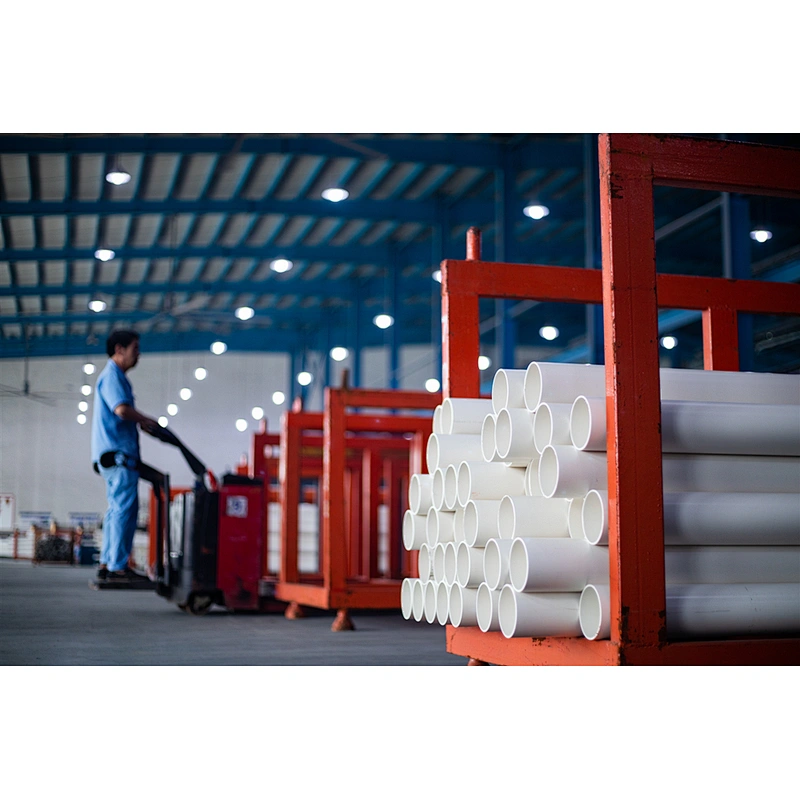
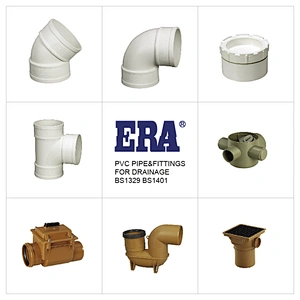
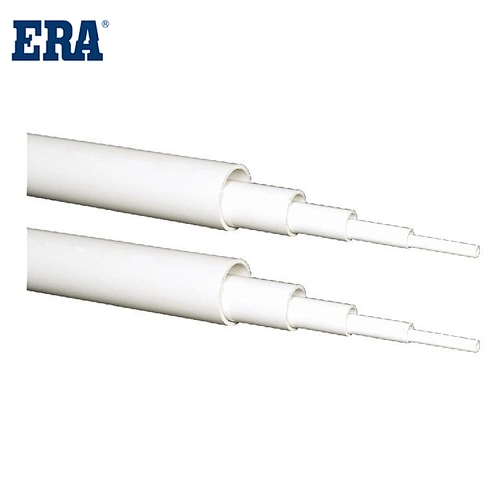
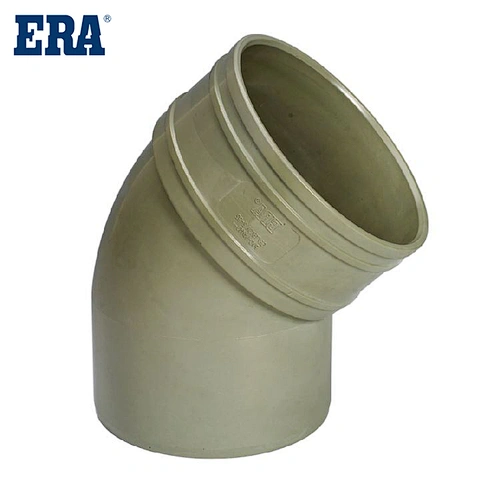
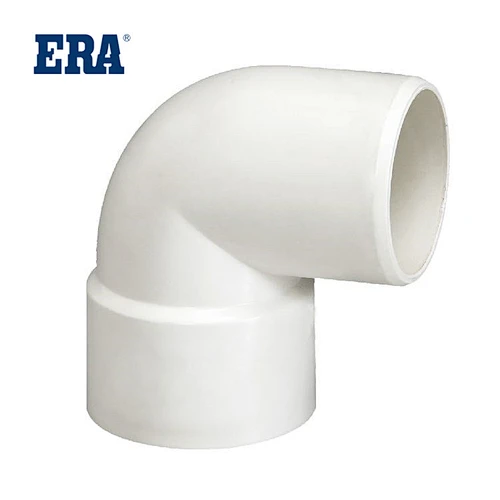
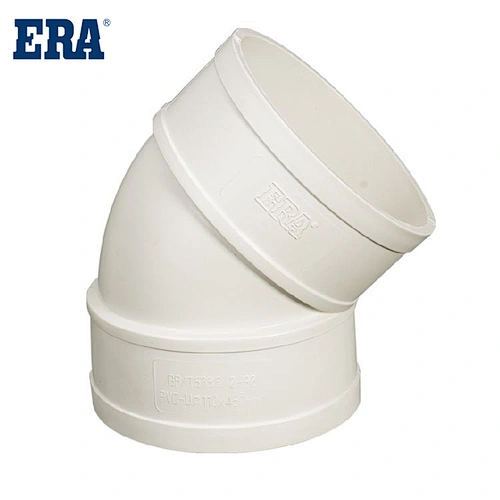
PVC PIPES AND FITTINGS FOR DRAINAGE
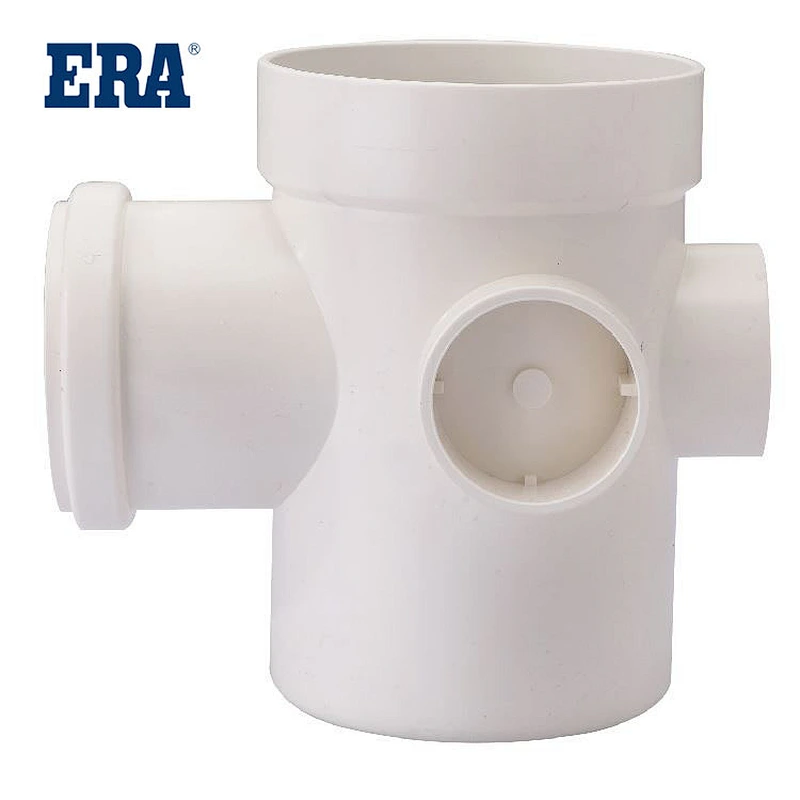
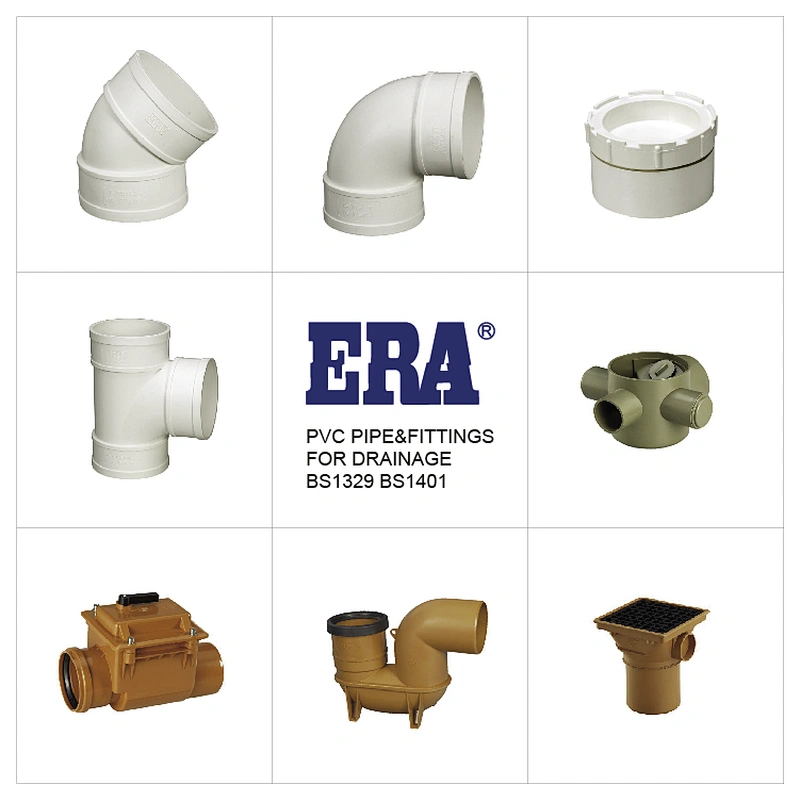
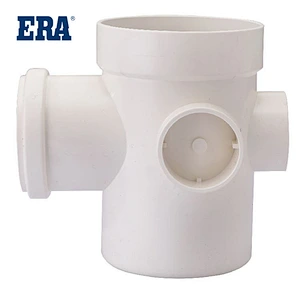
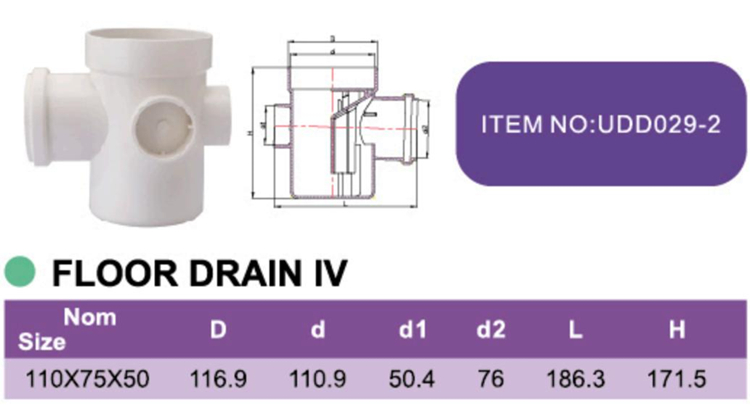
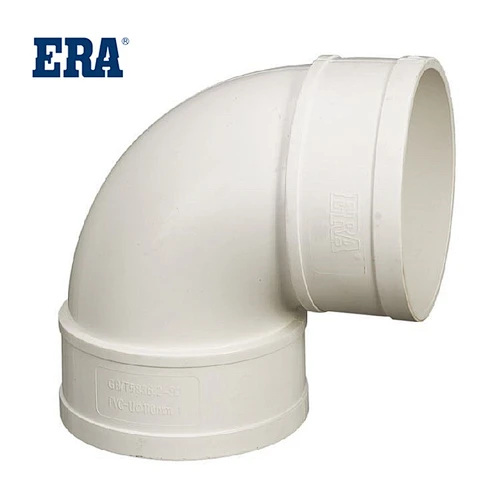
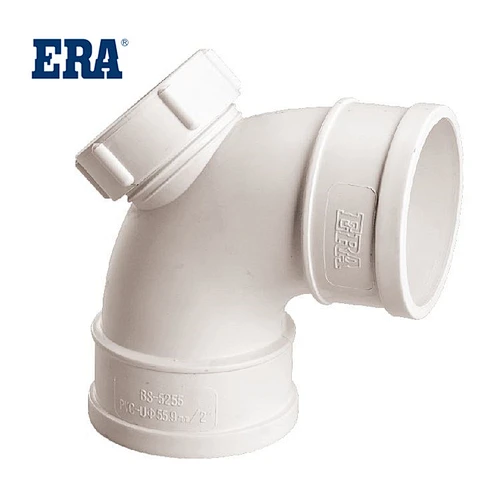
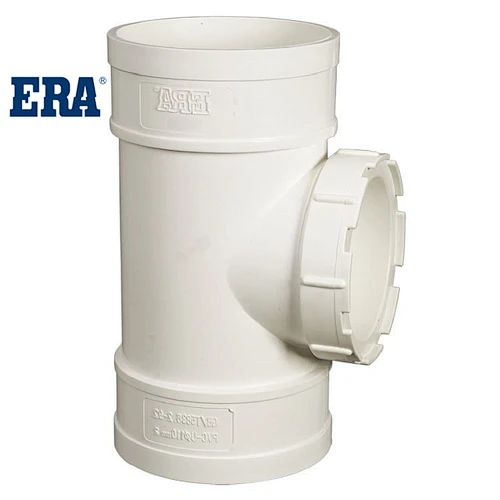
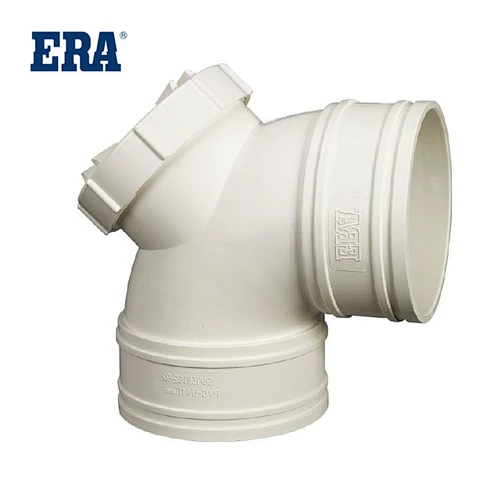
PVC PIPE SYSTEM DRAINAGE PIPES DIN STANDARD BS1329 BS1401, FLOOR DRAIN IV , UDD029-2System:PVC pipe system
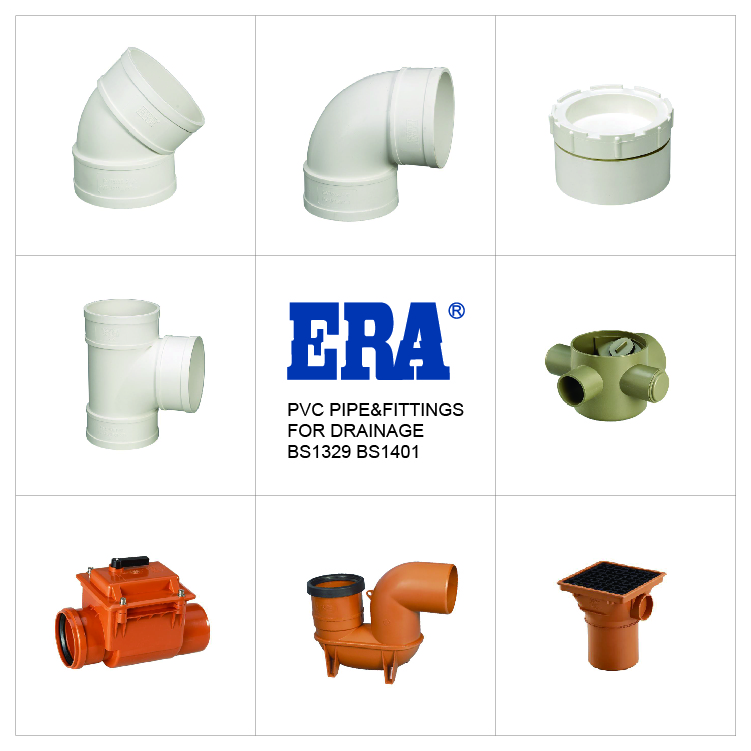
Referenced Standards:BS1329/BS1401
Size:50mm – 250mm
Certificate:Kitemark
Specification:
| Model Number | UDD029-2 | Material | PVC |
| Description | FLOOR DRAIN IV | Size | 110x75x50mm |
| Standard | BS1329、BS1401 | Color | WHITE、GREY |
| Brand | ERA | Temperature | 0-40 |
| Connection | glue welding | Certificate | / |
Main Products:
1、 What is a 'primary pipeline network'?
Introduction: Primary pipeline network usually refers to the main transportation pipeline system in a city or region. It is responsible for transporting fluids such as water, gas, and heat from supply sources (such as water plants, gas stations, heat stations, etc.) to distribution network nodes in various regions. It is the"backbone"of the entire pipeline system, mainly to ensure large-scale and long-distance fluid transportation.
● Features:
——High flow transportation: The primary pipeline network is responsible for long-distance fluid transportation, and the transported flow is usually large.
——Larger pipe diameter: Due to the need to carry a large amount of fluid, the diameter of the primary pipe network is usually larger and the pressure is also higher.
——Wide coverage: Primary pipeline networks often connect multiple supply sources and distribution network nodes, covering a wide range of areas.
——High importance: The operation of the primary pipeline network directly affects the normal operation of the water supply, gas supply, and heating systems in the entire city or region, so it usually has high safety requirements and maintenance standards.
Application examples:
——The main water supply network in the water supply system: These pipelines usually start from the water plant, pass through long-distance transportation, and finally supply water to various regions.
——The main natural gas pipeline network in the gas supply system: It transports natural gas from the gas source to various areas, providing gas for residents and industrial users.
——The thermal main pipeline in the heating system: distributed throughout the city from centralized heating sources (such as thermal stations), providing regional thermal energy supply.
2、 What is a 'secondary pipeline network'?
Introduction: The secondary pipeline network is a branch pipeline that branches off from the primary pipeline network, mainly responsible for transporting fluids from the primary pipeline network to specific users (such as residential areas, commercial areas, industrial areas, etc.). Compared with the primary pipeline network, the diameter of the secondary pipeline network is smaller and the conveying pressure is lower, but its distribution function is crucial and it is the"branch"of the entire pipeline system.
● Features:
——Allocation function: The main task of the secondary pipeline network is to allocate fluids in the primary pipeline network to specific areas or users.
——Small diameter and low pressure: The diameter of the secondary pipeline network is relatively small, and the flow rate and pressure transported are also low, mainly to meet the needs of local areas.
——Local coverage: The area covered by the secondary pipeline network is usually small and may only involve a certain residential area, street, or commercial district.
——The importance lies in serving end users: the operation of the secondary pipeline network is directly related to the water, gas, heating and other needs of every household, enterprise and commercial area, and is the"end"part of the pipeline system.
Application examples:
——Branch pipelines in the water supply system: pipelines that branch off from the primary pipeline network are responsible for transporting water to residential areas, schools, commercial districts, and other places.
——Urban gas distribution pipelines in the gas supply system: These pipelines distribute natural gas from the primary pipeline network to each household, ensuring the gas demand in various areas of the city.
——Regional thermal pipeline in heating system: A thermal pipeline that branches off from the main pipeline of a heating station and distributes hot water or steam to users such as residential areas and office buildings.
3、 What is the difference between"primary pipeline network"and"secondary pipeline network"?
Sort out the differences between the two in the form of a table:
Primary pipeline network
Function: Responsible for long-distance and high flow transportation of fluids, connecting supply sources and main distribution points
Pipe diameter: relatively large, usually a large-diameter pipeline
Pressure: High, meeting the transportation needs of long-distance and large flow
Scope: Wide, usually involving the main pipelines of the entire city or region
Importance: It is the backbone part of the system, ensuring that fluids can be smoothly transported from the source to multiple areas
Maintenance: Stricter maintenance is required to ensure safe operation under high traffic and pressure
Secondary pipeline network
Function: Distribute fluids from the primary pipeline network to end users or specific areas
Pipe diameter: Small, usually small to medium diameter pipes
Pressure: Low, meeting local area allocation needs
Scope: Small, usually covering a certain residential area, street, commercial district, etc
Importance: It is a crucial part of connecting users and ensuring that the needs of each end user are met
Maintenance: The maintenance requirements are relatively low, mainly focusing on the stability of the distribution system
Finally, to summarize, although the terms"primary pipeline network"and"secondary pipeline network"are commonly used in heating pipelines, they are actually a concept widely applicable to various pipeline systems such as water supply, gas supply, and heating. The"primary pipeline network"serves as the"backbone"responsible for the transportation of large flow, while the"secondary pipeline network"serves as the"branch", distributing fluids to each specific user or area. The two work together to ensure the smooth transportation and distribution of fluids.
In urban drainage systems, rainwater pipes and sewage pipes are two common but functionally distinct types of pipes. They each undertake the task of discharging different types of water flow. Let's take a look at the differences between the two in terms of materials, design, and functionality.
1、 Different uses of pipelines:
Rainwater pipeline: mainly used for collecting and discharging rainwater and melted snow water. These pipes are usually connected to surfaces such as roofs, roads, sidewalks, etc. to drain rainwater from the urban drainage system, preventing flooding and waterlogging.
Sewage pipeline: used to collect and transport wastewater generated from human life and industrial activities, including wastewater from kitchens, bathrooms, toilets, and industrial production.
2、 Different water quality for transportation:
Rainwater pipes: Rainwater is usually relatively clean, and after simple filtration and sedimentation, it can be directly discharged into natural water bodies such as rivers, lakes, or oceans.
Sewage pipeline: Sewage contains various harmful substances, including bacteria, chemicals, organic matter, etc. Therefore, sewage pipelines require more complex treatment and purification systems to ensure that the discharged water meets environmental standards.
3、 Different materials:
Rainwater pipes: There are generally four types of materials for rainwater pipes, namely pure copper PVC、 Colored aluminum, stainless steel, etc.
Sewage pipeline: The material of sewage pipeline is generally selected to use PE PVC、 Materials such as cast iron, fiberglass, concrete, etc.
4、 Different appearance:
Rainwater pipes: There are generally three shapes of rainwater pipes, namely square, circular, and semi-circular.
Sewage pipeline: The shape of sewage pipeline is only circular.
5、 Different colors:
Rainwater pipes: Rainwater pipes come in a variety of colors, especially those made of colored aluminum, which can even be configured according to the color of outdoor walls.
Sewage pipeline: The colors of common sewage pipelines are generally white (PVC) and black (PE).
6、 Different locations:
Rainwater pipes: Rainwater pipes are generally installed on outdoor walls to collect rainwater from surfaces such as buildings and roads, and are usually arranged along the edges of roads or buildings.
Sewage pipeline: Sewage pipelines are usually installed on indoor walls or underground to collect sewage from buildings, which can reduce odors and environmental pollution.
In summary, the difference between rainwater pipes and sewage pipes is that one is used to treat rainwater and the other is used to treat sewage. Due to their different purposes, there are many differences in practical applications, which can be easily understood.
There are various types of PVC drainage pipes on the market, and their quality varies greatly. A slight mistake can lead to potholes. Why do some pipes keep falling while others break halfway after being tossed around in logistics transportation? This involves an issue of calcium powder content, which is commonly referred to by factories as 50 parts calcium, 100 parts calcium, and 200 parts calcium tubes.
1、 Composition of PVC raw materials
The raw materials for PVC drainage pipes mainly consist of three parts: PVC resin powder, PVC additives, and PVC fillers.
PVC resin powder: PVC resin powder is a thermoplastic resin made by polymerization reaction of vinyl chloride monomer, which determines the basic properties of pipes, such as strength, corrosion resistance, etc.
● PVC additives: PVC additives mainly include heat stabilizer, lubricant, whitening agent, impact modifier, etc., which are mainly used to improve the processing performance, durability and anti-aging ability of pipes.
PVC filler: PVC filler mainly refers to calcium carbonate, also known as"calcium powder", which is mainly used to enhance the hardness and rigidity of pipes and reduce costs.
2、 Why add calcium powder?
● Cost reduction: Calcium carbonate is relatively inexpensive, and adding calcium powder can reduce the amount of PVC resin used, thereby reducing material costs and improving economic benefits.
● Enhance rigidity and hardness: Calcium carbonate as a filling material can improve the hardness, rigidity, and dimensional stability of PVC pipes, enhancing their compressive strength.
● Enhance thermal stability: Calcium carbonate has an alkaline pH value and can absorb hydrogen chloride, which to some extent enhances the thermal stability of PVC and avoids the decomposition of pipes due to high temperatures during processing.
● Improve processing performance: Calcium carbonate helps to enhance the processing fluidity of PVC pipes during production, improving the efficiency and effectiveness of extrusion molding.
3、 What are the effects of excessive addition of calcium powder?
● Increased brittleness: Calcium powder is an inorganic filler that can enhance the rigidity and hardness of pipes, but excessive addition can weaken the toughness of pipes, make them more brittle, reduce their impact resistance, and make them prone to brittle cracking under external forces or low temperatures.
● Decreased tensile strength: PVC resin endows pipes with certain elasticity and tensile strength. Excessive calcium powder will reduce the ductility and tensile capacity of pipes, making them more prone to fracture or deformation during installation or use.
The decrease in surface smoothness and the addition of excessive calcium powder can affect the surface quality of the pipe, resulting in surface roughness or granular unevenness. This not only affects the appearance but also affects the fluidity of the fluid inside the pipeline, increasing frictional resistance.
The increase in weight leads to an increase in installation costs. After the increase in calcium powder content, the density of PVC pipes will significantly increase, resulting in an increase in pipe weight and transportation and installation costs, especially for large-diameter pipes.
Therefore, when selecting PVC pipes, it is advisable to choose those with low calcium content, as the higher the calcium powder content, the poorer the quality. Of course, people are more focused on pursuing cost-effectiveness and seeking a balance between quality and price. Someone joked that they could already make pipes for 600 parts of calcium, but the"packaging without unloading"during loading made people laugh and cry.
As an important component of the drainage system, inspection wells include brick inspection wells, precast concrete inspection wells, fiberglass inspection wells, and plastic inspection wells. This article briefly introduces the classification of plastic inspection wells (commonly made of HDPE material on the market).
1、 According to their functions, plastic inspection wells can be divided into ordinary wells, water sealed wells, and drop wells.
Ordinary well is the most common plastic inspection well, widely used in drainage and sewage pipe network systems. It is usually located at the intersection, turn, change in pipe size or slope, and on straight pipe sections at a certain distance, mainly for the convenience of pipeline inspection, cleaning, and maintenance.
Water sealed well water sealed well is a safe liquid sealing device installed on the sewage pipeline network in the factory area with flammable gases, flammable liquid vapors or oil stains, to prevent combustion and explosion from spreading and expanding along the sewage pipeline network.
A drop well is used to handle situations where there is a height difference between different pipelines. Usually, a drop well is set between two pipelines at different elevations, and a designed drop structure is used to ensure that the water flows smoothly through the drop section inside the well.
2、 According to the structure of the well seat, plastic inspection wells can be divided into sedimentation chamber inspection wells and flow channel inspection wells based on their different functions in the drainage system.
● Sedimentation chamber inspection well (sedimentation well)
The main function of a sedimentation well is to deposit sediment, impurities, etc. in the pipeline by setting up a sedimentation chamber (the mud storage space at the bottom of the well) to prevent them from entering the pipeline and causing blockage. Commonly used in rainwater and sewage drainage systems, especially suitable for environments that are prone to carrying sediment, such as roads, squares, etc.
● Flow channel inspection well (flow channel well)
A flow channel well is installed at the bottom of the inspection well, which is smoothly connected to the pipeline and plays a role in guiding water flow, reducing water turbulence and sedimentation. Its main purpose is to ensure smooth drainage, reduce sediment deposition and pipeline blockage, especially suitable for sewage pipeline systems.
3、 According to the external shape of the well seat
The starting well has a relatively simple structure and is usually located at the starting end of the drainage pipeline system, serving as the starting point or source of the pipeline. Mainly used to collect initial water flow or sewage and guide it into the drainage or sewage pipe network.
The straight through well is mainly used for connecting two straight sections of pipelines in a pipeline system, and the pipelines do not change direction or branch inside the well.
The elbow well is used to connect and guide two pipes in different directions, allowing water to flow smoothly through the bend.
A three-way well is used at the intersection of three pipelines in a pipeline system, allowing the pipelines to converge or diverge in three different directions.
A four-way well is used at the intersection of four pipelines in a pipeline system, allowing the pipelines to converge or diverge in four different directions.
The above is a simple classification of plastic inspection wells in terms of function, well seat structure, and external shape of the well seat. The content is quite basic, and I am currently learning and selling. If you are interested in researching, you can refer to the two standards for plastic inspection wells, CJ/T 233-2016 and GB/T 41048-2021. Feel free to leave a comment below for discussion.
Due to the limitations of pipeline knowledge, my previous understanding of non excavation construction techniques was limited to two types: pipe jacking and horizontal directional drilling. Later, I discovered that there were many other non excavation construction methods available. Here is a list for everyone.
1、 Top pipe method
Introduction: The pipe jacking method is a method of laying pipelines by pushing prefabricated pipes underground. This method usually consists of a jacking working well and a receiving well. The pipeline starts from the jacking well and is pushed in sections by hydraulic jacking equipment until it reaches the receiving well. Throughout the process, there is no need to excavate the surface, greatly reducing the impact on the ground.
Advantages: During construction, there is no need to excavate the ground surface, which has minimal impact on road traffic and the surrounding environment. It is especially suitable for crossing obstacles such as highways, railways, and rivers.
Application scenarios: Suitable for scenarios that require large-diameter pipelines such as sewage pipelines, rainwater pipelines, and water supply pipelines.
2、 Shield tunneling method
Introduction: Shield tunneling is a fully mechanized construction method that involves pushing the shield machine into the ground and using the shield shell and pipe segments to support the surrounding rock to prevent collapse into the tunnel. At the same time, a cutting device is used to excavate the soil in front of the excavation face, and the excavated machinery is used to transport it out of the tunnel. A jack is used to press and push it in at the rear, and prefabricated concrete pipe segments are assembled to form a mechanized construction method for the tunnel structure.
Advantages: Suitable for the construction of long-distance, large-diameter tunnels or pipelines, especially in situations where geological conditions are complex or ground conditions do not allow for large-scale excavation.
Application scenarios: Used for large-scale underground projects such as subway tunnels, river crossing tunnels, and municipal pipe galleries.
3、 Shallow buried excavation method
Introduction: Shallow burial and underground excavation method is a method of tunnel or underground engineering construction in close proximity to the ground surface, suitable for weak surrounding rock environments in urban areas. It designs and constructs the tunnel by modifying geological conditions and controlling surface subsidence, using initial support such as grids and anchor spraying, following the principles of the"New Austrian Method"and"pipe ahead, strict grouting, short excavation, strong support, fast closure, and frequent measurement".
Advantages: It can be carried out in densely populated urban areas, with shallow excavation depth and minimal impact on ground transportation and construction.
Application scenarios: Used for the development of small and medium-sized underground pipelines, tunnels, or underground spaces in cities, such as power tunnels, drainage tunnels, subway stations, etc.
4、 Directional drilling method
Introduction: Directional drilling method uses a drilling rig on the ground to perform horizontal directional drilling, thereby drilling a channel underground and pulling or pushing prefabricated pipelines through the channel for pipeline laying underground. By controlling the direction of the drill bit, precise pipeline laying can be achieved, especially suitable for long-distance and obstacle crossing pipeline engineering.
Advantages: Suitable for long-distance pipeline laying through existing buildings, roads, or natural obstacles, without the need for large-scale ground excavation, with strong construction flexibility.
Application scenario: Suitable for laying power cables, communication pipelines, oil pipelines, gas pipelines, and other long-distance or obstacle crossing structures.
5、 Ramming method
Introduction: The ramming method uses the impact force of a rammer to directly drive steel or plastic pipes underground. The rammer operates through the inside or outside of the pipeline, ramming the pipeline section by section.
Advantages: The construction equipment is simple and suitable for the construction of short distance, small diameter pipelines, especially under suitable soil conditions.
Application scenario: Suitable for the construction of underground drainage pipelines, water supply pipelines, small-diameter cable pipelines, etc.
6、 Immersed tube method
Introduction: Immersed tube method is a construction method for building underwater tunnels. Immersed tube tunnels are constructed by floating several prefabricated sections to the sea surface (river surface) site, and then sinking and installing them one by one in the dredged foundation trench, forming a complete pipeline system.
Advantages: Suitable for long-distance pipeline laying across water bodies, especially in situations with deep water and complex geological conditions of riverbeds.
Application scenarios: Used for water pipelines, oil pipelines, submarine cables, etc. that cross rivers and lakes.
The above six are relatively common non excavation construction techniques, in addition to the micro tunnel method suitable for small-diameter pipelines and the cracking method suitable for pipeline renewal. These are relatively uncommon and will not be listed separately here. I am also learning and selling these contents now, please feel free to correct any mistakes.
First of all, let me clarify that the concept of non pressure pipelines usually only exists in the field of water supply and drainage, because in other pipeline application fields such as gas, petrochemical, chemical, heating, fire protection, etc., pressure pipelines are the world, and there is basically no non pressure situation.
Here is a simple comparison between the"pressure"and"no pressure"characteristics of pipelines, to facilitate everyone's understanding of the differences between the two.
1、 Definition
Pressure pipeline:
Pressure pipeline refers to a pipeline system that is subjected to a certain pressure inside the pipeline and is used to transport gases, liquids, or steam. The design, manufacturing, installation, and operation of pressure pipelines need to consider the pressure of the fluid inside the pipeline and ensure the safety of the pipeline under pressure.
● Non pressure pipeline:
Non pressure pipeline refers to a pipeline system in which the fluid inside the pipeline does not bear or almost does not bear internal pressure under normal working conditions. Non pressure pipelines usually use gravity flow for fluid transportation and do not consider internal pressure during design.
2、 Material
Pressure pipeline:
The material of pressure pipelines needs to have sufficient strength, pressure resistance, and corrosion resistance. Common materials include steel (such as carbon steel, stainless steel), copper, aluminum alloys, and high-performance plastics (such as PE, PVC, PP, etc.).
● Non pressure pipeline:
Non pressure pipelines, due to the fact that they do not need to withstand high pressure and have thin pipe walls, are designed with flow rate, flow velocity, and corrosion resistance as the main considerations. Lightweight and corrosion-resistant materials such as plastic (PVC, PE), concrete, ceramics, etc. are usually used.
3、 Applicable fluids
Pressure pipeline:
Suitable for conveying fluids that require a certain pressure to push, including gases (such as natural gas, compressed air), liquids (such as water, oil, chemicals), steam, etc. Fluid is usually transported in environments above atmospheric pressure, suitable for industrial production, water supply, gas supply, heating and other scenarios.
● Non pressure pipeline:
Mainly used for transporting fluids that do not require internal pressure, usually gravity driven liquids such as rainwater, sewage, wastewater, etc., suitable for municipal engineering and infrastructure projects such as drainage systems, sewage treatment, rainwater collection, etc.
4、 Design requirements
Pressure pipeline:
The design must be based on the maximum working pressure of the conveying medium to ensure safety and stability under pressure.
● Non pressure pipeline:
When designing, internal pressure is not considered, and fluid fluidity, gravity effect, and slope design are mainly considered.
5、 Connection method
Pressure pipeline:
Pressure pipelines are usually connected by welding, flange connection, hot melt connection, or electric fusion connection to ensure high sealing and pressure bearing capacity, and to adapt to high-pressure environments. Welding and flange connections are suitable for metal pipelines with high pressure and strength requirements, while hot melt and electric melt connections are suitable for plastic pipelines and can withstand medium to high pressure.
● Non pressure pipeline:
Non pressure pipelines mainly use methods such as plugging, bonding, or threaded connections, and the design focuses on easy installation and economy. Insertion and bonding are suitable for plastic pipelines, handling non pressure or low-pressure fluids, while threaded connections are used for small diameter or low-pressure pipelines.
6、 Applicable scenarios
Pressure pipeline:
Fluid flows under high pressure, and pipelines can be arranged above or below ground with high flow rates and strict sealing requirements. They are commonly used in water supply systems, industrial water delivery systems, gas transportation, fire protection systems, etc.
● Non pressure pipeline:
Relying on gravity to flow, it is usually arranged underground with low flow velocity and a small slope in pipeline design. It is used for systems that do not require pressure, such as municipal drainage, sewage treatment, rainwater collection, agricultural irrigation, etc.
7、 Inspection and testing
Pressure pipeline:
Before construction and operation, strict pressure testing (such as water pressure testing, air pressure testing) and non-destructive testing (such as ultrasonic testing, X-ray testing) must be conducted to ensure the reliability of the pipeline at the design pressure.
● Non pressure pipeline:
The testing requirements are relatively simple, mainly including appearance inspection, sealing test, and flow test.
8、 Installation and maintenance
Pressure pipeline:
Due to the risk of rupture and leakage during the long-term operation of pressure pipelines, regular inspection and maintenance are required to ensure their safety, with high maintenance costs and technical requirements.
● Non pressure pipeline:
Due to the lack of pressure, the safety risk is low, and maintenance is relatively simple. The main focus is on the smoothness of the pipeline, preventing blockage and corrosion.
In summary, pressure pipelines have stricter requirements for safety and durability due to their need to withstand the pressure of internal fluids. Therefore, they are widely used in systems that require continuous pressure, such as water supply, gas, and heating. Non pressure pipelines are more suitable for situations such as drainage and sewage that do not bear internal pressure, and their design emphasizes more on economy and construction convenience.


 English