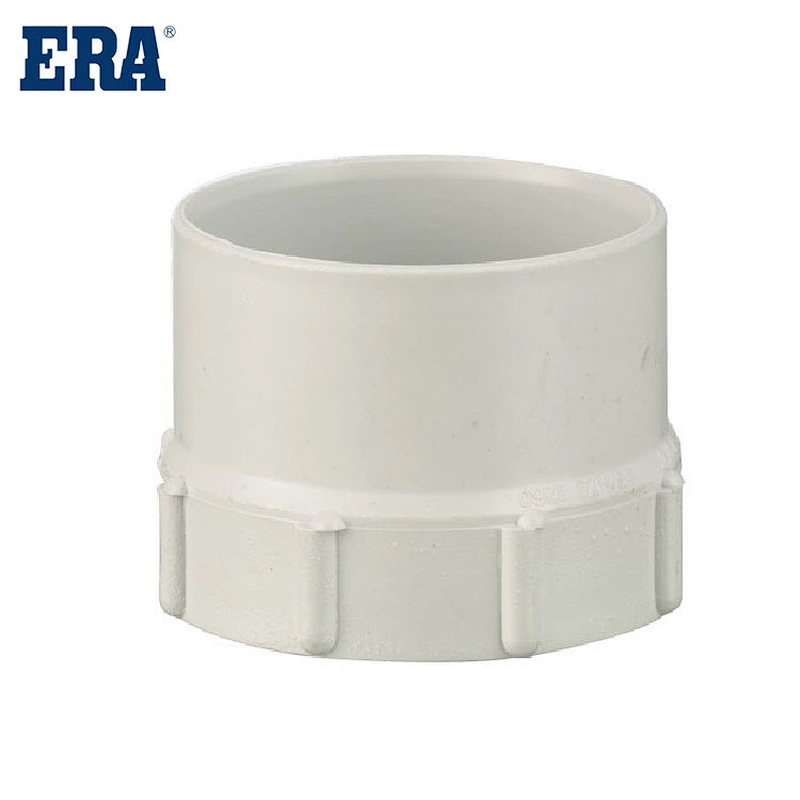
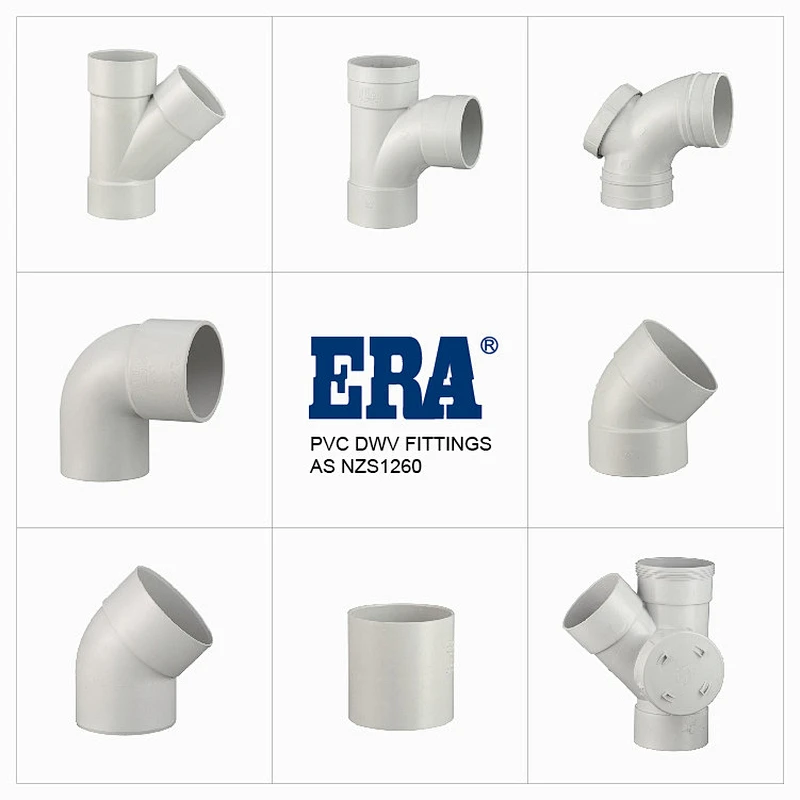
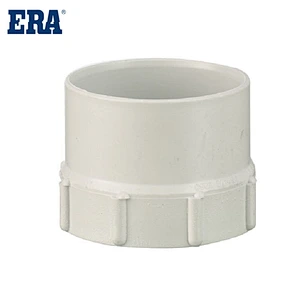
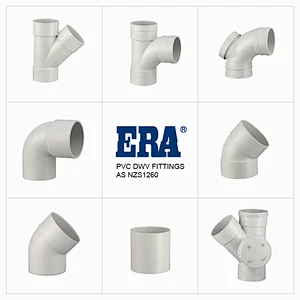
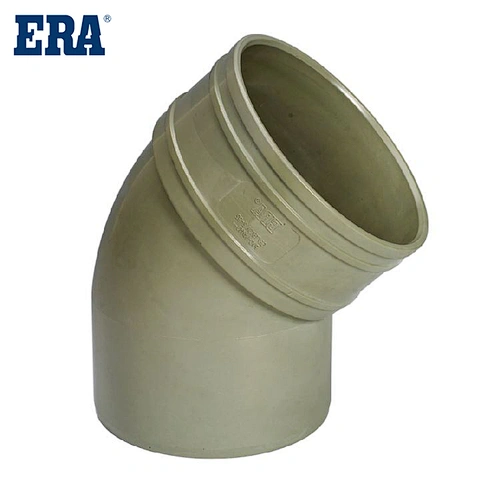
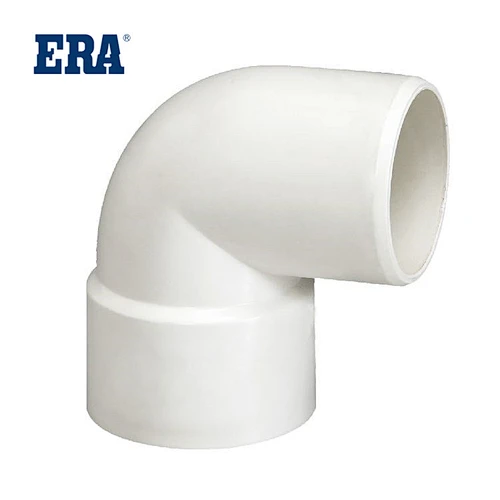
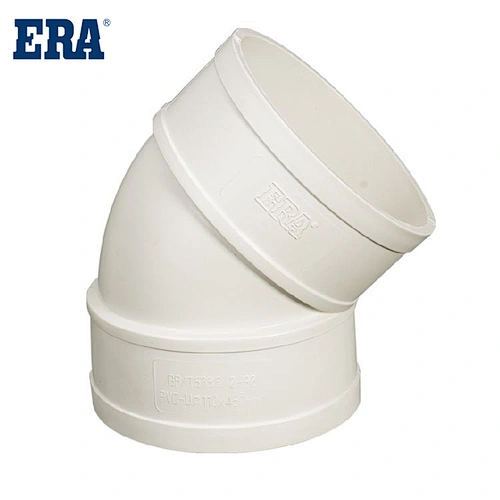
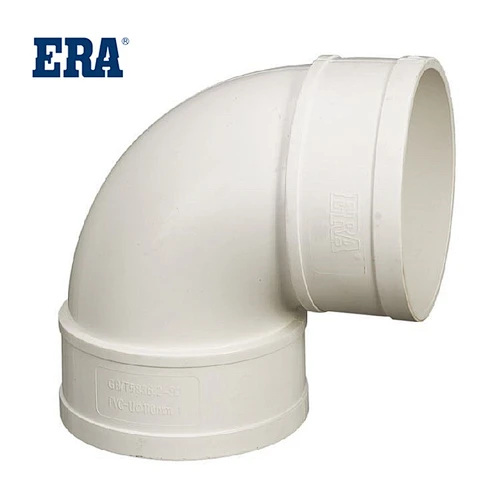
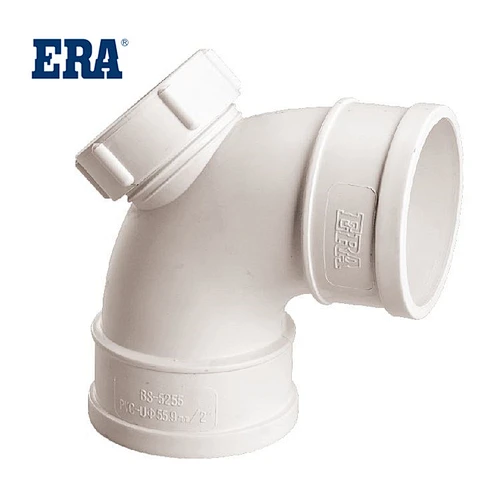
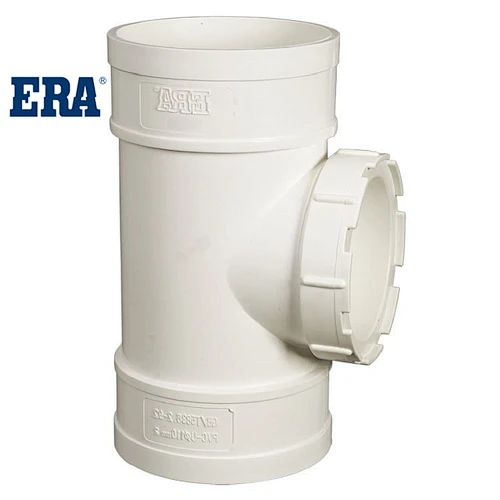
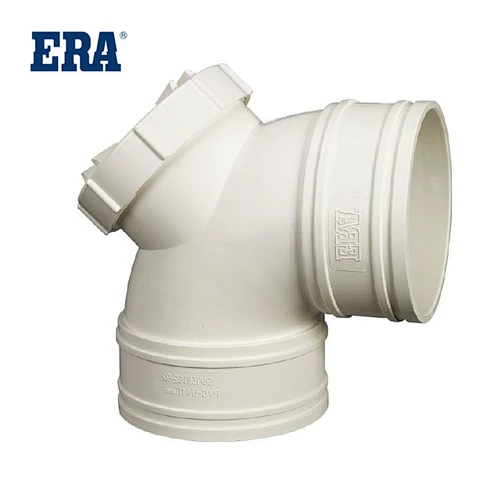
PVC drain pipe features
1. Strong corrosion resistance, not affected by corrosive soil and various drinking water;
2. The inner wall is smooth, and the friction resistance is smaller than that of conventional materials;
3. Pipes and fittings will not rust, so there will be no internal corrosion and shrinkage changes;
4. The exterior wall of the building will not be polluted because of the pipeline, so that the value of the building will not be damaged;
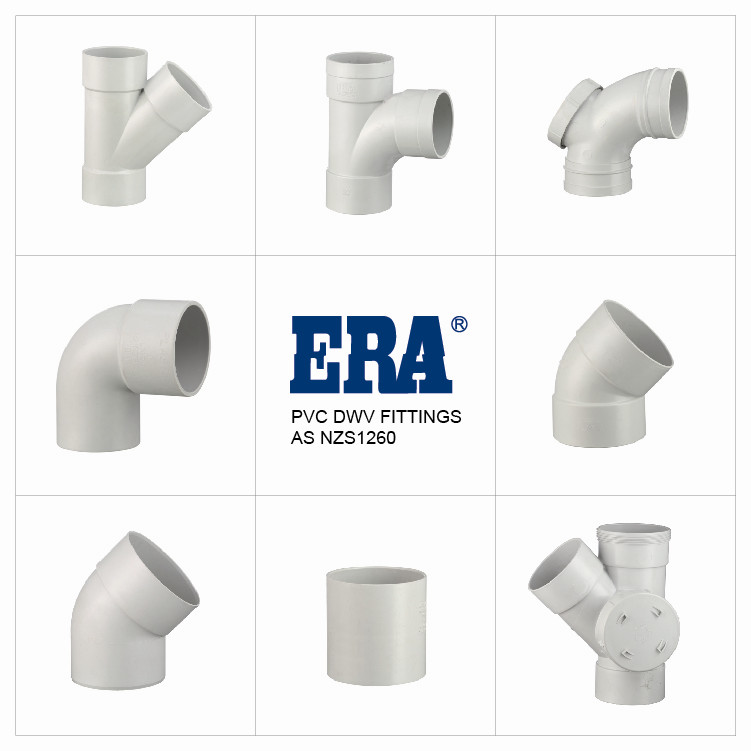
5. There are many styles of pipe fittings, which are also complete and suitable for various design and installation requirements;
6. Easy installation, no need for regular maintenance;
7 Weight of cast iron pipe is 1/5 to 1/6, easy to transport and operation;
8. Using glue, simple, fast, economic and efficient;
9. Tasteless, odorless, non-toxic;
10. Cheaper than traditional materials;
11. Under normal service conditions, the service life can reach more than 50 years.
Due to the striking resemblance in appearance between ABS pipes and PVC pipes (where PVC pipes refer to commonly used PVC drainage pipes on the market), many friends often struggle to understand. Here are a few differences between the two for your reference. 1、 Different Composition ● ABS Pipe: ABS stands for Acrylonitrile Butadiene Styrene, which is a copolymer of acrylonitrile, butadiene, and styrene. PVC pipe: PVC is an abbreviation for polyvinyl chloride, which is formed by extruding polyvinyl chloride resin with stabilizers, lubricants, etc. through hot pressing method. 2、 ABS pipes have different toughness: they have good impact resistance and only undergo ductile deformation when subjected to external impact; PVC pipe: It has a hard texture and good compressive and tensile properties, but poor toughness. 3、 Different temperature resistance ● ABS pipe: high softening temperature, usually around 90 ° C; PVC pipe: The softening temperature is relatively low, usually around 60 ° C. 4、 Different solvent resistance ● ABS pipe: ABS material may crack when exposed to organic solvents such as acetone and formaldehyde; PVC pipe: PVC will be weakened and deformed by the above-mentioned organic solvents. 5、 Price difference ● ABS pipe: the price is relatively higher for the same specification; PVC pipe: relatively cheaper for the same specifications; 6、 Different application fields: ABS pipe: mainly used in domestic water supply pipes; PVC pipe: mainly used as a protective pipe for wires and cables, or for sewage pipelines.
In urban drainage systems, rainwater pipes and sewage pipes are two common but functionally distinct types of pipes. They each undertake the task of discharging different types of water flow, so there are significant differences in material, design, and function. The following will compare the two.
1、 Different materials:
Rainwater pipes: There are generally four types of materials for rainwater pipes, namely pure copper PVC、 Colored aluminum, stainless steel, etc.
Sewage pipeline: The material of sewage pipeline is generally selected to use PE PVC、 Materials such as cast iron, fiberglass, concrete, etc.
2、 Different shapes:
Rainwater pipes: There are generally three shapes of rainwater pipes, namely square, circular, and semi-circular.
Sewage pipeline: The shape of sewage pipeline is only circular.
3、 Different colors:
Rainwater pipes: Rainwater pipes come in a variety of colors, especially those made of colored aluminum, which can even be configured according to the color of outdoor walls.
Sewage pipeline: The colors of common sewage pipelines are generally white (PVC) and black (PE).
4、 Different uses:
Rainwater pipeline: mainly used for collecting and discharging rainwater and melted snow water. These pipes are usually connected to surfaces such as roofs, roads, sidewalks, etc. to drain rainwater from the urban drainage system, preventing flooding and waterlogging.
Sewage pipeline: used to collect and transport wastewater generated from human life and industrial activities, including wastewater from kitchens, bathrooms, toilets, and industrial production.
5、 Different locations:
Rainwater pipes: Rainwater pipes are generally installed on outdoor walls to collect rainwater from surfaces such as buildings and roads, and are usually arranged along the edges of roads or buildings.
Sewage pipeline: Sewage pipelines are usually installed on indoor walls or underground to collect sewage from buildings, which can reduce odors and environmental pollution.
6、 Different water quality:
Rainwater pipes: Rainwater is usually relatively clean, and after simple filtration and sedimentation, it can be directly discharged into natural water bodies such as rivers, lakes, or oceans.
Sewage pipeline: Sewage contains various harmful substances, including bacteria, chemicals, organic matter, etc. Therefore, sewage pipelines require more complex treatment and purification systems to ensure that the discharged water meets environmental standards.
In summary, the difference between rainwater pipes and sewage pipes is that one is used to treat rainwater and the other is used to treat sewage. Due to their different purposes, there are many differences in practical applications, which can be easily understood by everyone.
The common PVC pipes are PVC drainage pipes and PVC water supply pipes, both of which are mainly made of polyvinyl chloride resin and produced through extrusion molding process. It is not difficult to understand from the literal meaning that one is used for drainage and the other for water supply, but specifically, what are the differences? Here is a list for everyone.
1、 Different uses
PVC water supply pipe: mainly used for the transportation of tap water, drinking water and other water sources in urban construction, mainly considering water quality maintenance and safety;
PVC drainage pipe: mainly used for building drainage, domestic sewage discharge, etc., focusing on the pipe's discharge capacity, pipe strength, corrosion resistance, etc;
2、 Pressure and wall thickness are different
PVC water supply pipe: requires high pressure, thicker pipe wall, and stronger pressure resistance. The pressure shown on PVC water supply pipes is the nominal pressure, expressed in Mpa. The nominal pressure is specified as 7 types, including 0.63Mpa, 0.8Mpa, 1.0Mpa, 1.25Mpa, 1.6Mpa, 2.0Mpa, and 2.5Mpa.
PVC drainage pipe: No pressure requirements, thin pipe wall.
3、 Different specifications
PVC water supply pipe:
There are many specifications and models of PVC water supply pipes to meet the requirements of various projects. The nominal outer diameters are 20mm, 25mm, 32mm, 40mm, 50mm, 63mm, 75mm, 90mm, 110mm, 125mm, 140mm, 160mm, 180mm, 200mm, 225mm, 250mm, 280mm, 315mm, 355mm, 400mm, 450mm, 500mm, 630mm, 720mm, 800mm, etc.
PVC drainage pipe:
The specifications and models of PVC drainage pipes are relatively limited because the drainage system itself does not require too many specifications. The nominal outer diameters are 32mm, 40mm, 50mm, 75mm, 90mm, 110mm, 125mm, 160mm, 180200mm, 250mm, 315mm, etc.
4、 Different execution standards
PVC water supply pipe: GB/T10002.1-2023 PVC-U pipes for water supply (implemented from April 1, 2024);
PVC drainage pipe:
GB/T5836.1-2018 PVC-U pipes for building drainage.
5、 Different hygiene requirements
PVC water supply pipe: According to the requirements of GB/T 10002.1-2023, the hygiene performance of the pipes used for transporting drinking water should comply with GB/T 17219-1998. The content of vinyl chloride monomer should not exceed 1.0mg/kg, and they must be non-toxic and pollution-free, with strict hygiene standards.
PVC drainage pipe: No relevant hygiene standard requirements.
The difference between PVC water supply pipes and drainage pipes mainly lies in the above five aspects. As for the color of the pipes and whether they are expanded, they can be customized according to customer needs and cannot be considered as differences between the two. In addition, the market share of PVC water supply pipes is gradually shrinking and being replaced by PE and PPR pipes with superior quality and performance.
The term 'PC pipe' here refers to 'polycarbonate pipe', while 'PVC pipe' is the common 'Unplasticized Polyvinyl Chloride pipe', also known as PVC-U pipe.
The previous article provided an overall introduction to PC tubes, and those who have read it know that the two are not the same thing. This article will focus on a comprehensive comparison.
1、 Different components
PC tube: The main component is polycarbonate resin (a polymer with carbonate groups in its molecular chain);
PVC pipe: The main component is polyvinyl chloride resin (a thermoplastic polymer polymerized from vinyl chloride monomer (VCM)).
2、 Different appearance
PC tube: PC tube has good transparency and transparency, suitable for scenes where fluid state needs to be observed. (However, when using PC tubing as a conduit, for performance reasons, it is generally made into an opaque milky white color)
PVC pipe: PVC pipes are generally opaque or semi transparent, with poor transparency, making it impossible to directly observe the internal conditions of the pipeline;
3、 Different impact resistance performance
PC tube: It has excellent impact resistance and is a high toughness material that can maintain good impact resistance even under extreme temperature conditions;
PVC pipe: Poor impact resistance, prone to cracking or damage when subjected to impact, especially in low-temperature environments;
4、 Different bending strengths
PC tube: It has good bending strength and can withstand a certain degree of bending and deformation without breaking;
PVC pipe: has relatively low bending strength and is prone to deformation and rupture when subjected to external forces;
5、 Applicable temperature range varies
PC tube: It has a wide temperature range and can usually be used normally within the range of minus 40 ℃ to plus 130 ℃. (Softening usually begins around 140 ℃)
PVC pipe: generally suitable for temperatures ranging from 0 ℃ to 60 ℃;
6、 Different weather resistance
PC tube: It has good UV resistance, is not easy to age and become brittle under sunlight exposure, and is suitable for long-term outdoor use.
PVC pipe: It has weak resistance to ultraviolet rays and can age, become brittle, and discolor when exposed to sunlight for a long time.
7、 Different application fields
PC tube: commonly used for protecting wires and cables in high-strength and impact resistant environments. In addition, due to its highly transparent characteristics, it is widely used in lighting, medical, electronics and other fields;
PVC pipe: mainly used for drainage, sewage, farmland irrigation, wire and cable protection in residential, commercial buildings and industrial facilities.
8、 Different costs
PC tube: Polycarbonate resin belongs to high-performance plastics, with high market prices and relatively complex production processes, resulting in high costs;
PVC pipe: Polyvinyl chloride resin is a common plastic raw material, with a relatively stable price and a relatively simple production process, resulting in lower costs;
The above nine points are an overall comparison between PC pipes (polycarbonate pipes) and PVC pipes (rigid polyvinyl chloride pipes). In addition, regarding the flame retardant performance of both, I personally feel that they are quite strong in terms of flame retardancy and can be extinguished immediately upon ignition. Therefore, the flame retardant performance is not listed separately for comparison. If there are any other aspects that are not perfect, please feel free to supplement and correct them.
PVC drainage pipes (building drainage+non pressure buried drainage) and water supply pipes, as we know from their names, have different uses. However, the differences in other aspects besides their uses are often ambiguous. Here is a comprehensive review for everyone.
1、 Different raw materials
PVC water supply pipe: high-purity PVC resin, additives, and stabilizers must also be non-toxic and harmless, in compliance with hygiene standards;
PVC drainage pipe: The requirements for the purity of PVC resin are relatively low, and traditional stabilizers and general plasticizers can be used to improve the durability, impact resistance, and corrosion resistance of the pipeline. The hygiene standards are relatively low.
2、 Different uses
PVC water supply pipe: mainly used for transporting drinking water, requiring the pipe material to meet the national hygiene standards to ensure water quality safety.
PVC drainage pipe: mainly used in drainage systems to treat domestic wastewater, sewage, rainwater, etc.
3、 Different pressure wall thickness
PVC water supply pipe: It needs to withstand a certain amount of water pressure, with a pressure range of 0.63MPa to 2.5MPa, and the pipe wall is relatively thick.
PVC drainage pipe: mainly used for drainage and sewage discharge, generally does not involve pressure concept, and the pipe wall is relatively thin.
For example, for the DN110 national standard PVC building drainage pipe, the specified wall thickness is only 3.2mm; For DN110 PVC national standard water supply pipes, there are seven wall thicknesses to choose from based on different pressures: 2.7mm, 3.4mm, 4.2mm, 5.3mm, 6.6mm, 8.1mm, and 10mm.
4、 Different specifications
PVC water supply pipe: with specifications ranging from DN20 to DN1200, there are many specifications, and each specification corresponds to different wall thicknesses based on different pressure bearing capacities.
PVC building drainage pipe: According to the national standard, the specifications range from dn32 to dn315, and each specification corresponds to only one fixed wall thickness;
5、 Execution standards
PVC water supply pipe: GB/T 10002.1-2023 PVC-U pipes for water supply
PVC building drainage pipe: GB/T 5836.1-2018 PVC-U pipes for building drainage
The implementation of standards is also the easiest way to visually distinguish between drainage pipes. GB/T 10002.1-2023 is for water supply pipes, and GB/T 5836.1-2018 is for drainage pipes. Of course, if it is a non-standard pipe, it will be discussed separately.
Overall, the difference between PVC water supply and drainage pipes lies in their hygiene standards and pressure bearing capacity. Water supply pipes have higher requirements for hygiene standards and pressure bearing capacity, while drainage pipes have relatively lower requirements.
Compare the performance of PVC pipes and PE pipes. 1、 Raw material comparison: PVC pipes are plastic pipes mainly made of polyvinyl chloride resin and extruded into shape. PVC pipes have the advantages of light weight, corrosion resistance, and low cost. However, compared to PE pipes, PVC pipes have poor impact resistance and are prone to breakage, especially in low-temperature environments. PE pipe is a plastic pipe mainly made of polyethylene resin and extruded into shape. PE pipes have excellent flexibility, corrosion resistance, and impact resistance, especially in low-temperature environments. 2、 Compared to PE pipes, PE pipes have strong toughness but insufficient rigidity. Small sized PE pipes can be shipped in coils, and the flexibility of PE pipes can reduce the damage caused by concrete falling pressure on pipelines. They are mostly used in engineering and are less commonly used for residential pipes. Although PVC pipes have poor toughness, they have strong rigidity, which can ensure the straightness and aesthetics of the pipeline. However, they are prone to brittleness and have a low coefficient of expansion during transportation. 3、 Compared to PVC pipes, PVC pipes perform well in general chemical environments, but have poor corrosion resistance to certain organic solvents and oils. PE pipes have strong corrosion resistance and can resist the erosion of many chemicals well. 4、 Comparison of application scope: PVC pipes are mainly used in drainage, sewage, rainwater collection, cable protection, construction engineering and other fields. Due to its low price, PVC pipes are widely used in municipal, residential construction, and engineering projects. PE pipes are mainly used in water supply, gas transportation, sewage, mining water, industrial water, farmland irrigation, cable protection and other fields. Due to its excellent corrosion resistance and impact resistance, PE pipes are commonly used in high demand and special environments. 4、 The installation and maintenance of PVC pipes are relatively simple, mainly using adhesive or rubber ring socket connections. However, during the installation process, it should be noted that PVC pipes have poor impact resistance and require appropriate protection to prevent excessive stress from causing pipe rupture. The maintenance cost of PVC pipes is relatively low, but once they break, the entire pipeline needs to be replaced, which increases the repair cost. The installation of PE pipes is relatively complex, mainly using hot melt or electric melt connections, requiring professional equipment and technical personnel, which increases installation costs. But PE pipes have strong impact resistance and generally do not require additional protection after installation. The maintenance cost of PE pipes is relatively low, and even if there is damage, local repairs can be carried out, reducing maintenance costs. Therefore, when selecting pipes, it is necessary to consider both actual needs and application scenarios comprehensively. In cost sensitive and impact resistant projects, PVC pipes may be a more suitable choice; In scenarios where high requirements are placed on corrosion resistance, impact resistance, and environmental performance, PE pipes may be a better choice.
Firstly, it should be noted that due to the wide variety of PVC pipes (such as drainage pipes, water supply pipes, chemical pipes, etc.), the PVC pipe referred to here refers to the commonly used PVC-U drainage pipe on the market. Due to frequent inquiries from friends in the background about the differences between PPR pipes, here are some simple comparisons. 1、 PPR, short for Polypropylene Random, is a type of pipe material that uses random copolymer polypropylene as its raw material. PVC is the abbreviation for Polyvinylchloride, also known as polyvinyl chloride. Its main component is polyvinyl chloride, and other ingredients are added to enhance its heat resistance, toughness, and ductility. The top layer of this surface facial mask is paint, the main component in the middle is PVC, and the bottom layer is back coating adhesive. 2、 PPR pipes with different colors not only have a bright and tough appearance, but also have richer colors, with white and green being more common, while PVC drainage pipes are usually only milky white in color and have a smoother appearance. 3、 PPR pipes have thicker wall thickness than PVC pipes of the same specifications. For example, for PPR4 and 6 pipes, the thickness is 2.3 and 3.5 millimeters respectively, while for PVC pipes with the same outer diameter, the thickness is only 2 millimeters, and the same applies to other specifications, which can usually be seen with the naked eye. 4、 Under normal circumstances, PVC drainage pipes have poor temperature resistance and are generally used within the temperature range of 0-60 ℃; PPR pipes are divided into cold water pipes and hot water pipes, with a suitable temperature range of -10-95 ℃. 5、 The connection methods for PVC drainage pipes are different. For pipes with an outer diameter less than 110mm, adhesive can be used, while for pipes with an outer diameter greater than 110mm, sealing gaskets, flange connections, etc. can be used. The main connection method for PPR pipes is hot melt connection, and electric melting and flange connections can also be used, but they are less commonly used. 6、 Due to factors such as material and wall thickness, production costs and selling prices vary. For the same specifications, PPR pipes are priced higher, while PVC pipes are priced relatively lower. 7、 PPR pipes with different uses are usually used in indoor hot and cold water pipelines, heating systems, heating systems, etc; PVC pipes are mostly used for building drainage, ventilation, farmland irrigation, sewage discharge, etc.


 English