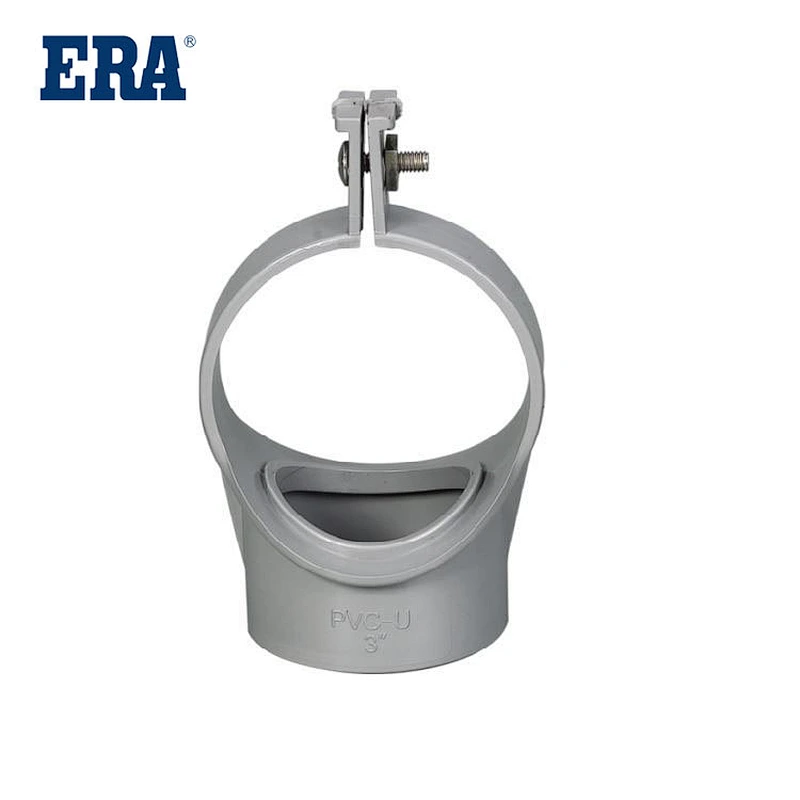
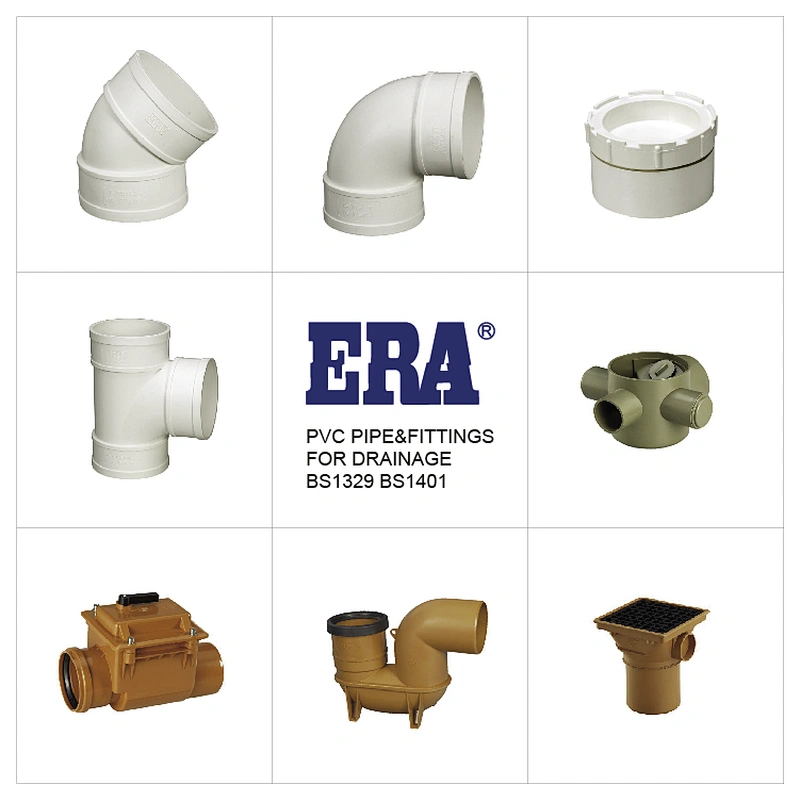
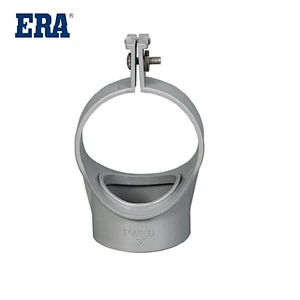
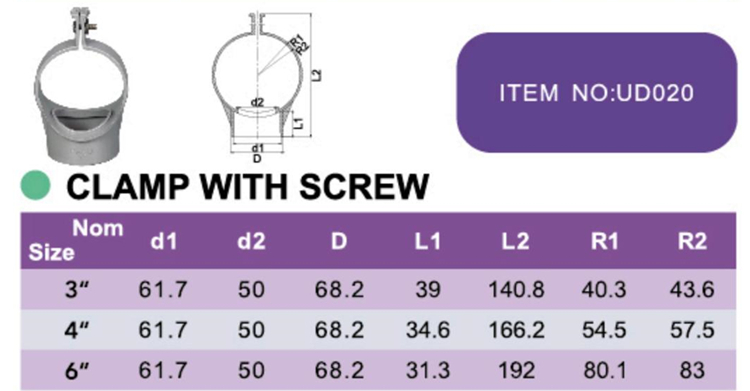
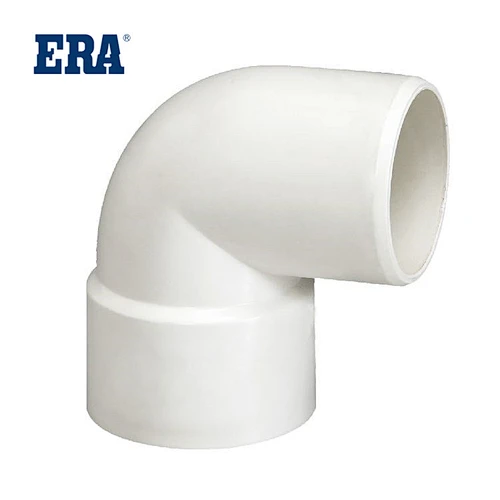
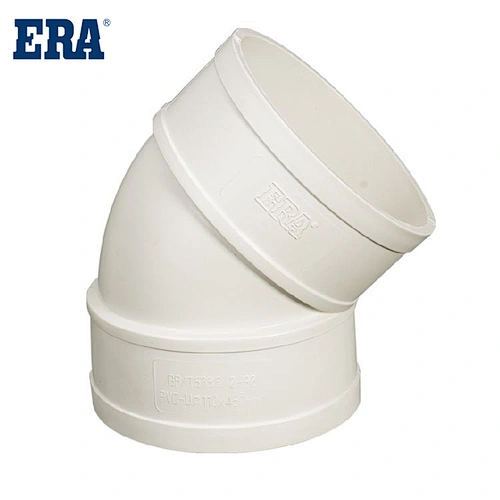
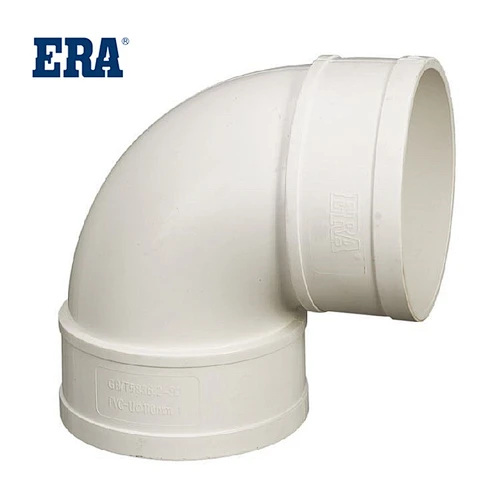
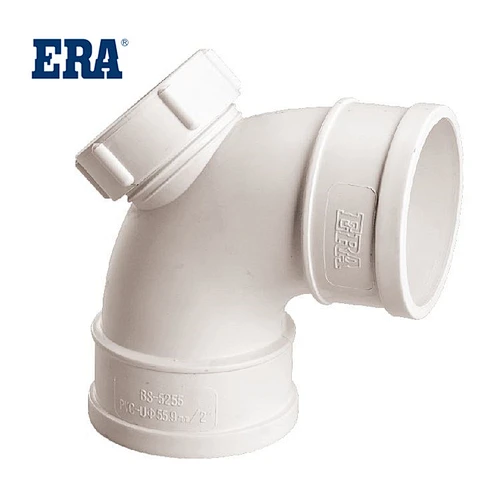
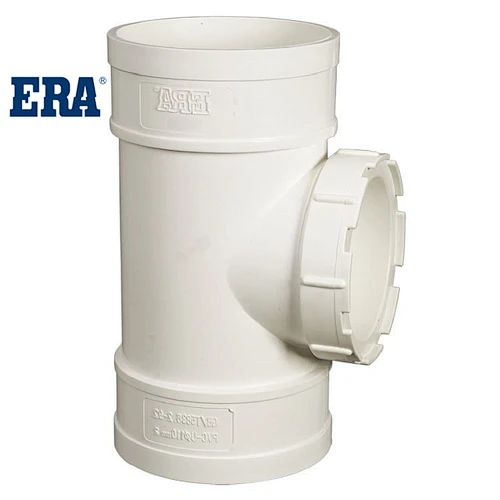
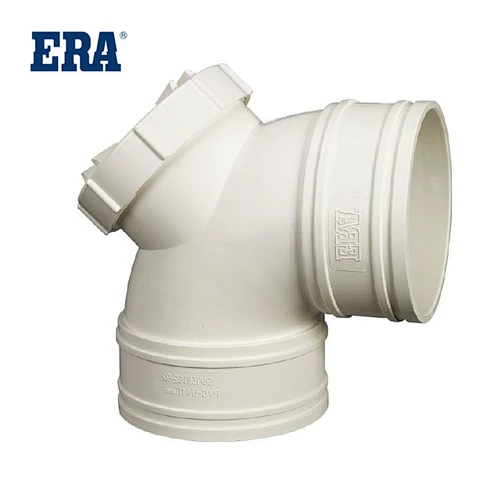
There are various classifications of"clamps"in the field of pipelines, each with its own characteristics and uses.
1、 Pipe clamp
Definition: A pipe clamp is a short, cylindrical pipe connector with internal threads on both ends, used to connect two pipes or fittings with external threads. It is a common fixed connection in traditional pipeline systems
Applicable materials: Commonly used in metal pipelines (such as galvanized steel pipes, stainless steel pipes, etc.).
Features:
——Threaded connections require the use of raw tape or sealant to ensure sealing;
——Fixed connection, not easy to disassemble after installation;
——Emphasize high strength, sealing, and pressure resistance.
Working principle: Connect two pipes end-to-end through threads or welding to ensure pipe continuity and sealing.
● Features: - Fixed connection, disassembly requires tools.
——Commonly used in sealing scenarios such as water pipes and gas pipes.
——Strong pressure bearing capacity, suitable for medium and high pressure pipelines.
Application scenarios: Commonly used in galvanized steel pipes, plumbing, gas, and fire pipeline systems. In addition, in everyday language,"pipe clamp"is sometimes used as a general term to refer to various ring fittings used for pipeline connection or fixation. In this case, clamps, throat clamps, and clamps are generally classified as"pipe clamps"because they all serve to fix or connect pipelines.
2、 Clamp: connection achieved through clamping
A clamp is a circular metal fixing device that is clamped and connected through structures such as bolts, locks, or steel wires. It is widely used for quick installation, repair, or fixation of pipelines, fittings, or valves, especially in grooved pipeline systems.
Working principle: The clamp wraps around the connection part through its own annular structure. When the bolt or lock is tightened, the internal rubber sealing gasket is compressed, thereby forming a good seal and fixation with the surface of the pipeline.
Features: Quick installation, no need for threads, suitable for emergency construction. ——Equipped with rubber gaskets, with moderate sealing performance. ——Detachable, suitable for frequent scene adjustments. ——Medium pressure bearing capacity, lower than pipe clamps.
Common types: Depending on the material and structure, clamps can be divided into two categories: steel wire clamps and cast iron clamps. ——Steel wire clamp: made of elastic steel wire, suitable for connecting small-diameter pipes such as hoses, with a simple structure and easy installation. ——Cast iron clamp: made of ductile iron, it is a commonly used groove connector for medium and large pipelines (such as fire pipes), with good sealing and pressure bearing capacity.
Application scenarios: Mainly used for connecting groove fittings, quick repair of hard pipes, and fixing pipelines in fire protection, water supply and drainage, and industrial pipelines.
3、 Clamp: a fastener used to support and secure pipelines
Definition: A clamp is a circular or semi-circular metal structural component mainly used to fix pipelines to walls, brackets, or hangers, achieving functions such as support, stability, and limiting. It is an important auxiliary fixing component in pipeline installation.
Working principle: The clamp wraps around the pipeline through a circular or U-shaped structure, and is fixed to a predetermined surface (such as a wall or bracket) using bolts or screws, applying clamping force to the pipeline to ensure its stability.
● Features:
——Strong load-bearing capacity, suitable for supporting medium and large pipelines.
——Fixed and stable, suitable for long-term use.
——Not under pressure, only used for support and limiting.
——Installation requires drilling or bolts, and disassembly is more complex.
● Common types:
——U-shaped clamp: resembling a U-shaped bolt, commonly used for fixing circular pipes.
——Circular/ring-shaped clamp: mostly consisting of two pieces, wrapped in a circular clamping mechanism.
——Ω - shaped/saddle shaped clamp: with an open design, suitable for easy fixation.
● Application scenarios:
——Fixed installation brackets for building pipelines;
——Cable conduit and pole fixation in the power industry;
——Chemical, petroleum and other industrial pipeline support systems;
——Horizontal/vertical fixation of air conditioning, exhaust, and plumbing pipes.
4、 Throat clamp: a small clamp specifically designed for hose connections
Definition: A throat clamp is an adjustable strap that is tightened with bolts or nuts to secure the connection between a hose and a hard tube.
Working principle: The throat clamp adjusts the tightness of the circular metal band through screws, tightly wraps the hose, and applies uniform pressure to make the hose fit tightly with the joint, preventing leakage or loosening.
● Features:
——Small, lightweight, and easy to operate;
——Commonly used are spiral and rack tightening structures;
——Most of them are made of stainless steel or galvanized carbon steel, which are corrosion-resistant;
——The tightening range is limited and suitable for soft materials.
● Common types:
——American style throat clamp: narrow band, suitable for small diameter pipes;
——German style throat clamp: uniform force, suitable for high pressure;
——T-shaped throat clamp: with strong pressure resistance, suitable for large diameter pipelines;
——Spring type throat clamp: It uses elastic tension to automatically adjust and adapt to thermal expansion and contraction.
● Application scenarios:
——Household water hose connection (such as washing machine inlet pipe);
——Automotive oil and water hose connections;
——Industrial hoses (such as air pipes, water pipes, and oil pipes) can be quickly fixed.
5、 Directly
Definition: Direct (also known as straight through) is a broader term that typically refers to a joint used to connect pipes in a straight line, with specific forms depending on the pipe material and connection method.
Applicable materials: Widely used in various pipeline systems, including PPR pipes, PVC pipes, PE pipes, composite pipes, etc.
Features:
——Various connection methods: hot melt, adhesive, thread, etc;
——Emphasize convenience and flexibility;
——The appearance and structure vary depending on the material (such as PPR/PE being directly hot-melt, PVC being directly adhesive).
The outdoor comprehensive pipeline network, also known as the building external supporting pipeline network system, is an important part of maintaining the operation of urban infrastructure. Its composition is complex and functionally critical, covering various professional pipelines such as drainage systems (sewage pipes, rainwater pipes), thermal pipelines, gas pipelines, water supply systems (tap water, reclaimed water, purified water pipes), communication and intelligent pipelines (telephone, cable TV, broadband network), and power pipelines.
Given its complexity and importance, scientific planning and full process control must be carried out in the early stages of design to avoid potential problems. This article will systematically sort out the avoidance logic of comprehensive pipeline network design from three aspects: the"four principles of plane coordination", the nine criteria of vertical elevation avoidance, and the priority order of cross layout.
1、 The"Four Principles"of Outdoor Integrated Pipe Network Construction (Plane Coordination)
(1) Pressure pipelines make non pressure pipelines
Non pressure pipelines (such as rainwater and sewage drainage pipes) rely on gravity flow and have strict requirements for slope and elevation, making it difficult to adjust arbitrarily. Therefore, pressurized pipelines (such as water supply and gas) should be actively avoided to ensure the smoothness and safety of the drainage system.
(2) Temporary pipelines make way for permanent pipelines; Shallow buried pipeline allows deep buried pipeline
The construction of deep buried pipelines is difficult, involving complex excavation depth and support, and high adjustment costs. Shallow buried pipelines are relatively flexible, and actively avoiding them can reduce design changes and earthwork volume.
(3) Single tube makes double tube
Double pipe systems, such as thermal supply and return pipes, are more complex in terms of spatial layout and system coordination, making adjustment difficult. The single tube system has a simple structure and is suitable for position adjustment.
(4) Flexible pipes make rigid pipes
Flexible pipelines (such as PE, PVC, etc.) have certain bending adaptability and can adjust their direction within a certain range. However, rigid pipelines (such as cast iron pipes and concrete pipes) are not prone to change direction, and their path changes should be avoided as much as possible during construction.
Design inspiration: Plane avoidance is not only about spatial coordination, but also about construction efficiency and system stability. Clarifying the essence of 'who allows whom' is the key to optimizing pipeline layout.
2、 Principle of vertical layout avoidance for comprehensive pipeline network (elevation coordination)
(1) Gravity flow pipeline avoids pressure flow pipeline
Gravity flow pipelines must maintain a continuous slope and cannot change direction through pressurization like pressure flow pipelines. Therefore, when crossing vertically, pressure flow pipelines should actively avoid it.
(2) Flexible pipeline avoids rigid pipeline
Flexible pipelines have a small bending radius and are suitable for flexible installation in elevation changes; If the elevation of rigid pipelines needs to be adjusted, it is often necessary to add fittings, which increases the difficulty of construction.
(3) Branch pipelines should avoid the main pipeline
The main pipeline undertakes the core transportation function of the system, and once its path and elevation are set, they should not be easily changed. The branch pipeline has a small impact range and is relatively easy to adjust.
(4) Small diameter pipelines should avoid large diameter pipelines
Large diameter pipelines have a large volume, wide excavation surface, complex construction, and high avoidance costs; Small pipelines are easier to adjust elevation during construction.
(5) Layout of power and communication pipelines on different sides
The power pipeline should be arranged on the east or south side of the road, and the communication pipeline should be arranged on the west or north side. This not only avoids signal interference from electricity to communication, but also facilitates later maintenance and management, reducing cross construction conflicts.
(6) Pipelines with similar properties and burial depths shall be laid in the same trench or trench
Beneficial for unified excavation, reducing construction costs, and facilitating subsequent centralized maintenance and system management.
(7) New pipeline to avoid existing pipeline
The existing pipeline system is in operation, and the cost of renovation or relocation is high and has a wide impact. New pipelines should actively consider avoidance in their design.
(8) Pipelines with small construction volume should avoid pipelines with large construction volume
Large scale pipeline engineering construction is complex and time-consuming, and it is not advisable to easily adjust the path. Small scale pipelines are more suitable for local path optimization.
(9) Frequent maintenance or concealed pipelines should be placed in locations that are convenient for maintenance
Components that require frequent operation, such as valves and instruments, should be located in easily accessible positions to improve maintenance efficiency.
Design inspiration: Elevation coordination is the core of three-dimensional spatial layout. Reasonable vertical design can not only avoid cross conflicts, but also improve the reliability and maintainability of the pipeline system.
3、 Cross arrangement order (cross priority)
(1) All types of engineering pipelines should not overlap and be buried directly in the vertical direction
Overlapping laying can cause construction interference, difficulty in maintenance, and even pose safety hazards, and must be arranged in a staggered manner.
(2) The water supply pipeline is located above the drainage pipeline
The water supply is pressurized clean water, and the drainage is gravity flow sewage. Placing the water supply pipe above can prevent drainage leaks from contaminating drinking water.
(3) Gas pipelines should be located above other pipelines (excluding thermal pipelines)
Gas is a flammable and explosive medium, and its placement in the upper part is conducive to the diffusion of leaked gas, avoiding the accumulation of safety hazards in low-lying areas.
(4) The power pipeline should be located below the thermal pipeline and above other pipelines
Power pipelines need good heat dissipation, and should avoid being affected by thermal pipelines. At the same time, they should also be kept away from dangerous pipelines such as gas.
(5) The thermal pipeline should be higher than the gas pipeline and water supply pipeline
The temperature of the thermal pipeline is relatively high, and it should be avoided from posing a threat to the lower flammable gas pipeline and the water supply pipeline that is easily affected by heat.
(6) The elevation of engineering pipelines at intersections should be determined based on the elevation of drainage pipelines
The drainage pipeline is designed for non pressure flow and has strict requirements for slope. It should be given priority consideration as a benchmark pipeline in elevation coordination.
Design inspiration: Cross processing is the most sensitive and critical link in pipeline network design. Clear priority order is the foundation for ensuring system security and preventing cross interference.
In summary, the design and construction of outdoor comprehensive pipeline networks are not simply"pipe laying and wiring", but a technical task that integrates engineering logic and system thinking. The seemingly simple principle of 'who gets who' is actually directly related to the design efficiency, construction cost, and long-term operational safety of the project. By mastering these avoidance logics proficiently, designers can not only effectively reduce rework on drawings, but also take the initiative in multi-party coordination, improving the overall quality and efficiency of the project.
Construction of municipal water supply and drainage pipelines: full analysis of six key links, making rework impossible to escape
Municipal water supply and drainage pipelines are the lifeblood of cities, and their construction quality directly affects urban safety and livelihood security. However, any negligence in any aspect such as trench collapse, interface leakage, or inadequate backfilling can lead to the entire pipeline being"overturned and restarted", causing huge economic losses and project delays.
1、 Preparation work before construction - lay a solid foundation and take preventive measures
On site investigation: not just 'looking at the site'
On site investigation is not a simple site inspection, but a systematic project. In addition to topographic survey, it is also necessary to clarify the distribution of soil layers, groundwater level, and bearing capacity through geological drilling; At the same time, pipeline detectors must be used to accurately locate existing pipelines and draw a"three-dimensional map of underground pipeline networks". For important nodes, exploration pits should be excavated for on-site verification to provide reliable basis for subsequent construction plans.
Material and equipment inspection: ensure the"entrance is closed"
The entry of pipes must follow the"three inspections"system: inspection certificate, inspection type inspection report, and on-site measured data. For plastic pipes such as PE and PVC, it is important to focus on checking the uniformity of wall thickness and color consistency; Concrete pipes should be struck and listened for sound to detect their internal density. All construction machinery must hold a"physical examination certificate"before taking up their posts, especially the safety devices of lifting equipment must be double verified.
Construction plan: not just 'paper work'
The special construction plan should have true guidance, including accurate calculation sheets for trench support, detailed layout plans for dewatering wells, scientific traffic diversion plans, and specific environmental protection measures. For high-risk projects such as deep excavations and adjacent buildings, it is necessary to organize expert discussions and refine emergency plans for each operational link.
Measurement and laying out: Establishing an"unshakable benchmark"
Using high-precision total station to set up pipeline control network and establish a combination of permanent and temporary control point system. All measurement data must undergo a three-level verification of"measurement re verification"to form a complete measurement record chain. Any design changes must go through a formal change process to ensure absolute consistency between the site and the drawings.
2、 Trench excavation and foundation treatment - shaping a solid 'breeding ground'
Accurate excavation: not just 'digging a trench'
The excavation process is dynamically monitored, and a laser rangefinder is used to detect the elevation of the trench bottom in real time. When encountering unknown obstacles, immediately initiate the"Discover Report Handle"procedure, and blind construction is strictly prohibited. In the area close to the operating pipeline, manual excavation must be used to ensure the safety of existing facilities.
● Scientific support: Equipping trenches with"armor"
Select the support method based on the measured soil data: for cohesive soil, slope excavation combined with surface mesh support can be used; The quicksand formation must be supported by sheet piles combined with well point dewatering; The solution of using steel sheet piles with internal support is required for the adjacent building area. All supporting structures must undergo displacement monitoring to ensure absolute safety.
● Fine leveling: creating a"flat foundation bed"
When mechanical excavation reaches 20cm above the design elevation, manual bottom cleaning should be switched to avoid over excavation and disturbance of the foundation. If encountering weak soil layers, replacement and filling treatment should be carried out according to the survey report. The replacement and filling materials should be compacted layer by layer, with a compaction degree of not less than 90%. After the base is leveled, a 3m ruler is used for inspection, and the flatness deviation is controlled within 2cm.
Bedding construction: the"first guarantee"for pipelines
Strictly follow the thickness and material requirements of the design to lay the cushion layer, using well graded medium coarse sand or crushed stone, and removing aggregates with excessive particle size. When laying, the"grid"method is used to control the thickness, and a flat plate vibrator is used to compact in layers to ensure uniform density.
3、 Pipeline installation - pursuit of millimeter level accuracy
Pipe inspection: eliminate the practice of"working with defects"
Establish a"re inspection before installation"system, focusing on checking whether the working surface of the socket is smooth, whether the rubber ring groove size is accurate, and whether the sealing ring is aged or deformed. For electric fusion connection pipelines, it is necessary to verify the compatibility between heating parameters and the on-site environment to ensure that everything is foolproof.
● Precise lifting: Let the pipeline be"gently positioned"
Special lifting straps are used for hoisting large-diameter pipelines, and two or more lifting points are set up to maintain balance. The process of entering the groove should be slow and smooth, guided by a flexible slide to avoid collision with the groove wall. Immediately fix the pipeline with adjustable supports after positioning to prevent displacement.
● Interface processing: Hold onto the 'lifeline'
The rubber ring interface should ensure that the rubber ring is not twisted or offset, and special lubricants should be used during installation; The hot melt connection should strictly control the heating temperature, time, and pressure to ensure the quality of the fusion; The welding interface should be inspected for quality in layers and undergo non-destructive testing. After each interface is completed, it should be marked and a quality traceability file should be established.
Accurate positioning: ensuring smooth water flow
During the pipeline installation process, a measuring point is set every 3 meters, and a level is used to monitor the elevation throughout the entire process. A theodolite is used to control the centerline. Especially at the turning points and interfaces of the slope, it is necessary to increase the number of measuring points to ensure the continuous and accurate slope, laying the foundation for smooth water flow.
4、 Backfilling construction - carefully constructing a"protective layer"
Acceptance before backfilling: Adhere to the principle of"zero hidden dangers"
Before backfilling, organize the construction, supervision, and construction units to conduct a joint acceptance to confirm that the pipeline installation quality, interface integrity, and pier stability are all qualified. Special attention should be paid to checking whether the bottom of the pipeline is tightly adhered to the cushion layer to eliminate any potential hanging hazards.
Layered backfilling: follow the principle of"thin paving and frequent compaction"
Strictly implement the layered backfilling system, with each layer's virtual paving thickness not exceeding 30cm. Use a nuclear density meter to test the compaction degree layer by layer to ensure that it meets the design requirements. For areas around inspection wells and pipeline intersections that are difficult to compact mechanically, small impact hammers are used to strengthen compaction.
● Symmetrical backfilling: maintaining"balance of power"
Synchronize backfilling on both sides of the pipeline, with a height difference controlled within 20cm. During the backfilling process, set up displacement monitoring points to monitor the vertical and horizontal displacement of the pipeline in real time. If any abnormalities are found, adjust the backfilling plan immediately. This is the core measure to prevent pipeline displacement.
Fine operation:"protection"from top to bottom
Manual compaction is used within 50cm of the pipe top, and large machinery is prohibited. After exceeding 50cm, the mechanical compaction should also control the vibration force and passage frequency to avoid excessive compaction causing damage to the pipe body. After each layer of backfilling, it is necessary to carry out flatness adjustment to create conditions for subsequent road construction.
5、 Quality Inspection and Acceptance - The Ultimate Test of Data Speaking
Pressure testing: Strength testing of water supply pipelines
The water supply pipeline strictly follows the"segmented overall"two-level pressure testing system. The test pressure is 1.5 times the working pressure and not less than 0.8 MPa. During the stabilization period, the pressure drop shall not exceed the allowable value specified in the specifications. Only when all interfaces are free of leakage and damage, can they be considered qualified.
● Tightness testing:"Smooth verification"of drainage pipelines
The closed water test of the drainage pipeline should be carried out in sections, with a constant pressure of 30 minutes at the specified head height, to calculate whether the seepage volume meets the standard. Simultaneously conduct a water flow test to check if the water flow is unobstructed and if there is any reverse slope, ensuring that the system functions properly.
● Acceptance of ancillary facilities: do not overlook any details
The acceptance of inspection wells should ensure that the quality of masonry, internal and external painting, ladder installation, and the straightness of flow channels are all qualified. The installation of manhole covers should be smooth and firm, with a smooth connection to the road surface. All details are related to the overall quality of the project.
● Data archiving: Establish a"lifelong ID card"
From measurement and layout to final acceptance, all construction records, inspection reports, and image data must be organized and archived to form a complete quality traceability chain. This is a necessary condition for engineering acceptance and an important basis for later maintenance.
6、 Summary of Key Control Points -"Construction Proverbs"condensed from experience
Standardization is the key, responsibility is assigned to individuals
Strictly implement national standards such as the"Code for Construction and Acceptance of Water Supply and Drainage Pipeline Engineering"(GB 50268), establish a clear responsibility system, and have clear responsible persons and acceptance personnel for each link.
Pay close attention to the key points and strictly guard against them
Make concealed engineering, interface quality, and backfill compaction the three key control points, implement the"key monitoring of key areas"strategy, and ensure that these most prone to problems are foolproof.
Special working conditions, special treatment
Develop a special drainage plan for rainy season construction; Reinforcement measures should be taken for soft soil foundation; Good precipitation support should be provided in areas with high water levels; A special protection plan should be formulated at the intersection of pipelines. The unchanging construction method is destined to fail.
● Leave traces throughout the entire process, with traceable quality
Establish a full process image recording system from material entry to completion acceptance, especially for concealed works and key processes, clear image data must be retained to provide intuitive basis for quality traceability.
The construction of municipal water supply and drainage pipelines is a systematic project, and any negligence in any link may result in the failure of previous efforts. Only by translating regulatory requirements into concrete actions, integrating experience and lessons learned into construction practice, and truly achieving"standards in the heart, standards in the hands, and quality in the eyes", can we build high-quality projects that can withstand the test of time and achieve the ideal goal of"managing for a hundred years and benefiting every household".


 English