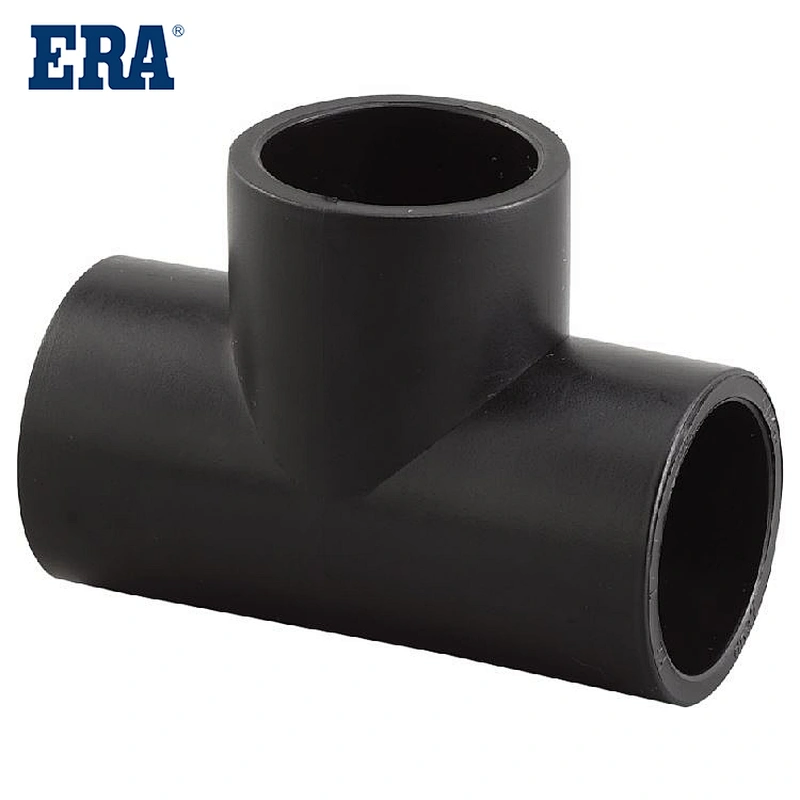
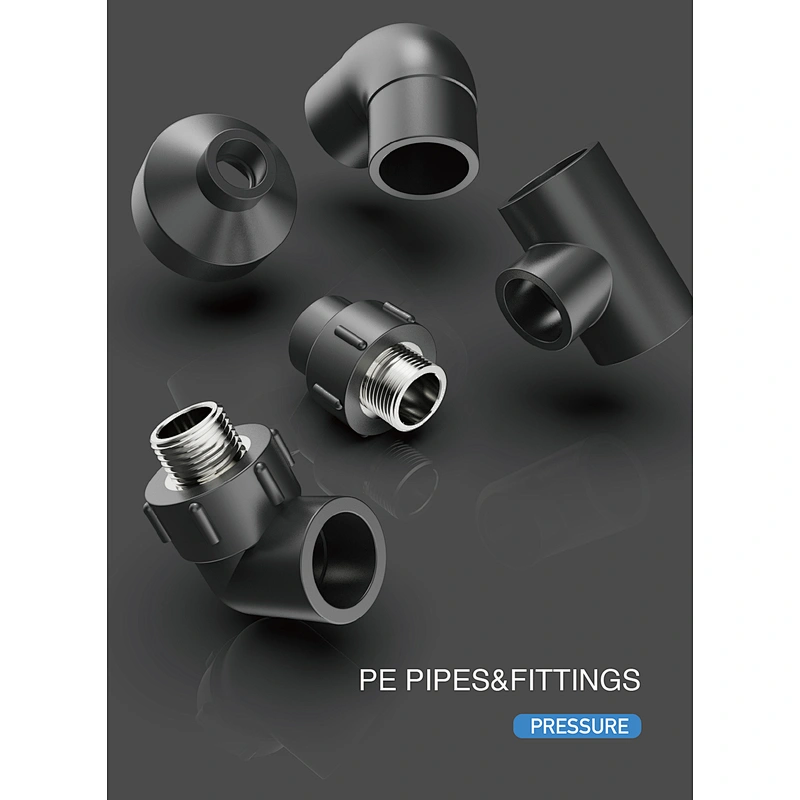
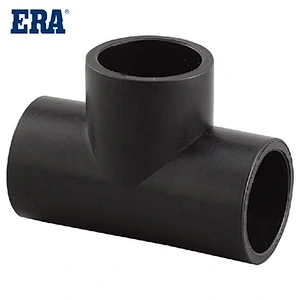
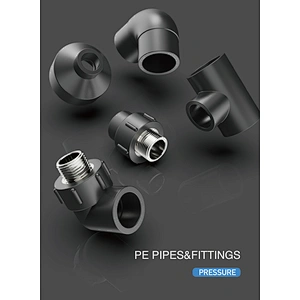
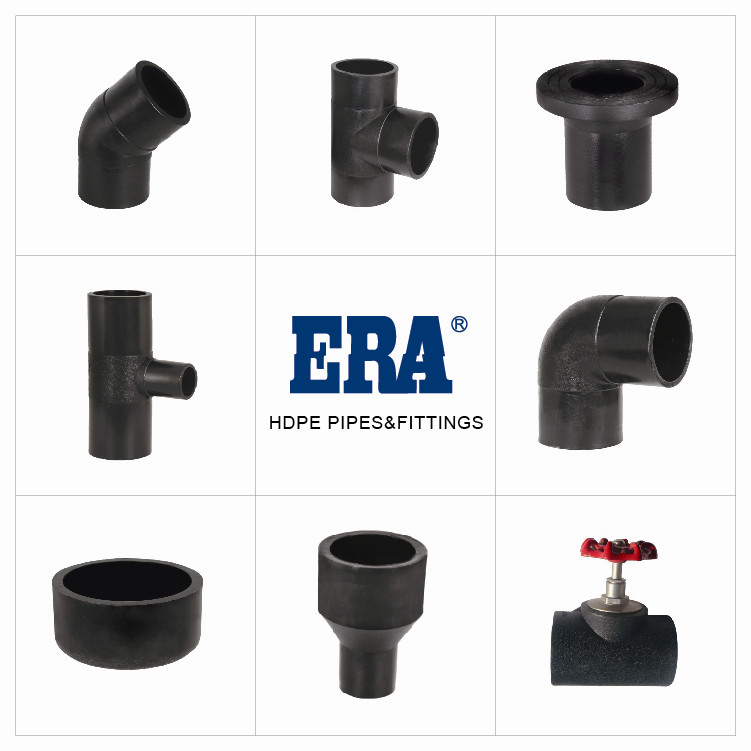
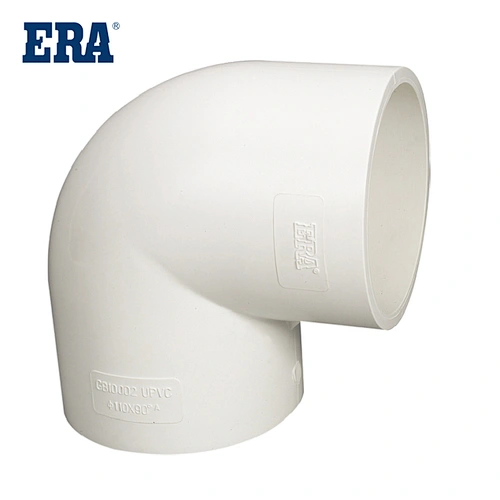
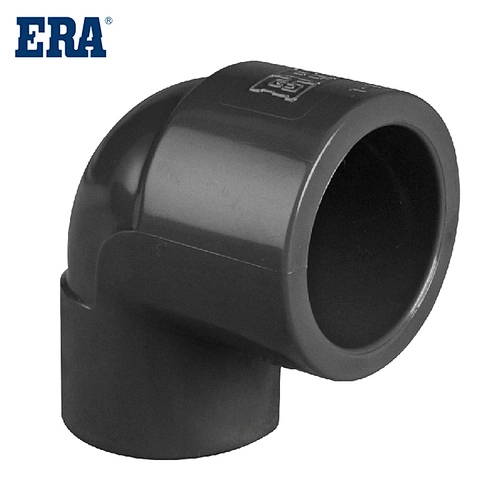
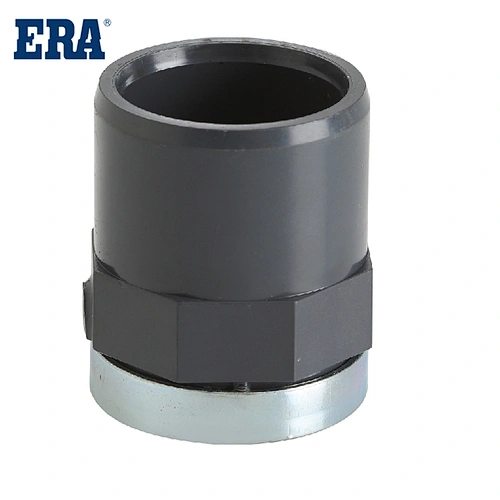
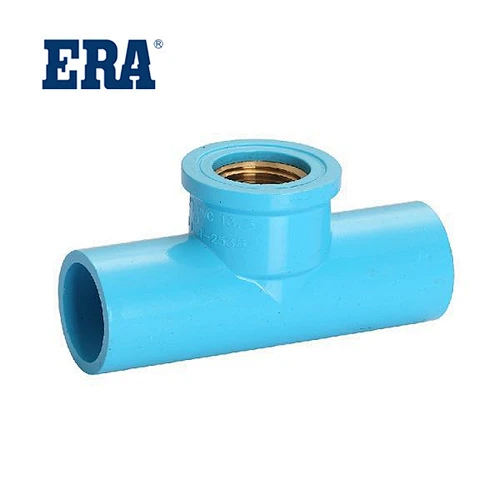
ERA Brand PE Butt Welding PE Fitting For Tee
Specification:
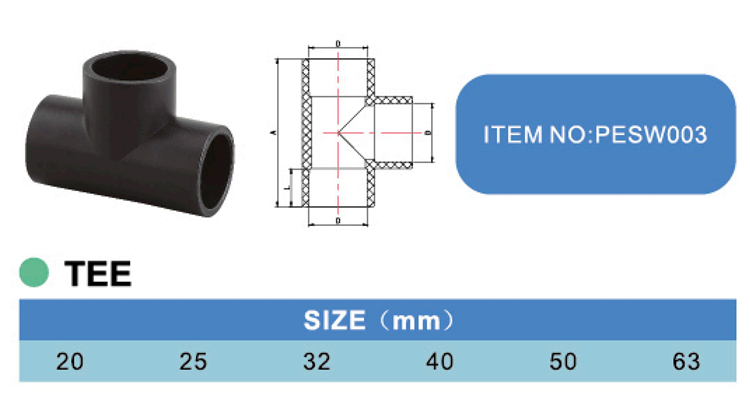
Model Number | PESW003 | Material | PE/HDPE |
Description: | Tee | Color: | black |
Size: | 20mm | Certificate: | CE WRAS |
Features:
The compression fittings for HDPE pipe are made by high quality PP material with UV protection, both material and fittings are approved use with drinking water.
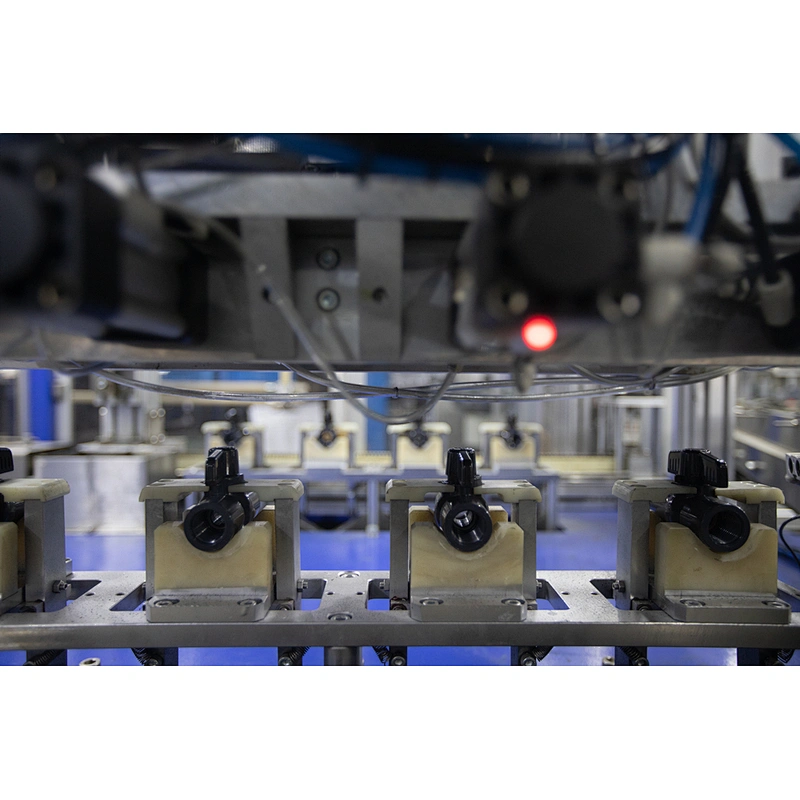
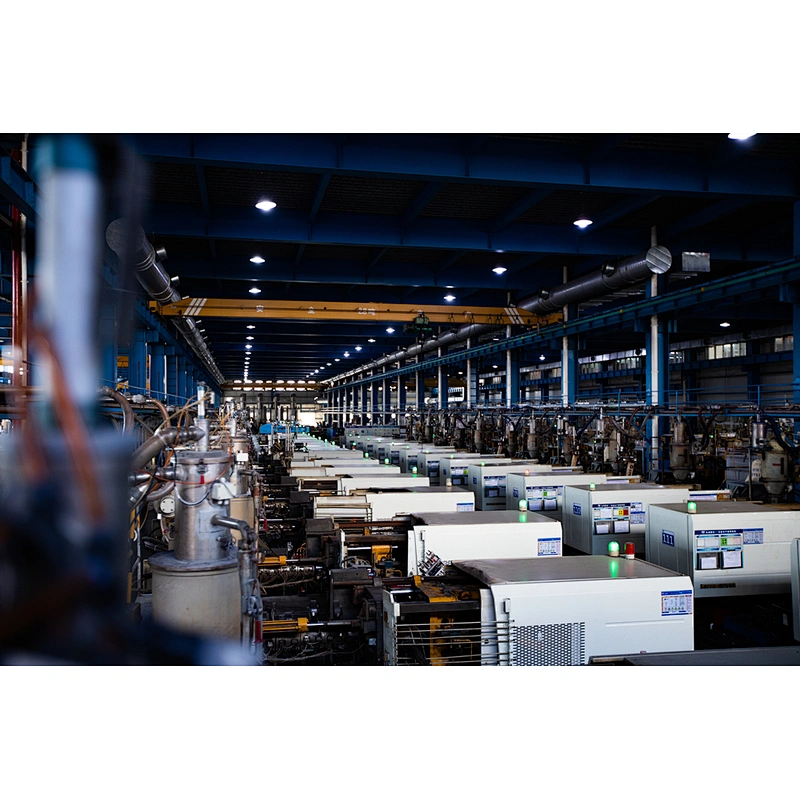
PP Compression Fittings is fabricated and designed using premium quality basic material and progressive technology.
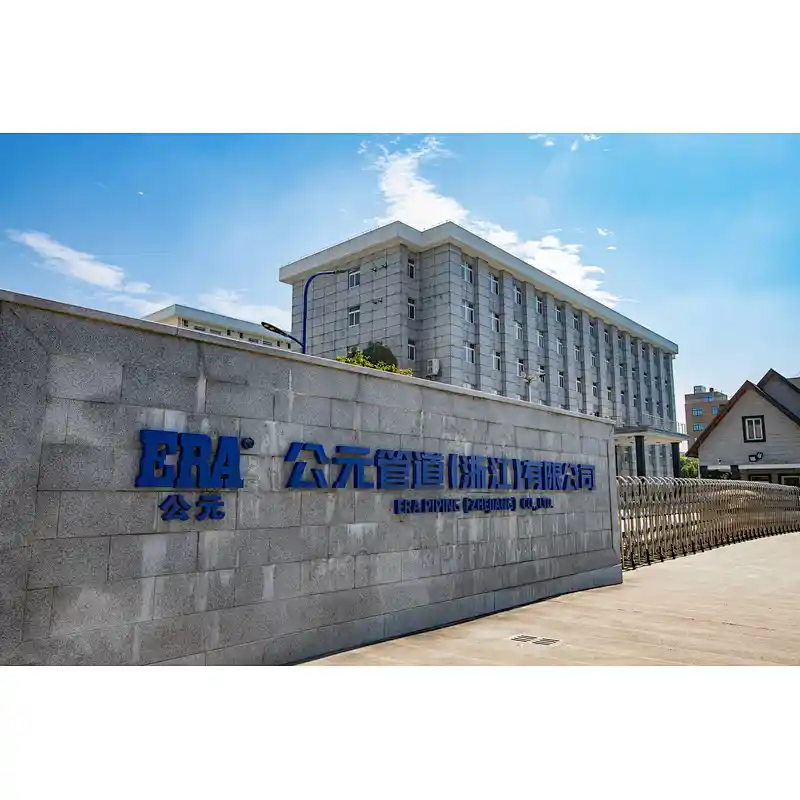
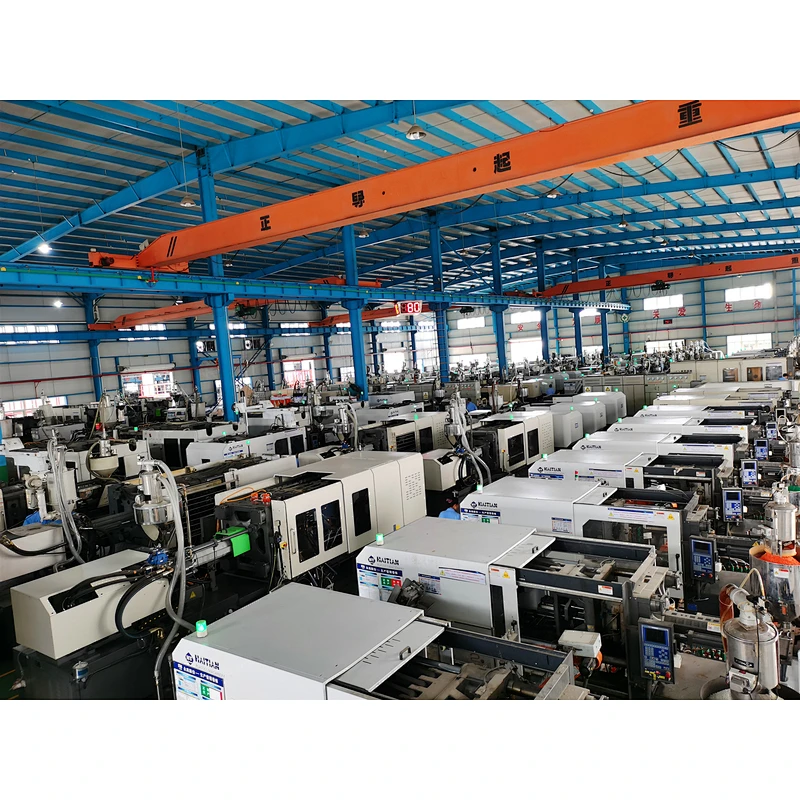
Our company is one of the great manufacturers from all around the world.
The high-quality material used in the product has an application in the area of water distribution, irrigation, swimming pools, and cable conduits.
Fast & Reliable Connection: Split ring opening has been optimized to make pipe insertion even easier.
1.Extended Service Life
HDPE pipe is a safe and durable product ideal for your piping infrastructure. The service life of HDPE is estimated to be between 50 to 100 years, depending on application, design and installation.
2.Trenchless Installation
Traditional piping systems are installed by open cut (digging a ditch), resulting in traffic and environmental disruption. HDPE can be installed using this traditional open-cut method or by utilizing eco-friendly trenchless technology.
For trenchless installation, a horizontal directional machine bores a continuous hole beneath the ground. When the drilling head reaches the end of the bore, the pipe is attached and pulled back through the hole.
The flexibility of HDPE, combined with its outstanding tensile strength and abrasion resistance, make it the preferred and proven choice for trenchless installation technology
What is hdpe material?
HDPE is a kind of opaque white wax-like material, light specific gravity than water, specific gravity is 0.941~0.960, soft and ductile, but slightly harder than LDPE, also slightly able to stretch, non-toxic, tasteless. It is the product of polymerization under low pressure under the catalysis of Ziegler catalyst, so high density polyethylene is also called low pressure polyethylene.
Unique to the various grades of HDPE is the appropriate combination of four basic variables: density, molecular weight, molecular weight distribution, and additive. Different catalysts are used to produce custom polymers with special properties. These variables are combined to produce different HDPE grades for different purposes; Achieve the best balance of performance.
Advantages of HDPE
1, HDPE has excellent resistance to most life and industrial chemicals, it can resist strong oxidant, acid, alkali salt and organic solvent corrosion and dissolution.
2, HDPE does not absorb moisture and has good waterproof steam property, can be used for moisture-proof and impermeable or packaging.
3, HDPE has good electrical properties, especially high insulation dielectric strength, so that it is very suitable for wire and cable. Medium to high molecular weight classes have excellent impact resistance at room temperature and even at temperatures as low as -40F.
4, HDPE has good machinability and heat sealing.
5, HDPE has a high degree of paper-like, crisp and open, hardness of LDPE film 4~5 times. Its surface hardness, tensile strength, rigidity and other mechanical strength close to PP, tougher than PP.
6, HDPE is non-toxic and odorless, can also be used for food, clothing, knitwear and other packaging materials, affordable, low price.
Color identification is a widely used method for quick identification in the pipeline industry, but when you really flip through the standards, you will find that the blue, yellow, and red lines on the same black pipe may have completely different meanings, because the color code rules follow the product system and execution standards, not the two words"PE".
1、 Ordinary PE solid wall water supply pipe:"black pipe+blue line"has clear basis
The most common PE water supply solid wall pipe has clear color rules. The current GB/T 13663.2-2018"Polyethylene (PE) piping systems for water supply - Part 2: Pipes"stipulates that the pipes should be black or blue, and at least three blue color bars should be extruded on the black pipes and evenly distributed along the circumference of the pipes. Blue pipes are only used for concealed installation.
So when you see a black PE solid wall pipe with a blue color strip, there is a standard basis to first judge it in the direction of the water supply pipe. But this is just a quick identification. When it comes to actual on-site acceptance or procurement, we still need to continue monitoring the body identification, implementing standards, specifications, SDR, and pressure levels. We cannot end it just by seeing the blue line.
2、 Gas PE solid wall pipe: cannot be simply labeled as a"yellow line"now
The color rules for PE solid wall pipes used for gas have been adjusted in the 2023 version of the new standard, which deserves special attention. GB/T 15558.2-2023"Underground Polyethylene (PE) Pipeline Systems for Gas Use Part 2: Pipes"stipulates that PE100 and PE100-RC black pipes shall be co extruded with at least 3 orange color stripes, and PE80 black pipes shall be co extruded with at least 3 yellow color stripes.
This means that the simple correspondence of"yellow line=gas"in the industry in the past is no longer accurate enough. Now we can also see the yellow colored strip of gas PE solid wall pipe, which may correspond to PE80 grade pipe material; The PE100 level gas PE pipe has an orange color stripe. If the gas properties are only judged by the"yellow line", there may be omissions or misjudgments on PE100 pipes.
3、 Steel wire mesh skeleton composite pipe: rules have changed again
The steel wire mesh skeleton PE composite pipe is really easy to get everyone involved. Although both it and ordinary PE solid wall pipes use a large amount of polyethylene, the product system is different and the implementation standards are also different, so there is naturally another set of color rules.
CJ/T 189-2007"Steel Wire Mesh Skeleton Plastic (Polyethylene) Composite Pipes and fittings"distinguishes the outer color of pipes according to their purpose:
| Usage | Color requirements in CJ/T 189-2007 |
| Used for water supply | Black or blue, the black tube should have a blue color bar |
| Gas use | Black or yellow, the black tube should have a yellow color bar |
| Used for special fluids | Black or red, the black tube should have a red color bar |
That is to say, in this standard system, the red color bar corresponds to"for special fluids", and the original text of the standard is not directly written as"red line=mining".
In addition, there is GB/T 32439-2015"Steel Wire Mesh Reinforced Polyethylene Composite Pipes for Water Supply", which is only for water supply purposes and has clear provisions: the pipe material should be black with a blue color strip. So, for the same"steel wire mesh skeleton pipe", it is necessary to first determine which standard it follows and what scene it is used for, in order to correctly interpret the color of the color bar.
4、 What is the common"red line mining pipe"in the market?
In the actual market, it is indeed common to see some mining steel wire mesh skeleton composite pipes using black pipe bodies with red color bars, which has led to the industry's empirical judgment that"the red line is mining". But this judgment cannot be extended to all mining PE pipes.
Taking MT/T 558.1-2005"Plastic pipes for underground coal mines - Part 1: Polyethylene pipes"as an example, the standard focuses on requirements such as usage classification, flame retardant and anti-static performance, safety signs, and product identification, but does not stipulate that"mining PE solid wall pipes must use red color markings". The classification logic of this standard is to classify mining water supply and drainage pipes, spraying pipes, positive pressure air pipes, negative pressure air pipes, gas drainage pipes, etc. according to their purposes, and color bars are not mandatory requirements.
A more accurate understanding is that the red color bar is common in some mining steel wire mesh skeleton composite pipes, but it is not a uniform mandatory identification for all mining PE pipes. Seeing the red line, one can associate it with mining or special fluid applications, but it cannot be used as a standard basis to draw conclusions.
5、 Correct order of color markings
Putting these sets of standards together, the logic becomes clear:
Ordinary PE solid wall pipes and steel wire mesh skeleton PE composite pipes are not the same product system, and cannot be judged by the same set of color formulas.
When quickly identifying on site, you can first look at the color as a preliminary impression; But to truly confirm the purpose, it's best to follow this order:
The first step is to see what kind of pipe it is. Is it a regular PE solid wall pipe or a steel wire mesh skeleton composite pipe? The product type determines which set of color rules it applies to.
The second step is to determine what standards to implement. The meaning of the color bar may be completely different for the same black tube body, whether it complies with GB/T 13663.2, GB/T 15558.2, or CJ/T 189-2007.
Step three, monitor the complete identification of the body. The outer wall of the pipe is usually printed with information such as nominal outer diameter, nominal pressure, material grade, and implementation standards, which are the hard basis for determining the purpose.
Step four, finally make a judgment based on the color bar. Color bars are auxiliary identification tools, not decisive criteria.
This way, it is not easy to mistake the product's purpose for a blue, yellow, or red line. Industry experience can help us respond quickly, but standard text is the ultimate basis.
During the acceptance inspection of PE water supply pipes, in addition to checking the certificate of conformity, it is also necessary to verify whether the product meets the design requirements, whether the data and physical objects correspond, whether there are any abnormalities in appearance and storage status, and whether the project requires re inspection. These links are indispensable, but in practical operation, each has its own pitfalls.
1、 First, confirm if it is the type of management required for the project
This step may seem the simplest, but it is the most prone to problems on site.
The appearance of PE water supply pipes looks similar, but the specifications, SDR series, pressure rating, and material rating are not the same. What specifications, pressure levels, and execution standards are required for the project, and the products delivered should correspond to the design documents and procurement list.
For example, if the design requires a certain caliber, SDR, and pressure rating, even if the actual products on site are PE water supply pipes, as long as the model, grade, or execution standards are inconsistent, they cannot be released directly because they are all PE pipes. The long-term strength of PE100 and PE80 is different, and the wall thickness and pressure bearing capacity of SDR11 and SDR17 are also different. The consequence of mixing them is not that they can be used, but that they may fail prematurely under design pressure.
So the first step in entering the site is to put together the design requirements, procurement list, and on-site physical items for verification. If there are obvious differences in product name, specifications, grade, quantity, etc., first clarify the problem and then discuss the acceptance later. If the physical object does not meet the design requirements but the supplier says"can be replaced", there must be a formal design change or technical confirmation document, and verbal promises cannot be used as a basis for release. The relevant engineering specifications also specify that the material, specifications, models, quality, etc. of pipes and fittings should comply with the current national product standards and design requirements.
2、 We need to see the certificate of conformity, but more importantly, we need to see if it can be traced back to this batch of goods
The certificate of conformity is certainly important, but"having a certificate of conformity"and"having no problem with the information"are not the same thing.
On site verification should focus on whether the identification of the pipe body, packaging information, and quality certification documents can correspond, including production enterprise, specifications, execution standards, production or batch information, etc. According to GB/T 13663.2-2018, pipes should have permanent markings when leaving the factory, with intervals usually not exceeding 1 meter. The markings should include at least the manufacturer and trademark, internal fluid, nominal outer diameter x wall thickness, standard size ratio (SDR), material and naming (PE100 or PE80), nominal pressure, mixing material grade, production batch number, production time and location, adopted standard number, etc. The pipe marking should not cause pipe breakage or other forms of failure, and the marking should remain clear and legible after normal storage, weather aging, and installation and use.
If the identification of the pipe is unclear, the batch information is missing, or the certificate of conformity and testing data clearly do not match the actual product on site, it cannot be simply signed for simply because the manufacturer provides a proof document. The quality certificate should include the name and manufacturing date of the manufacturer, the product name and standard, specifications and materials, relevant testing data specified in the product standard, the signature and inspection date of the quality inspector, and the official seal of the quality inspection department of the manufacturer. In engineering practice, during on-site acceptance, the purchase contract, quality certificate, performance inspection report, user manual, etc. of each batch of products should be checked, and re inspected according to relevant national standards and regulations.
For water supply purposes, attention should also be paid to hygiene permits and approvals. PE water supply pipes come into direct contact with drinking water and belong to products related to drinking water hygiene and safety. According to the"Classification Catalogue of Sanitary and Safety Products Related to Drinking Water (2025 Edition)", polyethylene pipes belong to the category of water transmission and distribution equipment and should apply for hygiene administrative licenses or undergo hygiene and safety evaluations in accordance with regulations. The supplier shall provide valid hygiene license approval documents related to drinking water hygiene and safety products, and confirm that the products meet the requirements of hygiene and safety evaluation.
3、 Appearance, size, and storage condition all need to be considered
After verifying the data, we need to look at the physical object.
Visual inspection is the most direct stage of on-site acceptance. The inner and outer surfaces of PE water supply pipes should be clean and smooth, without bubbles, obvious scratches, dents, impurities, uneven colors, and defects. The pipe ends should be cut flat and perpendicular to the pipe axis. If the pipe has been significantly flattened, bent abnormally, or the port is damaged, it should not be used directly as a normal product. The depth of surface scars should not exceed 10% of the pipe wall thickness and should not exceed 0.5mm.
Size spot checks cannot be completely ignored. On site, necessary spot checks can be conducted on the outer diameter, wall thickness, etc. according to project requirements, especially when there is inconsistency between the physical object and the identification, significant differences between products from the same batch, or doubts about specifications, further verification should be carried out. In engineering practice, the specifications, dimensions, wall thickness, and allowable deviations of pipes and fittings should comply with their product standards and design requirements. 20% of each specification and model of product can be randomly inspected and measured with a steel ruler and vernier caliper. However, it should be noted that on-site sampling with calipers and wall thickness gauges is only a part of the on-site inspection and cannot replace the complete quality inspection specified in the product standards.
Transportation and storage status are easily overlooked links. PE pipes should be handled with care during transportation, loading and unloading, and site handling. They should not be thrown, dropped, rolled, dragged, or come into contact with sharp objects or contaminated with dirt. During inspection, attention should be paid to whether the pipe has been dragged or heavily pressed, whether it has been scratched by sharp objects, and whether the pipe mouth has been contaminated by mud, oil, and other pollutants. In terms of storage, the pipes should be stored in a well ventilated warehouse with a temperature not exceeding 40 ℃. They should not be stacked outdoors or exposed to sunlight for a long time. The stacking area should be flat, with support pads at the bottom, and the stacking height should not exceed 1.50m. If the pipes have been exposed to sunlight for a long time, stacked haphazardly, or have serious port pollution when arriving, even if there is no obvious damage to the appearance, they should be treated with caution.
4、 If the project requires retesting, it cannot be omitted
The first three steps are routine checks that should be done for each project, but"re inspection"is another matter. Entry verification is on-site inspection, while retesting is sending samples to qualified testing institutions for laboratory testing. The two cannot be replaced by each other.
Whether the project requires re inspection depends on the contract, design documents, or local regulatory requirements. In some regions, the quality inspection of engineering materials will explicitly require sampling and inspection of PE water supply pipes entering the site. In engineering practice, on-site inspections should be jointly witnessed and sampled by representatives of the tenderer, supervisor, and winning bidder, and inspected by qualified inspection units.
In practical projects, common re inspection requirements include core indicators such as geometric dimensions, static hydraulic strength, elongation at break, longitudinal shrinkage rate, and hygiene performance. Static hydraulic strength is a key indicator for verifying the long-term pressure bearing capacity of pipes, usually tested according to GB/T 6111; The elongation at break reflects the toughness of the material; The longitudinal shrinkage rate is related to the processing quality and dimensional stability of the pipe material. For the use of drinking water, hygiene performance indicators cannot be ignored and should comply with the provisions of GB/T 17219"Safety Evaluation Standards for Drinking Water Transmission and Distribution Equipment and Protective Materials".
If the project or supervisor explicitly requires retesting, on-site sampling should be standardized and the samples should be representative of the batch of products. If the retest result is not qualified, the batch of products shall not be used for engineering. It should be noted that the re inspection cycle may be longer. When entering the site for acceptance, the pipes should not be used in the project just because the samples have been sent for inspection. They should wait for the qualified results to come out before being released.
Summary
The on-site acceptance of PE water supply pipes essentially involves answering four questions: whether they are the pipes required for the project, whether the information is correct, whether there are any problems with the physical object, and whether the project should be sent for inspection. Only after passing all four questions can the entry inspection be considered completed.


 English