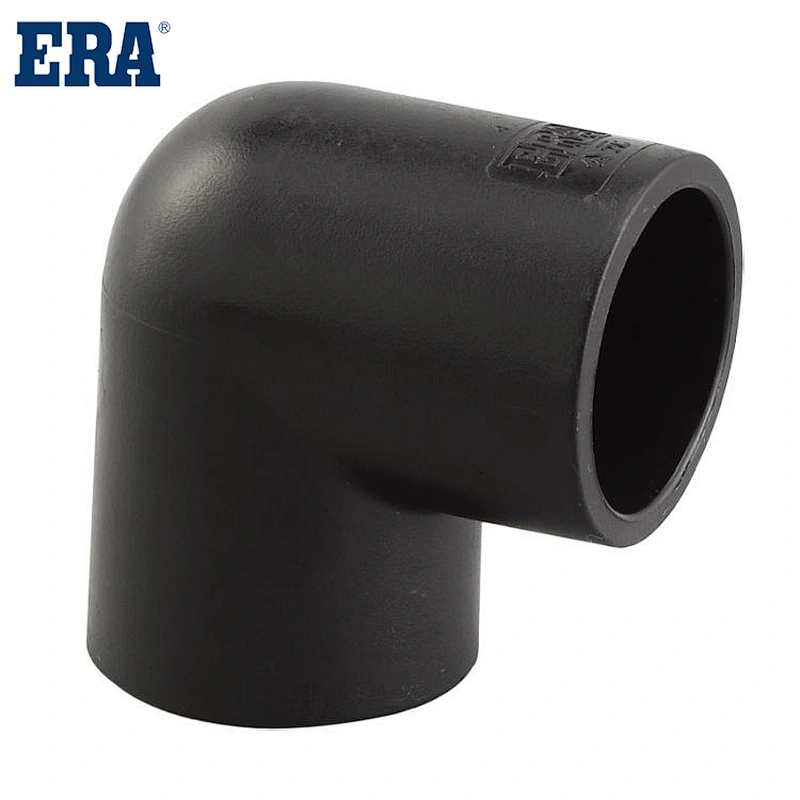
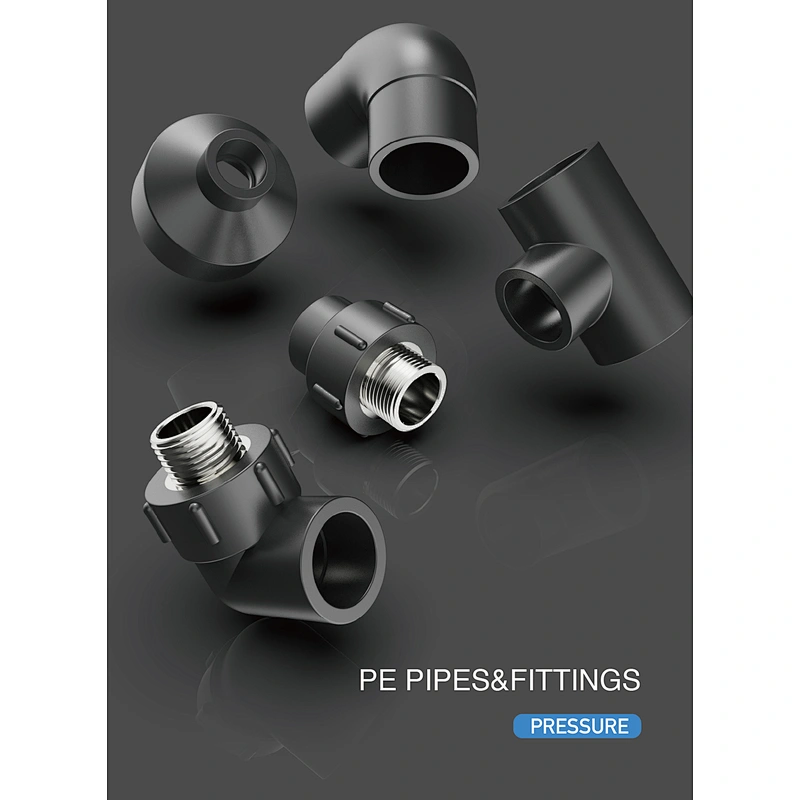
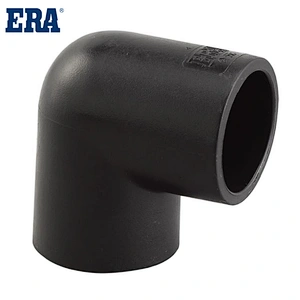
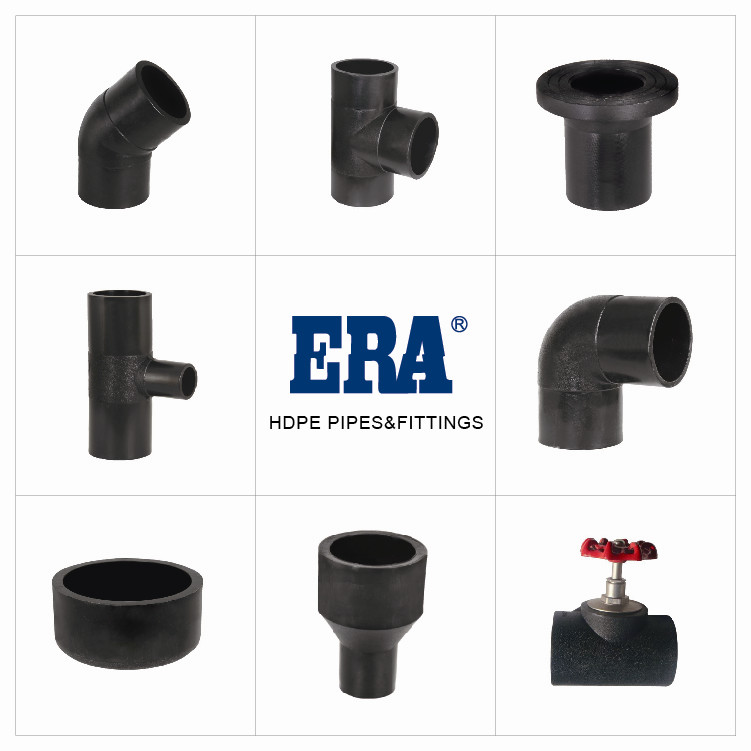
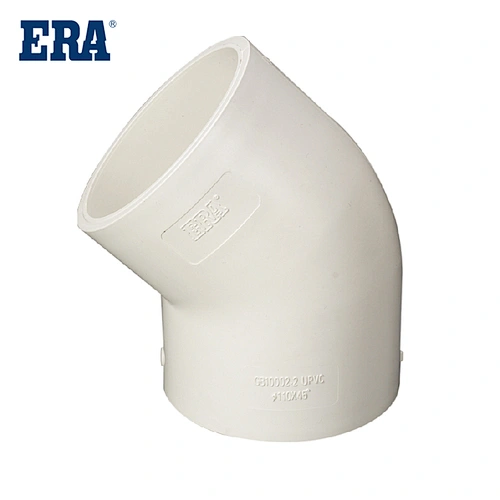
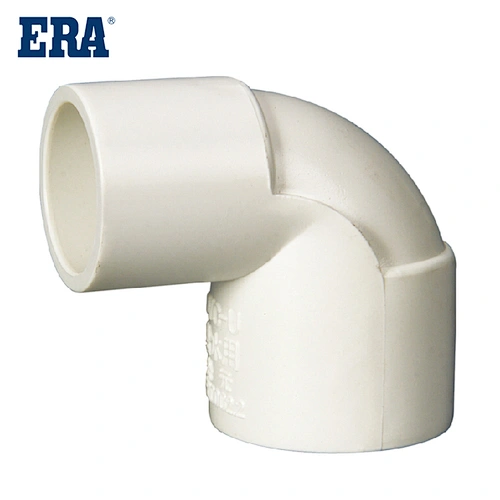
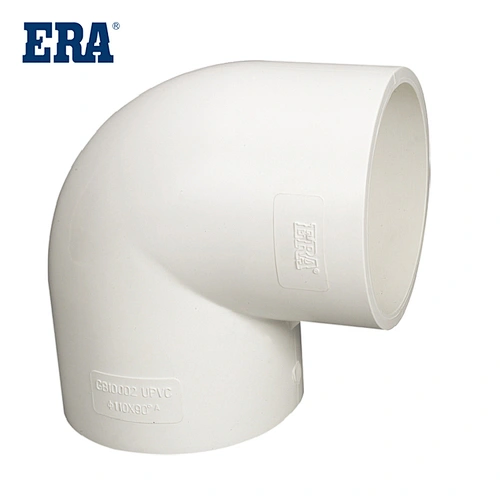
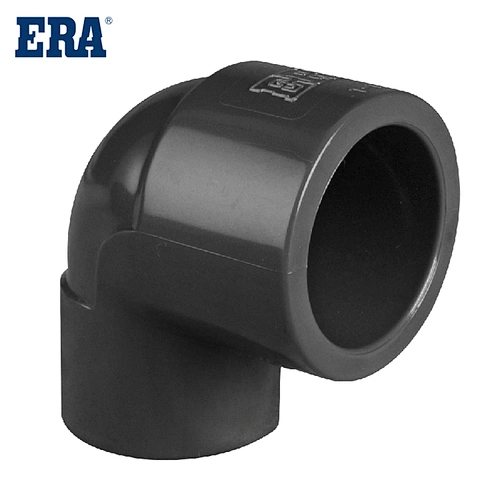
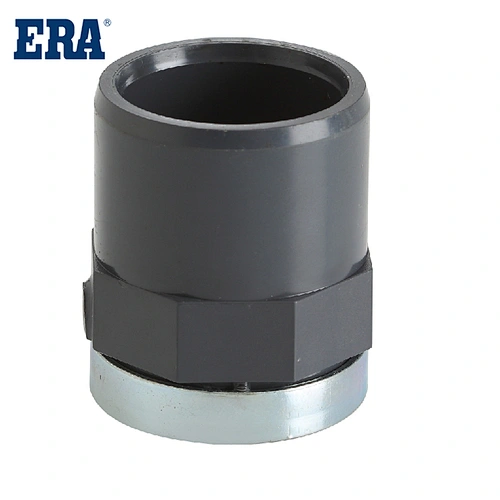
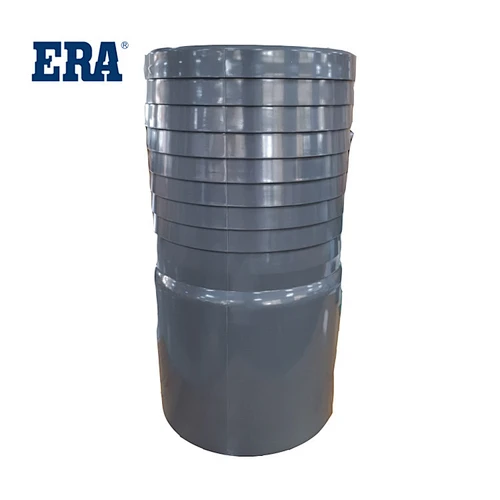
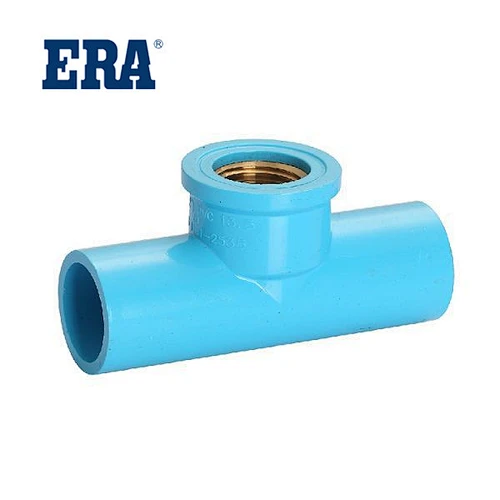
ERA Brand PE Butt Welding PE Fitting For 90 Degree Elbow
Specification:
Moreover, our PP Compression Fitting has an optimum sealing which works under all the conditions.
With an adequate combination of these fittings it is possible to design and pressure piping application of fluide with PE pipes
You should slide the nut on the pipe and after that place the compression ring. Next, all that is left is to slide the pipe directly into the fitting and make sure that the nut is tightened as required.
Specification:
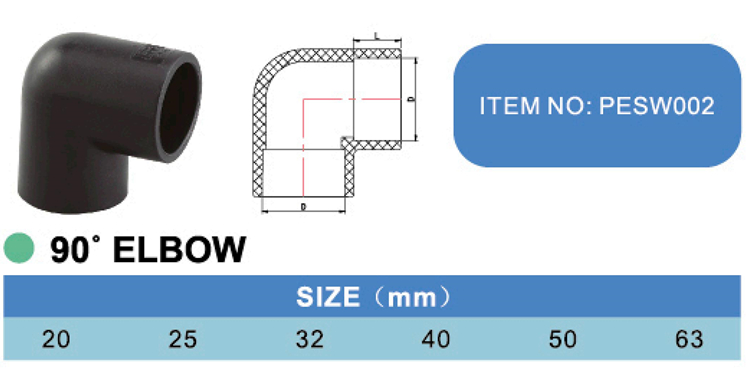
Model Number | PESW002 | Material | PE/HDPE |
Description: | 90 Degree Elbow | Color: | black |
Size: | 20mm | Certificate: | CE WRAS |
1.Extended Service Life
HDPE pipe is a safe and durable product ideal for your piping infrastructure. The service life of HDPE is estimated to be between 50 to 100 years, depending on application, design and installation.
2.Trenchless Installation
Traditional piping systems are installed by open cut (digging a ditch), resulting in traffic and environmental disruption. HDPE can be installed using this traditional open-cut method or by utilizing eco-friendly trenchless technology.
For trenchless installation, a horizontal directional machine bores a continuous hole beneath the ground. When the drilling head reaches the end of the bore, the pipe is attached and pulled back through the hole.
The flexibility of HDPE, combined with its outstanding tensile strength and abrasion resistance, make it the preferred and proven choice for trenchless installation technology
Main Products:
Common Problems and In-Depth Analysis of PE Pipeline [Hot Melt Welding]
In the installation and construction of PE pipelines, the quality of hot melt welding is the single most critical factor determining the long-term integrity, safety, and service life of the entire pipeline system. A flawless weld creates a monolithic, homogeneous structure, while a defective weld introduces a potential point of failure. The following is an in-depth analysis and detailed guidance on several common technical challenges, aimed at empowering construction personnel to not only follow procedures but to understand the underlying principles, thereby effectively mitigating risks and consistently achieving high-quality welds.
1. Can PE Pipes Be Directly Hot-Melt Welded with Pipes (or Fittings) of Different Wall Thicknesses?
In-Depth Analysis and Answers:
Core Conclusion: Direct hot melt welding of components with significantly different wall thicknesses is a non-standard practice and should be strictly avoided for critical pressure applications.
Fundamental Disparity in Heat Capacity: The core issue lies in thermal dynamics. A thicker wall has a greater mass of material to heat. When both a thick and a thin wall are pressed against the same heating plate at the same temperature, the thin wall will reach its optimal melt temperature and may even begin to degrade before the thick wall has achieved a sufficient melt depth throughout its entire cross-section.
Asymmetric Pressure and Material Flow: During the application of welding pressure, the thinner, hotter, and less viscous section will deform more easily, resulting in an excessive, often knife-edged, roll-back bead. Conversely, the thicker, potentially cooler section will exhibit a smaller, under-formed bead. This"mismatched bead"is a visual testament to the severe internal stress and incomplete fusion at the interface.
Long-Term Performance and Integrity Risks: This internal stress concentration becomes a chronic weakness. Under cyclic pressure loading (water hammer) or thermal cycling, the weld is prone to brittle failure, cracking from the point of highest stress. It significantly compromises the long-term hydrostatic strength and fatigue resistance of the joint, turning it into the predictable weak link of the pipeline.
Standardized Operation and Best Practices:
Primary Solution: Use an Electrofusion Coupling. This is the most reliable and recommended method. The internal heating wires of the coupling provide a controlled, uniform heat directly to the outer surface of both pipes, independent of their wall thickness. The contained melt pool and constraining sleeve ensure a robust joint.
Alternative: Use a Transition Fitting. If a direct connection is unavoidable, source a manufactured transition fitting or a saddle that is specifically designed to bridge the different wall thicknesses with a tailored geometry.
Last Resort with Strict Conditions: If hot melt welding is the only option, it must be treated as a special procedure. This requires developing, qualifying, and meticulously documenting a unique set of welding parameters (e.g., staggered heating times, adjusted pressure profiles) for that specific combination. This procedure must be validated through destructive testing (e.g., tensile tests, hydrostatic burst tests) and is generally not practical or justified for routine projects.
2. Can Pipes and Fittings Produced from Different Grades of Polyethylene Raw Materials Be Connected?
In-Depth Analysis and Answers:
Core Conclusion: Compatibility is conditional and heavily dependent on the connection method and the materials' flow properties.
The Decisive Factor: Melt Flow Rate (MFR): The MFR is a measure of a polymer's viscosity in its molten state. A lower MFR indicates a higher molecular weight and longer chains, leading to higher melt viscosity. For two materials to fuse properly, their melt viscosities must be similar at the welding temperature to allow for mutual diffusion of polymer chains across the interface.
The Mutual Diffusion Principle: A general industry rule stipulates that PE80 and PE100 materials with an MFR difference of ≤ 0.5g/10min (190°C/5kg) are typically compatible for fusion. Within this range, their molecular chains can inter-diffuse and entangle sufficiently to form a strong, monolithic structure.
Risk of Incompatibility: A large MFR disparity means one material will be fluid while the other remains viscous. The fluid material may be pushed aside or"squeezed out"during the application of pressure, preventing proper mixing and creating a weak, disbonded interface with poor mechanical properties.
Connection Method Specifics:
Electrofusion Connection: The More Forgiving Method. Electrofusion fittings are more tolerant of different PE grades. The design of the fitting, with its confined melt zone and controlled expansion pressure, helps force the fusion of dissimilar viscosities. However, the manufacturer's instructions must always be consulted for specific compatibility approvals.
Hot Melt Butt Welding: The Stringent Method. For a high-integrity butt weld, the standard and safest practice is to join pipes and fittings of the identical PE grade and MFR. This guarantees matched thermal and rheological behavior, ensuring a consistent bead formation and a homogeneous fusion zone.
Operational Imperative:
Prior to any welding activity, it is a mandatory pre-qualification step to verify the material grade (e.g., PE100) and the MFR value of both the pipe and the fitting from their respective certificates. Never assume compatibility.
3. What is the Reason for the Occurrence of Pockmarks on the Weld Bead of Polyethylene Pipes? Does it Impact Quality?
In-Depth Analysis and Answers:
Core Conclusion: Pockmarks are typically surface voids caused by volatiles (moisture) or contaminants, and their impact on weld integrity depends on their severity and location.
Primary Cause: Moisture Vaporization. PE pipe can absorb ambient moisture, which concentrates at the cut ends. Upon contact with the hot plate, this moisture instantly flashes into steam. The expanding gas bubbles become trapped in the molten polymer and, after cooling, manifest as small pits or pockmarks on the surface of the formed bead.
Secondary Cause: Particulate Contamination. Dirt, sand, grease, or oxidation products on the pipe end or heating plate can be enveloped by the melting plastic. These inclusions prevent proper polymer fusion around them, creating voids or discolored spots.
Assessing the Impact on Weld Quality:
Superficial Pockmarks (Acceptable): Industry standards, such as the CJJ63-2008 specification, acknowledge that a limited number of small, isolated pockmarks on the outer edges of the bead are primarily a cosmetic issue. They are located outside the primary structural stress zone of the weld and, therefore, have a negligible effect on the pressure-bearing capacity.
Critical Defects (Rejection Criteria): A weld must be rejected and cut out if pockmarks are:
Large, deep, or interconnected.
Located at the root of the bead (the interface between the two pipes).
Numerous and spread across the entire bead surface.
This indicates severe contamination or saturation, which has compromised the integrity of the entire fusion face.
Proactive Prevention Strategy:
Proper Storage: Store pipes under cover, with ends capped and protected from rain and ground moisture.
Meticulous Preparation: Immediately before welding, wipe the pipe ends and the heating plate with a clean, lint-free cloth and isopropyl alcohol.
Environmental Control: In high-humidity conditions, pre-heat the pipe ends briefly with a hot air gun to drive off any surface moisture immediately before facing and welding.
4. What Causes an Irregular Weld Bead on Polyethylene Pipes?
In-Depth Analysis and Answers:
Core Conclusion: An irregular bead is a clear visual indicator of an unstable or unbalanced welding process and often signifies a flawed weld.
Operational Errors:
Improper Heating Plate Withdrawal: A jerky, slow, or tilted withdrawal can"smear"the molten surface, tearing the viscous polymer and creating a ragged, uneven bead profile.
Aggressive Alignment (Crashing): Bringing the pipe ends together with excessive force or misalignment causes a violent displacement of the molten material, leading to an asymmetrical and often undersized bead.
Equipment and Calibration Issues:
Non-Uniform Heating: A warped heating plate or a malfunctioning temperature sensor can create hot and cold spots across the surface. This results in one side of the pipe melting more than the other, producing a high bead on the hot side and a low bead on the cool side.
Misaligned Clamps: If the pipe is not securely and concentrically clamped, the two ends will be offset, preventing a uniform melt and pressure application.
Material Inconsistency: As previously discussed, joining pipes with different MFR values will result in different melt flows under pressure, directly causing bead mismatch.
The Path to a Perfect Bead:
Smooth Equipment Operation: Withdraw the heating plate in a single, swift, and straight motion.
Controlled Alignment: Engage the pipes with a smooth, steady pressure, ensuring they come together squarely without impact.
Rigorous Equipment Maintenance: Implement a regular calibration schedule for the welding machine, including verification of heating plate temperature, flatness, and hydraulic pressure settings.
Uncompromising Cleanliness: A clean system is fundamental to a uniform melt.
5. Why Does the Weld Seam of a Polyethylene Pipe Crack During the Back-Bend Test?
In-Depth Analysis and Answers:
Core Conclusion: Cracking during a back-bend test is a definitive failure, confirming a"cold weld"where molecular fusion is incomplete.
Insufficient Thermal Energy:
Low Temperature: Welding at a temperature below the recommended range (typically 200°C - 230°C) means the polymer chains lack the thermal energy to become fully mobile and inter-diffuse.
Inadequate Heating Time: The pipe ends have not been in contact with the heating plate long enough to build up the necessary heat reservoir for a proper melt.
Insufficient Fusion Pressure and Time:
Low Pressure: Inadequate joining pressure fails to force the molten layers into intimate contact and to expel potential contaminants from the interface.
Insufficient Cooling Time: Rushing the cooling process under pressure interrupts the crucial phase of molecular re-crystallization and chain entanglement, locking in stresses and creating a weak boundary layer.
The Root Cause: Lack of Molecular Entanglement:
A successful weld transforms the interface between two pipes into a single, continuous mass of polyethylene. The polymer chains from each side must cross the original boundary, diffuse into the other side, and entangle thoroughly. The conditions described above prevent this diffusion, leaving a distinct plane of weakness. When bent, the pipe fractures along this unbonded interface, often appearing as a clean, brittle break.
6. What Should I Do if the Welder Reports that the PE Pipe Interface is Difficult to Align?
In-Depth Analysis and Answers:
Core Conclusion: Misalignment is predominantly caused by pipe ovality (out-of-roundness), which must be managed through proper handling and corrective techniques.
Understanding Ovality: Ovality is the deviation from a perfect circle, calculated as (Max OD - Min OD) / Nominal OD. High ovality makes it physically impossible to achieve a seamless, gap-free alignment around the entire circumference.
Primary Causes of Ovality on Site:
Poor Storage Practices: Stacking pipes too high, especially in warm weather, causes the lower pipes to deform under sustained load.
Improper Handling and Transportation: Incorrect support or strapping can crush or distort pipes.
Thermal Effects: Uneven exposure to sunlight can cause differential expansion and warping.
A Systematic Solution Approach:
Prevention at the Source:
Inspect Upon Delivery: Check for visible ovality before accepting the shipment.
Proper Storage: Store pipes on flat, continuous supports and avoid high stacks. Implement a"First-In, First-Out"(FIFO) inventory system to minimize storage time.
On-Site Correction Techniques:
Mandatory Use of a Re-rounder: The most effective and professional tool for this job is a pipe re-rounding clamp (or rounding caliper). It is mechanically adjusted to gently re-form the pipe end to its correct circular shape immediately before welding. This should be a standard step for all butt welding procedures.
Strategic Use of Alignment Marks: The extruded colored stripes on PE pipes are a crucial manufacturing reference. Always align these stripes on both pipes before clamping. This ensures that any residual minor ovality is matched symmetrically, minimizing gaps, and it also aligns the molecular orientation of the pipe material for optimal weld strength.
Verification Before Welding: After clamping in the welding machine, slowly rotate the pipes and visually check the gap between the faced ends. The gap should be consistent all the way around. If a large variation is observed, loosen the clamps, rotate the pipes relative to each other, and re-tighten to find the position that gives the best possible alignment.
Is PE100 a national standard? PE100、 Have you distinguished between new materials and national standards?
In the polyethylene (PE) pipeline industry, “PE100”、 'New materials' and' national standards' are the three most commonly mentioned and easily confused core concepts. They respectively point to three different dimensions: material grade, raw material status, and product standards. A correct understanding of the relationship between the three is the cornerstone of ensuring the quality of pipeline engineering, avoiding procurement misunderstandings and technical communication barriers.
1、 PE100- Performance Level Certification of Polyethylene Materials
Core definition: PE100 is not a brand or specific formula, but a performance level certification based on long-term strength. It marks that the polyethylene raw material has reached internationally recognized top-level mechanical performance standards.
1. Scientific basis for grading:
This grading system is not arbitrarily set, but based on the extremely rigorous' Long term Hydrostatic Strength '(MRS) test. This test simulates the creep resistance and damage resistance of pipelines under continuous internal pressure (usually a water temperature of 20 ℃ with a lifespan of 50 years). The MRS value represents the lower limit of circumferential stress that the material can withstand with a 97.5% chance of survival after 50 years.
PE80 level: MRS ≥ 8.0 MPa (i.e. able to withstand a circumferential stress of 8.0 megapascals for a long time)
PE100 level: MRS ≥ 10.0 MPa (i.e. able to withstand a circumferential stress of 10.0 megapascals for a long time)
2. Technical advantages and engineering value of PE100:
PE100 is not a simple upgrade of PE80, it means the optimization of molecular structure (higher crystal structure and longer molecular chains), bringing comprehensive performance improvements:
Higher pressure bearing capacity: Under the same diameter and wall thickness (SDR value), PE100 pipes can withstand working pressure about 25% higher than PE80 pipes. This makes PE100 the top choice in scenarios such as high-pressure water transmission and main pipeline networks.
Better resistance to slow crack growth (SCG): This is a key indicator for measuring the ability of pipelines to resist crack propagation caused by scratches, stress concentration, and other factors. PE100 has better toughness, can effectively resist accidental damage during installation and operation, and has a longer lifespan.
Better economy (thinning): Due to its higher strength, PE100 pipes can be made thinner (i.e. with a larger SDR value) to meet the same pressure requirements. This directly reduces the amount of materials used, lowers raw material and transportation costs, while increasing the flexibility of the pipes, making laying more convenient.
Conclusion: PE100 is the"ID card"of material properties, which answers the question of"how high is the long-term strength of this raw material.
2、 New Material - Tracing the Origin and History of Raw Materials
Core definition:"Brand new materials"emphasize the"origin"of raw materials, referring to raw polyethylene particles that are directly polymerized and produced from petrochemical enterprises without any use, processing, or pollution. It focuses on purity and initial performance.
1. Inherent characteristics of new materials:
Molecular chain integrity: Without thermal history and shear degradation, the length and structure of the molecular chain remain optimal, ensuring excellent long-term hydrostatic strength.
Stable and uniform performance: There is little fluctuation in performance between batches, the processing window is wide, and the fusion performance (hot melt butt welding and electric fusion welding) is very reliable, which can form uniform and firm welds.
High hygiene and safety: There is no risk of pollutants, bacteria, or unknown additives migrating, which is a mandatory requirement for the production of drinking water pipes.
Excellent aging resistance: evenly mixed with high-quality carbon black and antioxidants, it can effectively resist ultraviolet radiation and thermal oxidative aging, ensuring decades of service life.
Important analysis:"Brand new materials"only guarantee that the raw materials are new and do not directly equate to high grades. The new material can be PE63, PE80, or PE100. A common misconception is that"as long as it is brand new material, it is good material". In fact, PE80 pipes produced with brand new material still have lower long-term strength than PE100 pipes produced with brand new material.
2. Comparison of recycled/reclaimed materials:
The opposite of new materials is recycled materials, which are plastic products that have been recycled, crushed, cleaned, melted, and granulated after consumption or industrial use.
Performance uncertainty: Recycled materials have undergone at least one processing and usage cycle, resulting in issues such as molecular chain breakage, degradation, and impurity contamination, leading to a significant decrease in their mechanical properties, aging resistance, and hygiene performance.
Welding risk: Recycled materials with complex composition and unstable melt index (MFR) are prone to defects such as uneven curling, false welding, and cold welding during hot melt welding, making them one of the most dangerous hazards in pipeline systems.
Application limitations: It is usually only suitable for non pressure drainage, conduit and other scenarios that do not require high strength and lifespan.
3、 National standard (GB/T standard) - Comprehensive passing line for final products
Core definition:"National standard"(mainly referring to GB/T 13663"Polyethylene (PE) piping systems for water supply") is a comprehensive and mandatory set of technical requirements and qualification criteria for finished pipes and fittings. It answers the question of 'Is this pipe safe and reliable?'.
1. The comprehensiveness and strictness of national standards:
The national standard is a result oriented system. It does not directly stipulate whether you must use PE100 or brand new materials, but it ensures that the final product"passes"in any aspect through a series of scientific tests. Taking GB/T 13663.2-2018 as an example, its testing scope covers the entire lifecycle of the product:
Short term performance: appearance, size, longitudinal shrinkage rate (reflecting production stress).
Mechanical properties: static hydraulic strength (short-term and long-term), elongation at break, resistance to slow crack growth (≥ 165 hours), resistance to rapid crack propagation (RCP).
Material properties: Oxidation Induction Time (OIT, reflecting resistance to thermal oxidative aging), Melt Mass Flow Rate (MFR, reflecting batch consistency and weldability of the material).
Weather resistance: carbon black content, carbon black dispersion (ensuring UV resistance).
Hygiene performance: When used for drinking water, a hygiene permit is required to ensure that it is non-toxic and harmless.
2. The ultimate interpretation of the relationship between the three parties:
In theory, a pipe factory can try to produce"national standard pipes"using low-grade new materials (such as PE80) or high-quality recycled materials, as long as their finished products can pass all the rigorous tests mentioned above.
However, in real industrial practice, this is almost an impassable path:
Due to its inherent MRS value limitations, PE80 grade raw materials are difficult to meet the highest requirements of PE100 national standard pipes in terms of long-term static hydraulic strength (such as 20 ℃, 50 years) and resistance to slow crack growth.
Due to the uncontrollable performance and inherent defects of recycled materials, it is almost impossible to stably pass all national standard testing items, especially long-term strength, resistance to slow crack growth, and hygiene indicators.
Therefore, a logical and reliable conclusion is:
A truly qualified"national standard PE water supply pipe", especially for high-pressure pipelines, is almost always manufactured from"new materials"or"mixed materials mainly made of new materials"of"PE100 level". 、
Suggestions for engineering procurement and construction personnel:
When purchasing, one should not only rely on the merchant's unilateral claim of"national standard management", but should also request to provide:
Qualified third-party testing report confirming compliance with GB/T 13663.2 standard.
The grade certificate of the raw materials confirms that PE100 grade raw materials are being used.
When there is doubt about the quality of the product, samples can be sent to authoritative testing institutions to focus on testing the melt mass flow rate (MFR) and oxidation induction time (OIT), which can effectively reflect whether the raw materials are pure, whether recycled materials are added or excessively recycled.
Only by distinguishing the concepts of the three and understanding their inherent connections can wise technical judgments and procurement decisions be made to ensure project quality from the source.


 English