| characteristic | PPR pipe plug | Metal plug (copper/stainless steel) | PVC plug |
| Temperature resistance | ≤ 95 ° C (short-term) | ≤200°C | ≤60°C |
| Pressure resistance | PN10-PN25 | High voltage customization | PN6-PN10 |
| Corrosion resistance | Excellent (resistant to chemical media) | Medium (may rust) | Good (not resistant to organic solvents) |
| Cost | low | tall | minimum |
| Applicable scenarios | Cold and hot water system, HVAC | High temperature steam and chemical pipelines | Cold water pipe, drainage pipe |
7、 Selection suggestions
Select according to connection requirements:
Permanent closure: Hot melt pipe blockage (with the best sealing performance).
Temporary maintenance: threaded pipe blockage (easy to disassemble).
Select by pressure:
Conventional household water supply: PN16 pipe blockage.
High level pressurization system: PN20 or thickened pipe plug.
Special Scenario:
Outdoor direct burial: Use outer plastic coated PPR pipe plugs to prevent UV rays and mechanical damage.
Frequent disassembly: Paired with PPR union and threaded pipe plug to extend service life.
summarize
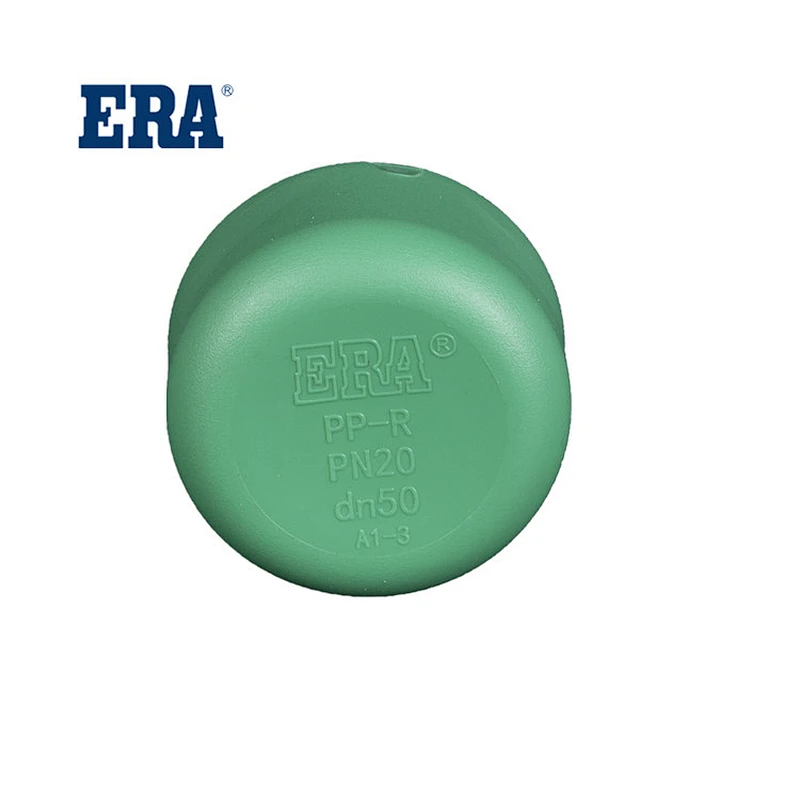
PPR pipe plug is an indispensable accessory in PPR pipeline system, and correct selection and installation can ensure system safety and reliability. In practical applications, it is necessary to select the appropriate type based on pressure, temperature, and frequency of use, and strictly follow the operating specifications to avoid leakage or system failure caused by small accessories. For high-pressure, high-temperature, or special medium scenarios, it is recommended to combine metal plugs or professional solutions to ensure long-term stable operation.
The distinction between PPR (pipe cap) and PPR (pipe plug)
1、 Different definitions:
PPR pipe cap:
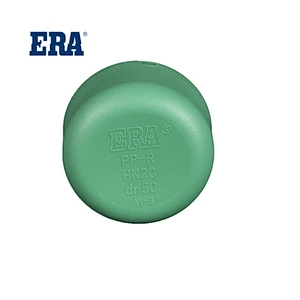
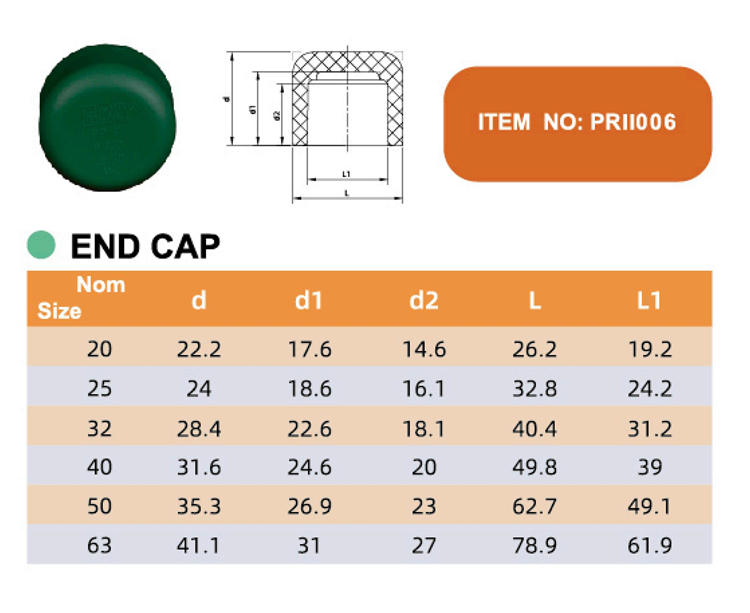
PPR pipe cap is a fitting used to seal the end of a pipeline, usually in the shape of a cap, which can completely cover the opening of the pipeline.
PPR pipe plug:
PPR pipe plug, also known as screw plug, is a fitting used to seal openings or interfaces on pipelines. It is usually cylindrical or threaded and can tightly seal the interfaces or openings of pipelines.
2、 Different uses:
PPR pipe cap:
It is usually used to seal the end of a pipeline to prevent debris, dust, or moisture from entering the pipeline. It is commonly found in pipelines that have been completed or not used for a long time.
PPR pipe plug:
Used for sealing the middle or branch interfaces of pipelines to prevent water or gas leakage, and also suitable for temporary sealing of pipelines. It is widely used in pressure testing, pipeline maintenance, temporary sealing during construction, and system debugging.
3、 Different connection methods:
PPR pipe cap:
The most common method of hot melt connection is to weld the pipe cap to the outer surface of the pipeline to form a seal. After installation, the pipe cap is generally not easy to remove and is suitable for long-term use.
PPR pipe plug:
The pipe plug is equipped with inner and outer threads, which are fastened by threaded connection to form a seal. Due to the threaded design, the installation of pipe plugs is very convenient and can be disassembled, making it suitable for occasions that require frequent installation and disassembly.
The pressure units in the pipeline industry may seem complex, but when subdivided, they can be divided into three categories: first, the International System of Units (also known as the SI system or metric system), such as Pa (pascal), KPa (kilopascal), and MPa (megapascal); Secondly, British units (American standard system), such as psi; Thirdly, other non SI and non imperial systems, such as bar kgf/cm², Let's break them down one by one below.
1、 Pa (Pa) - International System of Units
Definition: Pa (pascal) is the fundamental unit of pressure, defined as a force of one Newton per square meter.
Conversion relationship: 1 Pa=1 N/m ² (Newton/square meter)
Application areas: Pa (pascal) is mainly used in science, engineering, and precision measurement, especially in high-precision pressure measurement.
Note: In the field of pipelines, Pa itself is not commonly used in daily operations because its value is relatively small. MPa or bar are usually used instead because these units are more in line with the actual application range.
2、 MPa (megapascal) - International System of Units
Definition: MPa is the abbreviation for megapascals, which is a unit of pressure that represents the pressure experienced per unit area.
Conversion relationship: 1MPa=1000kPA (kilopascals) 1kPA=1000Pa (pascals) 1 MPa=1000000Pa (pascals)
● Application areas:
MPa is a commonly used pressure unit in the pipeline industry, especially in pipeline design, construction engineering, pressure vessels, and other applications. It is widely used to describe the pressure resistance performance of various pipelines, such as plastic pipes, steel pipes, and water supply pipelines.
Applicable countries: Pa, kPA, and MPa are widely used international standard units globally, widely applicable in Europe, Asia, and international standards, and are also the most commonly used main pressure units in China.
3、 PSI (pascal) - British units
Definition:
PSI (Pound per square inch) is a unit of pressure in the British system of units, representing the force acting on an area per square inch. 1 psi is defined as a pressure of 1 pound force (1 lbf) applied per square inch.
Conversion relationship: 1 psi ≈ 0.00689 MPa
Application areas: Widely used in the design, installation, maintenance, inspection, and other aspects of water pipes, gas pipes, oil and gas pipelines, hydraulic pipelines, and pneumatic pipelines.
Applicable countries: the United States and some countries that use imperial units.
4、 Bar - a non SI but metric based engineering unit
Definition: Bar is a non SI (International System of Units) unit, but it is based on the metric system and is mainly used to represent the pressure of gases or liquids, especially widely used in European and international standards. It has been listed as a non legal unit of measurement in China.
Conversion relationship: 1 bar=100000 Pa=0.1 MPa1 bar=14.5 psi (commonly used approximate value)
Application areas: mainly used in gas and liquid transportation, engineering equipment, as well as meteorological and atmospheric pressure measurement.
Applicable countries: Mainly used in European and international standards, but also in some countries that use metric units.
5、 Kgf/cm ² (kilogram force per square centimeter)
Definition: kgf/cm ² represents a force of 1 kilogram per 1 square centimeter of area. Among them, kilogram force (kgf) refers to the gravitational force exerted on a 1-kilogram object, which is approximately equal to 9.81 newtons (N) on the surface of the Earth.
Fiberglass reinforced plastic (FRP) pipes are widely used in municipal, chemical, power, environmental protection and other fields due to their excellent performance. However, when many people see the name"fiberglass", they always have a question in their hearts: is fiberglass pipe glass or steel? What are the characteristics?
What is the definition of fiberglass pipeline?
Firstly, let's take a look at the definition. Fiberglass Reinforced Plastic (FRP) pipeline is a high-performance pipeline made of glass fiber as the reinforcing material and resin as the matrix material through a composite process. So, fiberglass pipes are neither entirely glass nor entirely steel.
Let's take a closer look at its ingredients:
● Fiberglass:
Glass fiber is a reinforcing material that provides high strength and rigidity to pipelines. It is usually in the form of fine filaments and has excellent tensile strength and corrosion resistance. By weaving or winding into layers, glass fiber enhances the mechanical properties of the resin.
Resin matrix:
Resin is a matrix material used to"bond"glass fibers together, forming the shape of pipelines and providing good corrosion resistance. Commonly used resins include polyester resin, epoxy resin, vinyl ester resin, etc.


 English