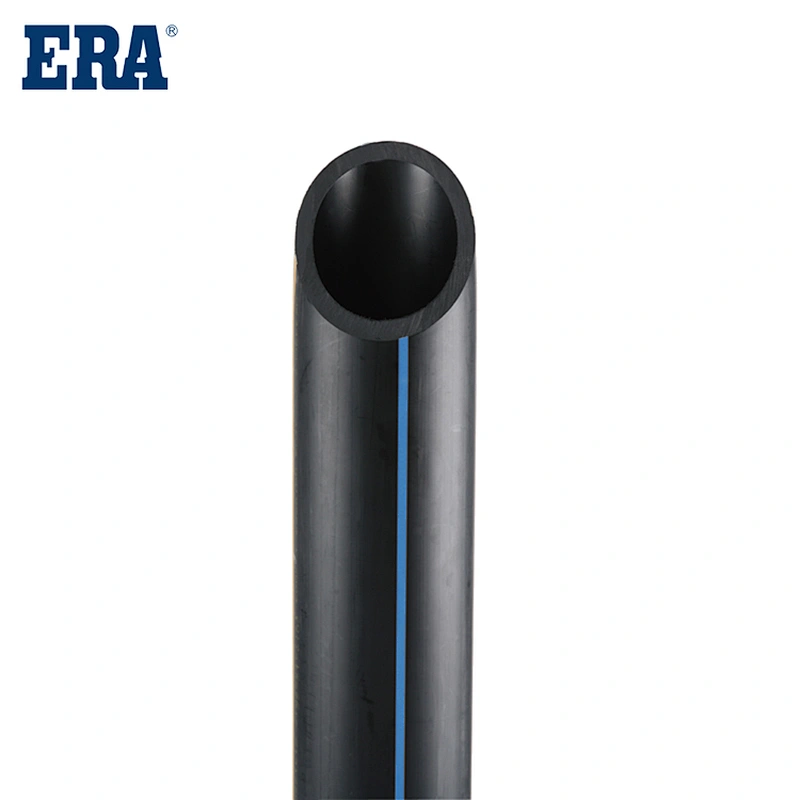
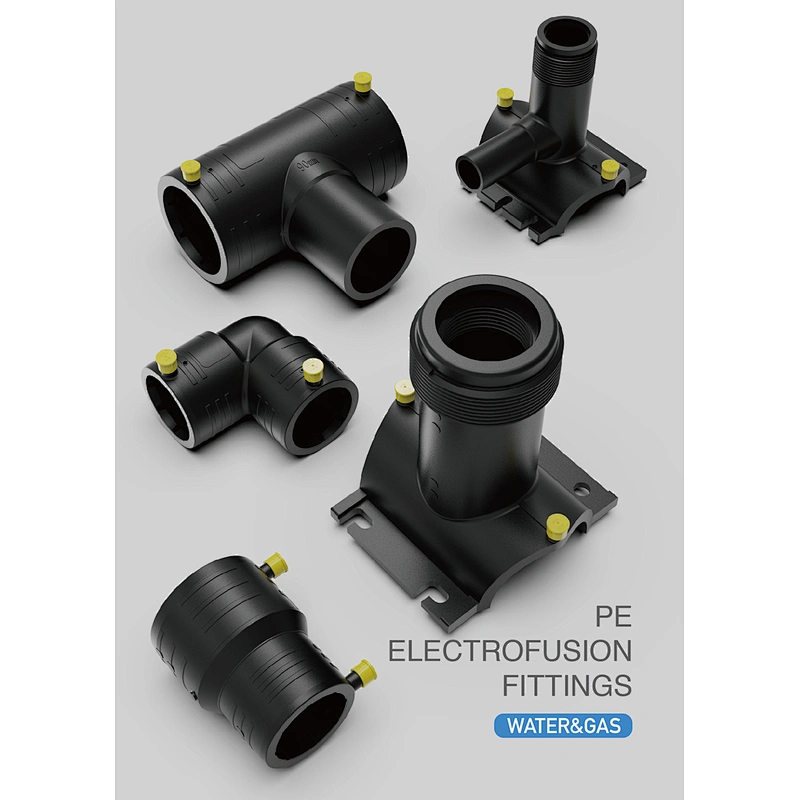
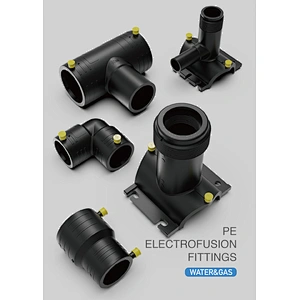
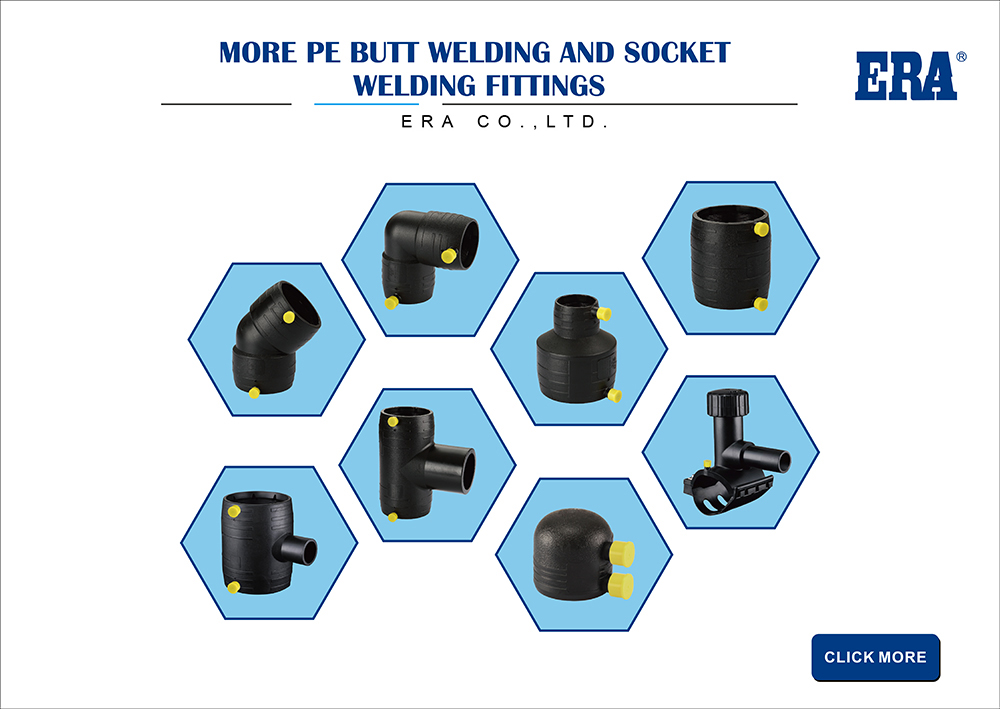
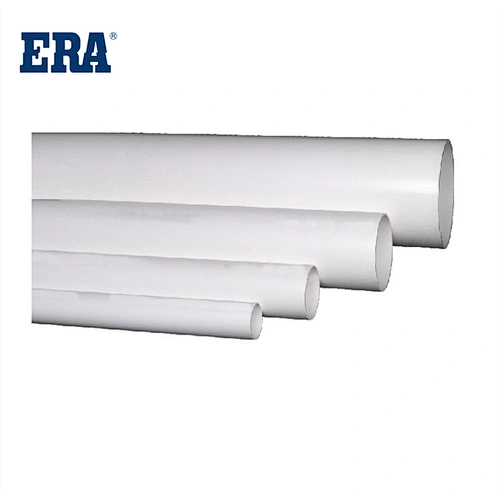
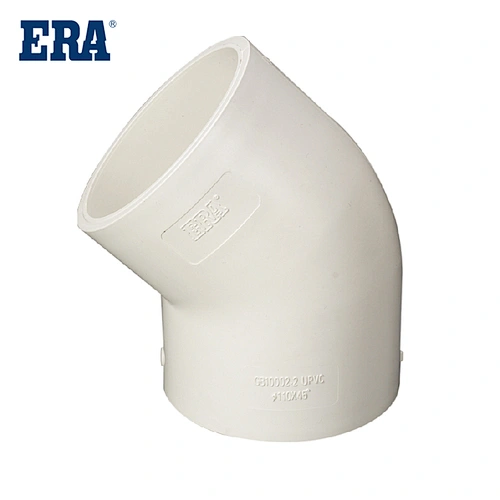
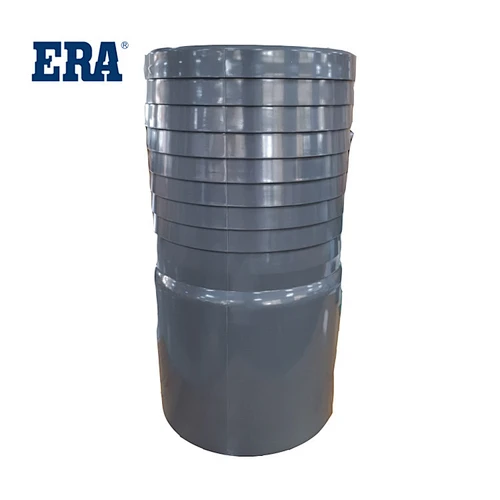
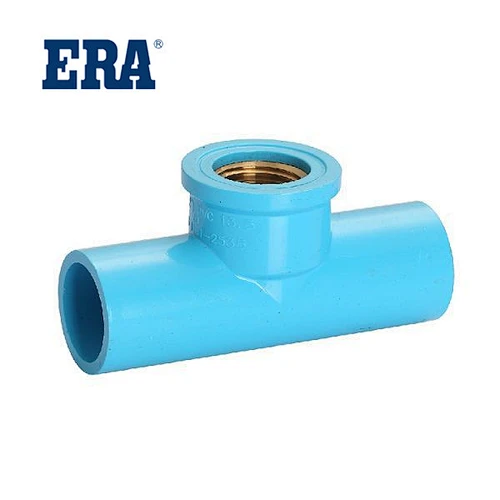
ERA Brand PE Electrofusion Fittings For Gas and Water PE Pipe For Water Supply
System:PVC pipe system
Scope:HDPE pipe system is used across the globe for applications such as water mains, gas mains, sewer mains, slurry transfer lines, rural irrigation, fire system supply lines, electrical and communications conduit, and stormwater and drainage pipes.
Referenced Standards:DIN STANDARD
Specification:
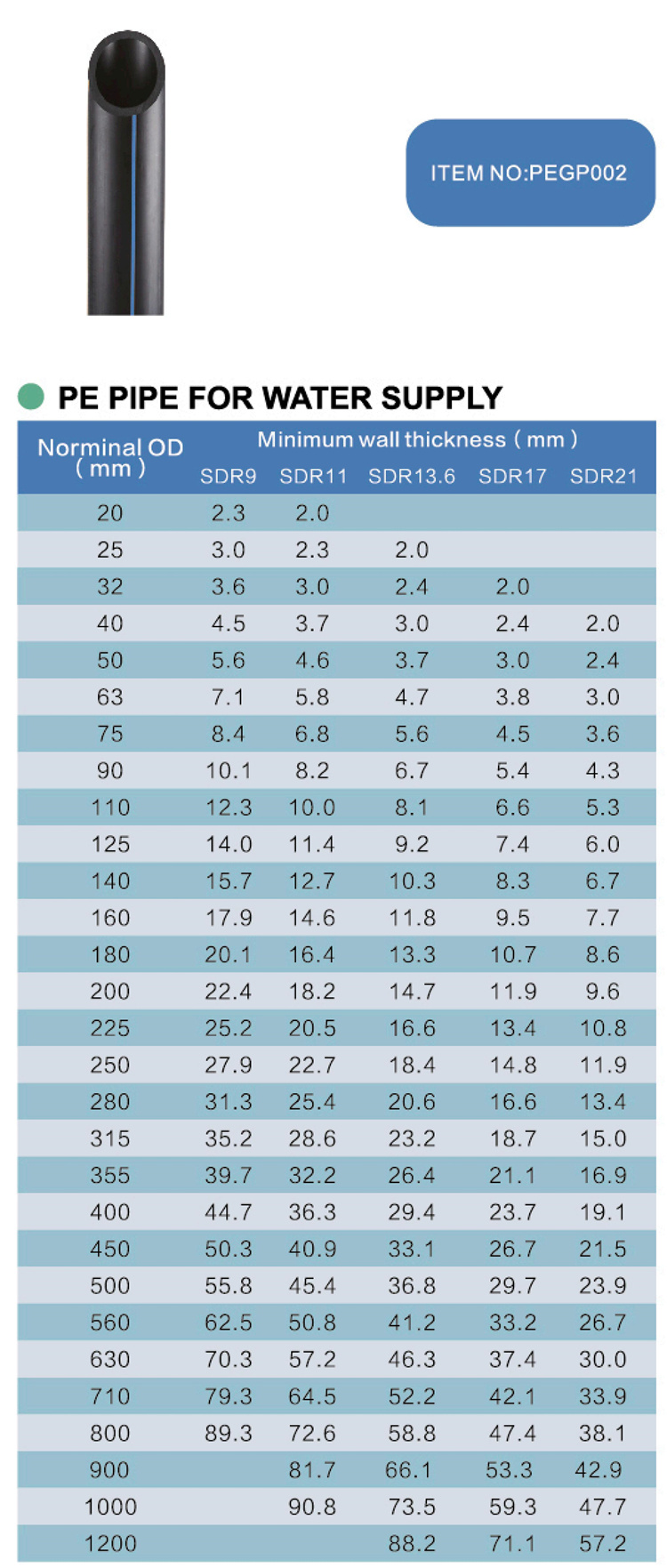
Model Number | PEGP002 | Material | PE |
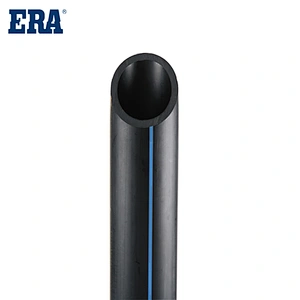
Description: | PE Pipe For Water Supply | Color: | black |
Size: | 20--1200mm | Certificate: | CE |
For trenchless installation, a horizontal directional machine bores a continuous hole beneath the ground. When the drilling head reaches the end of the bore, the pipe is attached and pulled back through the hole.
The flexibility of HDPE, combined with its outstanding tensile strength and abrasion resistance, make it the preferred and proven choice for trenchless installation technology.
High-density polyethylene (HDPE) or polyethylene high-density (PEHD) is a polyethylene thermoplastic made from petroleum.
HDPE is known for its large strength to density ratio. The density of HDPE can range from 930 to 970 kg/m3. Although the density of HDPE is only marginally higher than that of low-density polyethylene, HDPE has little branching, giving it stronger intermolecular forces and tensile strength than LDPE. The difference in strength exceeds the difference in density, giving HDPE a higher specific strength. It is also harder and more opaque and can withstand somewhat higher temperatures (120°C/ 248 °F for short periods). High-density polyethylene, unlike polypropylene, cannot withstand normally required autoclaving conditions. The lack of branching is ensured by an appropriate choice of catalyst (e.g., Ziegler-Natta catalysts) and reaction conditions
HDPE features are as follows:
1, HDPE has excellent resistance to most life and industrial chemicals, it can resist strong oxidant, acid, alkali salt and organic solvent corrosion and dissolution.
2, HDPE does not absorb moisture and has good waterproof steam property, can be used for moisture-proof and impermeable or packaging.
3, HDPE has good electrical properties, especially high insulation dielectric strength, so that it is very suitable for wire and cable. Medium to high molecular weight classes have excellent impact resistance at room temperature and even at temperatures as low as -40F.
4, HDPE has good machinability and heat sealing.
5, HDPE has a high degree of paper-like, crisp and open, hardness of LDPE film 4~5 times. Its surface hardness, tensile strength, rigidity and other mechanical strength close to PP, tougher than PP.
6, HDPE is non-toxic and odorless, can also be used for food, clothing, knitwear and other packaging materials, affordable, low price
In addition to color, appearance, outer diameter, and wall thickness, there are also several indicators that may sound a bit vague in the commonly used PE pipe testing reports. These indicators are: elongation at break, longitudinal shrinkage rate, oxidation induction time, melting mass flow rate, and hydrostatic pressure. Later, we will break down these indicators and introduce them to everyone. 1、 What is the definition of elongation at break? The elongation at break refers to the maximum elongation deformation that a material can withstand when subjected to tensile fracture, usually expressed as a percentage. In tensile testing, when a material sample fractures, the ratio of the difference in sample length before and after fracture to the original sample length is the elongation at break. 2、 What is the elongation at break of PE pipes? The elongation at break of PE pipes is an important indicator for evaluating the flexibility of water supply pipes. By testing the elongation at break of water supply pipes, it can be determined whether the quality of the pipes meets the specifications. The elongation at break test can be conducted according to GB/T 8804.3-2003"Determination of Tensile Properties of Thermoplastic Pipes". The test temperature should be kept constant below 23 ℃. According to the specifications, tensile tests should be carried out at different speeds on a tensile strength testing machine to obtain the maximum tensile rate at which PE water supply pipes break (specification requirement ≥ 350%). 3、 What is the significance of elongation at break for PE pipes? The elongation at break of PE pipes can depend on factors such as material type, grade, additives, molecular structure, manufacturing process, etc. Generally speaking, types of PE pipes such as high-density polyethylene (HDPE) and linear low-density polyethylene (LLDPE) have relatively good plastic deformation ability, so their elongation at break is usually high. In practical applications, the elongation at break of PE pipes is often in the range of 500% to 1000%, which means that the length of PE pipes may increase by 5 to 10 times during tensile fracture. This high elongation at break enables PE pipes to have good adaptability to external impacts, deformations, and displacements, helping to reduce the risk of breakage and improve the durability of the pipeline. 3、 What are the factors affecting the elongation at break of PE pipes?
The elongation at break of PE pipes is influenced by various factors, including: (1) molecular structure: different types of polyethylene molecular structures can affect their plastic deformation ability, thereby affecting the elongation at break. (2) Temperature: Temperature has an impact on the plastic deformation and fracture properties of materials, with higher temperatures typically increasing the elongation at break. (3) Loading rate: Rapid loading may lead to brittle fracture, while slow loading helps with plastic deformation and increases fracture elongation. (4) Additives: Toughening agents and other additives added to materials can affect their plasticity ability, thereby affecting their elongation at break. In summary, the elongation at break of PE pipes is an important mechanical property parameter that reflects the material's ability to deform during tensile fracture. It is crucial for ensuring the reliability and durability of PE pipes in practical applications. However, it should be noted that the specific elongation at break data may vary depending on the material, so these factors should be taken into account when selecting materials and conducting engineering design.
1、 What is vertical shrinkage rate?
Polyethylene (PE) pipes may encounter longitudinal shrinkage during the production process, which refers to the dimensional changes that occur in the longitudinal direction (pipe length direction) of the pipe during cooling or curing. This kind of shrinkage is a common phenomenon in plastic processing, which can also affect the final size and performance of the pipe. Vertical shrinkage rate is an indicator used to describe the degree of change, usually expressed as a percentage. The calculation method for longitudinal shrinkage rate is determined by measuring the length difference of the pipe before and after processing.
2. Factors affecting longitudinal shrinkage rate?
The longitudinal shrinkage rate is influenced by various factors, including the type of material, molecular structure, processing conditions, temperature, and cooling rate. Different types of polyethylene, such as high-density polyethylene (HDPE), low-density polyethylene (LDPE), etc., exhibit different shrinkage rates during processing. Generally speaking, the shrinkage rate of high-density polyethylene is usually lower, while the shrinkage rate of low-density polyethylene is higher. Specifically, there are the following influencing factors: (1) Material type: Different types of polyethylene (such as high-density polyethylene (HDPE), low-density polyethylene (LDPE), etc.) have different molecular structures and characteristics, resulting in different longitudinal shrinkage rates. (2) Molecular structure: The molecular structure of polyethylene also affects the longitudinal shrinkage rate. For example, polyethylene with linear molecular structures typically exhibits lower shrinkage rates, while polyethylene with branched molecular structures may have higher shrinkage rates. (3) Processing temperature: Processing temperature is an important influencing factor. Higher processing temperatures typically lead to greater molecular motion, resulting in greater shrinkage rates during cooling. (4) Cooling rate: Cooling rate is also one of the factors affecting longitudinal shrinkage rate. A faster cooling rate may cause polymer molecules to align more tightly, thereby increasing the shrinkage rate. On the contrary, a slower cooling rate may reduce the shrinkage rate. (5) Environmental temperature and humidity: Environmental temperature and humidity can also affect the longitudinal shrinkage rate. High temperature and humidity environments may accelerate the molecular motion and shrinkage of polyethylene. (6) Additives: Various additives such as antioxidants and stabilizers may be added during the production process of polyethylene pipes. The type and content of these additives may also have an impact on the longitudinal shrinkage rate. (7) Processing technology: Different production processes, such as extrusion, injection molding, etc., can also affect the longitudinal shrinkage rate. The processing conditions of different processes can affect the molecular arrangement and curing rate of materials.
3、 How to control the vertical shrinkage rate?
In actual production, in order to control the longitudinal shrinkage rate, some measures can be taken, such as adjusting the processing temperature, changing the mold structure, optimizing the cooling system, etc. Through these measures, the longitudinal shrinkage rate can be reduced to a certain extent, thereby obtaining a final product size that better meets the requirements. In summary, the longitudinal shrinkage rate of PE pipes is an indicator that describes their length changes during the production process, and is influenced by various factors such as materials and processing conditions. Reasonable control of shrinkage rate is necessary in production to ensure that the size and performance of the final product meet the expected requirements.
1、 What is Melt Flow Rate (MFR)?
Melt mass flow rate (MFR), also known as melt index (MI), is an indicator used to evaluate the flow performance of molten polymers under specific temperature and pressure conditions. It reflects the mass of molten polymer flowing out of the standard extrusion outlet within a certain period of time, usually measured in grams per 10 minutes (g/10 min). The melt flow rate is an important reference for selecting plastic processing materials and grades, which can better adapt the selected raw materials to the requirements of the processing technology and improve the reliability and quality of the products in molding.
2、 What is the measurement method for melt flow rate (MFR)?
Melt Flow Rate (MFR) testing is typically conducted under specific temperature and load conditions to ensure comparability of results. The standard test conditions are: temperature of 190 ° C, load of 2.16 kg. During the testing process, the predetermined polyethylene sample is placed in a heating cylinder to melt it, and then the molten polymer is extruded through a standard orifice (extrusion port) to calculate the mass extruded within the specified time.
3、 What are the effects of melt flow rate (MFR)? The high and low melt flow rate (MFR) have their advantages and applicable situations, depending on the actual application requirements. Different applications may require different material properties, so when choosing polyethylene (PE) pipe materials, it is necessary to weigh these advantages and make a choice based on specific needs—— The impact of high MFR:
(1) Superior processing performance: High MFR polyethylene materials have good flowability during processing, which helps with mold filling and extrusion, and improves production efficiency. (2) Surface smoothness: High MFR materials can more fully fill the mold cavity, thereby producing a smoother surface quality. (3) Product details: High MFR materials are suitable for making products with complex details because they are easier to fill small mold spaces.
——The impact of low MFR:
(1) Material strength enhancement: Polyethylene with lower MFR typically has higher molecular weight, which may result in better mechanical strength and stiffness. (2) Enhanced heat resistance: Materials with low MFR typically exhibit better high-temperature resistance and are suitable for applications in high-temperature environments. (3) Improved impact resistance: Polyethylene with low MFR typically has higher impact resistance, which is important for applications that require resistance to external impacts. (4) Improved chemical corrosion resistance: Materials with low MFR typically have better chemical corrosion resistance and are suitable for environments in contact with chemicals. Melt Flow Rate (MFR) testing is commonly used for quality control and comparison of polymer raw materials. It can be used to evaluate the differences in flow properties of polyethylene materials from different batches, brands, or additive formulations. Materials with higher MFR values typically have better flowability under the same processing conditions, which is crucial for processing techniques such as injection molding and extrusion.
——Oxidation Induction Time (OIT), as a key indicator for measuring the quality of PE pipes, is mainly used to evaluate the thermal aging stability of polyethylene pipe materials.
1、 What is oxidation induction time?
Oxidation Induction Time (OIT) is an experimental method used to measure the ability of materials to resist oxidative degradation at high temperatures. In PE pipe materials, molecular chains may break in the presence of high temperature and oxygen, leading to a decrease in material performance. The oxidation induction time measures the time at which the material begins to oxidize and degrade at a certain temperature. This indicator is of great significance for predicting the service life of PE pipe materials and evaluating their performance changes in practical applications.
2、 How to determine the oxidation induction time?
The oxidation induction time is usually determined using thermogravimetric analysis (TGA). In TGA experiments, the sample is heated to a certain temperature and exposed to air. By monitoring the quality changes of the samples, the time at which the material begins to undergo oxidative degradation can be determined. According to national standards, the oxidation induction time should be greater than or equal to 20 minutes to be considered qualified
3、 What are the influencing factors of oxidation induction time?
The oxidation induction time is influenced by various factors, including the chemical composition, molecular structure, and addition of heat stabilizers of the material. Below is a specific analysis: (1) Material type and composition: Different types of polyethylene pipe materials, such as high-density polyethylene (HDPE), low-density polyethylene (LDPE), linear low-density polyethylene (LLDPE), etc., have different molecular structures and compositions, so their oxidation induction time may also vary. (2) Additives and stabilizers: Various stabilizers, antioxidants, etc. may be added to polyethylene pipe materials to enhance their resistance to thermal aging. The type and content of additives may affect the oxidation induction time. (3) Thermal stability: The thermal stability of polyethylene materials determines their antioxidant capacity under high temperature conditions. Better thermal stability usually means longer oxidation induction time. (4) Oxygen concentration and temperature: Oxidation occurs through the reaction between oxygen and material molecules, so both oxygen concentration and temperature can affect the oxidation induction time. Higher oxygen concentration and temperature may lead to faster oxidative degradation. (5) Molecular structure and chain length: The molecular structure and chain length of polyethylene can affect its molecular stability at high temperatures. Polyethylene with longer molecular chains and fewer branches may have better thermal stability to some extent. (6) Processing method and history: The temperature and history (number of processing times) during the processing may also affect the molecular structure and thermal stability of polyethylene materials, thereby affecting the oxidation induction time. (7) Environment and usage conditions: The usage environment and conditions of PE pipes, such as exposure to sunlight, high temperature, high humidity, etc., can also affect their oxidation induction time. Extreme environments may accelerate the oxidative degradation of materials. In summary, oxidation induction time has significant value in the research, production, and use of polyethylene pipe materials. It can help materials scientists evaluate the antioxidant properties of different material formulations, in order to select appropriate heat stabilizers and additives. In the field of pipeline engineering, understanding the oxidation induction time of PE pipe materials can help predict their service life and ensure the long-term stable operation of pipeline systems.
PE pipes are mostly black, but in reality, there are other colors for PE pipes, which are determined by the color masterbatch added to their raw materials.
1、 What is a colorant?
So, what exactly is a pervert? We know that polyethylene resin itself is white, and uncolored PE pipes usually appear white or transparent in color. Color masterbatch is a high concentration pigment or coloring agent that usually exists in the form of particles or powders. By mixing it with polyethylene resin, the coloring purpose of PE pipes can be achieved.
2、 What are the functions of colorants?
(1) Coloring ability color masterbatch can transform white or transparent PE resin into the desired color, giving PE pipes specific identification and appearance. By adjusting the amount of color masterbatch added, the depth and saturation of colors can be controlled to meet the needs of different customers and applications.
(2) Uniformly dispersed colorants have excellent dispersibility and can be uniformly mixed into PE resin, ensuring color consistency throughout the entire pipeline production process. This uniform dispersion can also prevent the generation of color blocks or spots, improving the quality of the product.
(3) Color masterbatch with good durability and stability usually has light resistance, weather resistance, and chemical resistance, which can reduce the damage caused by ultraviolet rays to a certain extent, ensuring that the color of PE pipes is not easily faded or damaged when used outdoors. The stability of color masterbatch can also maintain the consistency of pipeline color over a long period of time.
(4) High quality colorants with safety and environmental friendliness should meet hygiene and environmental standards to ensure that the color of PE pipes does not pose a threat to users and the environment. This means that we can confidently use PE pipes colored with colorants without worrying about the release of harmful substances.
The above is a brief introduction to colorants. In short, PE pipes come in various colors besides the most common black. By adding different colorants to its raw material polyethylene resin, various colors of PE pipes can be achieved.
PE100 and PE80 here refer to the grade of PE raw materials, not the pipe diameter. PE100 is a 100 grade polyethylene raw material, and PE80 is an 80 grade polyethylene raw material.
PE raw materials are classified into five levels according to international standards: PE32, PE40, PE63, PE80, and PE100. The main types used for water supply pipelines are PE80 and PE100. The MRS of PE80 reaches 8Mpa, and the MRS of PE100 reaches 10Mpa. In other words, when polyethylene is subjected to long-term static hydraulic strength at 20 ℃ for 50 years, the circumferential stress values at which the material is damaged are PE80 at 8.0-99.99MPa and PE100 at 1.0-12.49MPa.
MSR is the reduction of Minimum Required Strength, which refers to the circumferential tensile stress strength of the pipeline. Let's analyze the difference between PE80 and PE100 in detail:
1、 The difference in raw materials: PE80 refers to grade 80 polyethylene raw materials, while 100 refers to grade 100 polyethylene raw materials. The corresponding pressure bearing capacity of level 100 is better than that of level 80. When made into PE water supply pipes, level 80 can withstand a maximum pressure of 1.25 MPa, while level 100 can withstand a pressure of 1.6 MPa. The density of grade 80 is lower than that of grade 100, so grade 80 is also called medium density polyethylene (MDPE), and grade 100 is called high-density polyethylene (HDPE).
2、 The difference in performance: ① Tensile performance: The tensile yield strength of PE100 is 20% higher than that of PE80; ② Impact resistance: The impact resistance of PE100 is higher than that of PE80; ③ Bending performance: The bending modulus of PE100 is 20% higher than that of PE80; ④ Pressure bearing capacity: PE100 has a higher pressure bearing capacity than PE80; ⑤ Ability to withstand fast and slow crack growth: PE100 is higher than PE80.
3、 The difference in construction costs is that under the same usage pressure, PE100 grade pipes are thinner and lighter than PE80 grade pipes, reducing engineering costs and construction expenses. Through comparative analysis of PE100 and PE80, it is a trend to use PE100 material instead of PE80. Due to the similar prices of the two raw materials themselves, with the continuous increase in the use of PE100 material, even small diameter pipelines can be replaced with PE100 material instead of PE80.


 English