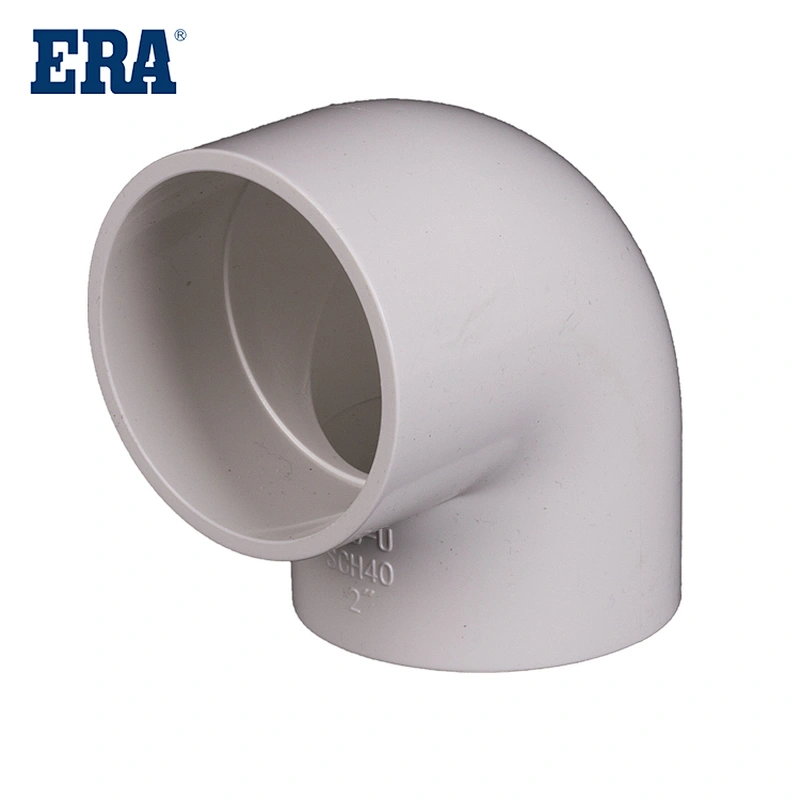
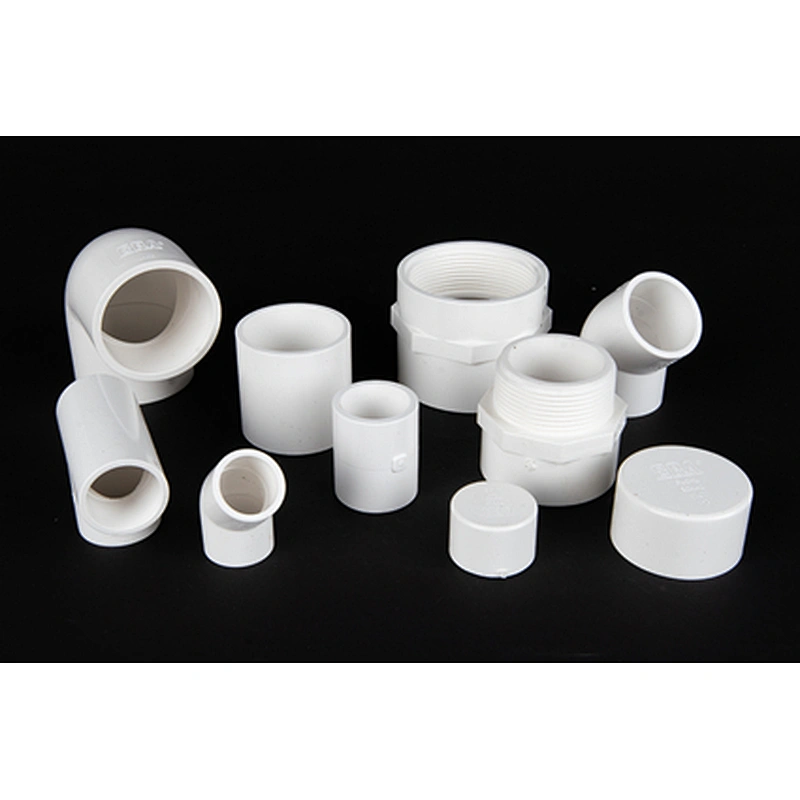
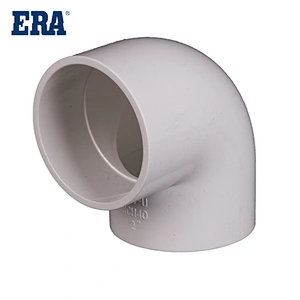
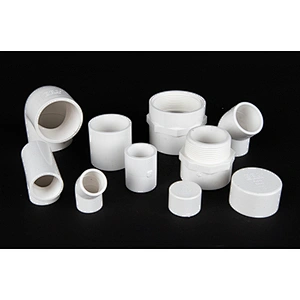
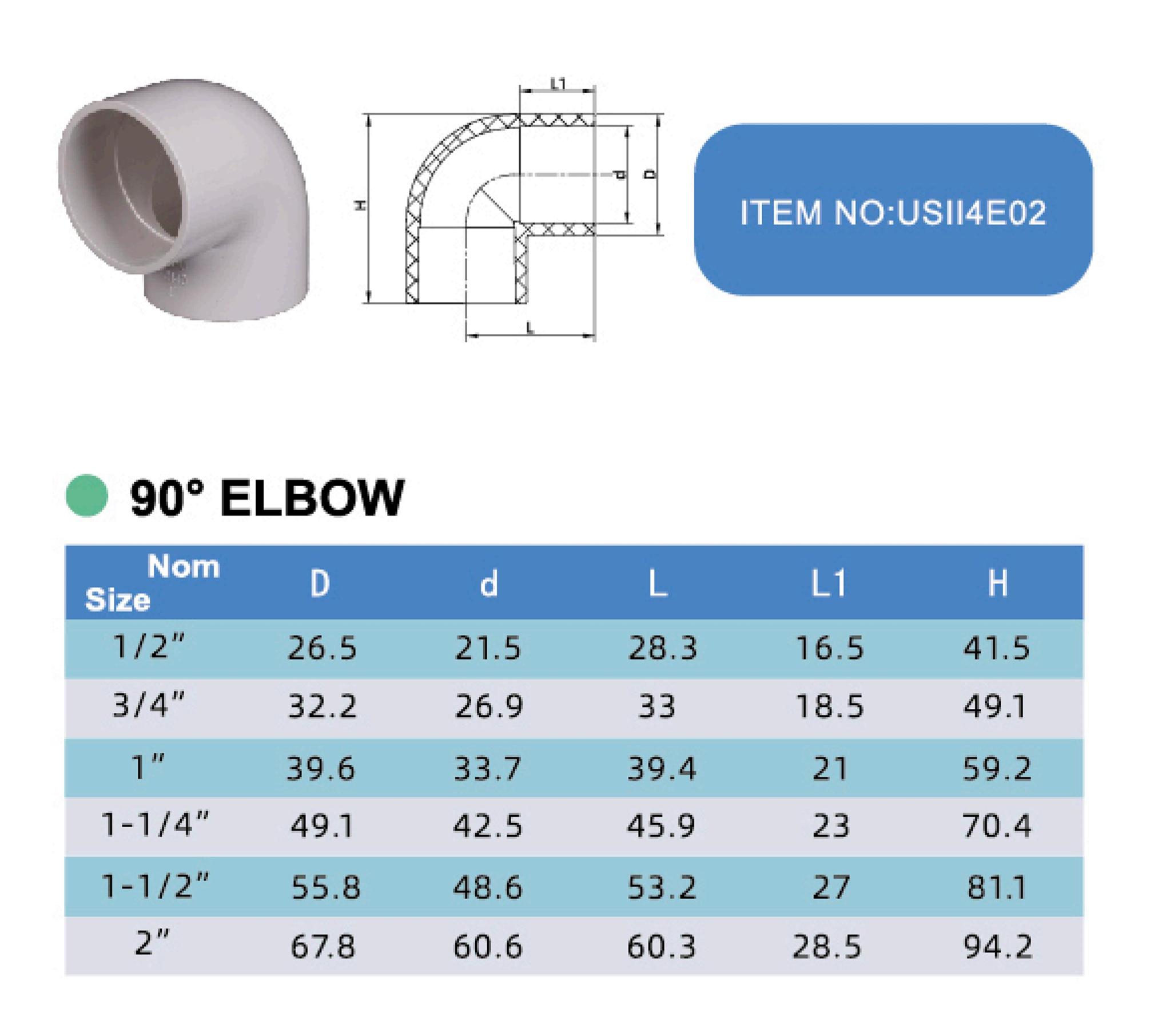
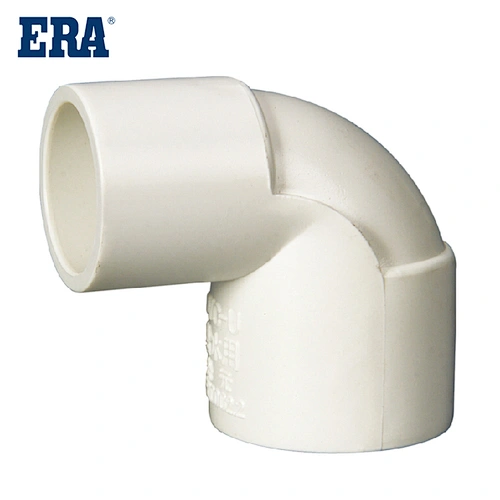
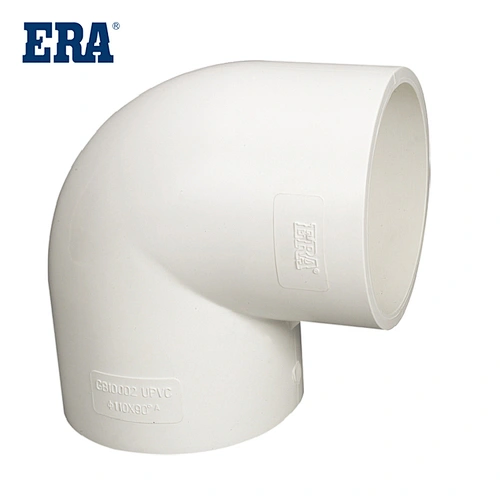
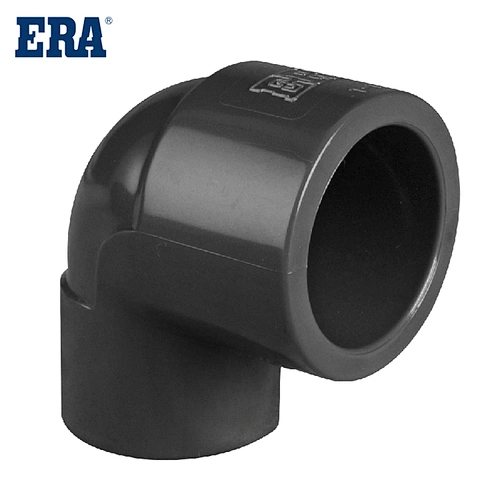
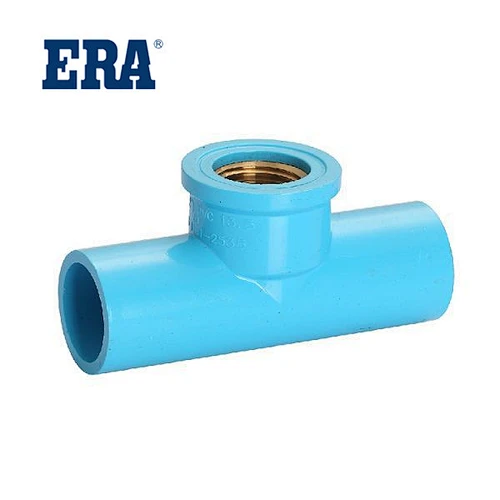
ERA Piping Systems, PVC Pipe Fitting ,90° Elbow , USII4E02 , Schedule 40 (ASTM D2466) , NSF-pw & UPC
| Model Number | USII40E2 | Material | PVC |
| Description | 90° ELBOW | Standard | SCH40 ASTM D2466 |
| Temperature | Max 60℃ /140℉ | Working Pressure | PN10 ,10Bar, 1.0Mpa |
| Size | 1/2''--2'' | Certificate | NSF/UPC |
| Connection | Socket or Thread | Color | Light Grey |
Specification:
Solvent cement joints shall be made in a two-step process with primer manufactured for
thermoplastic piping systems and solvent cement conforming to ASTM D 2564.
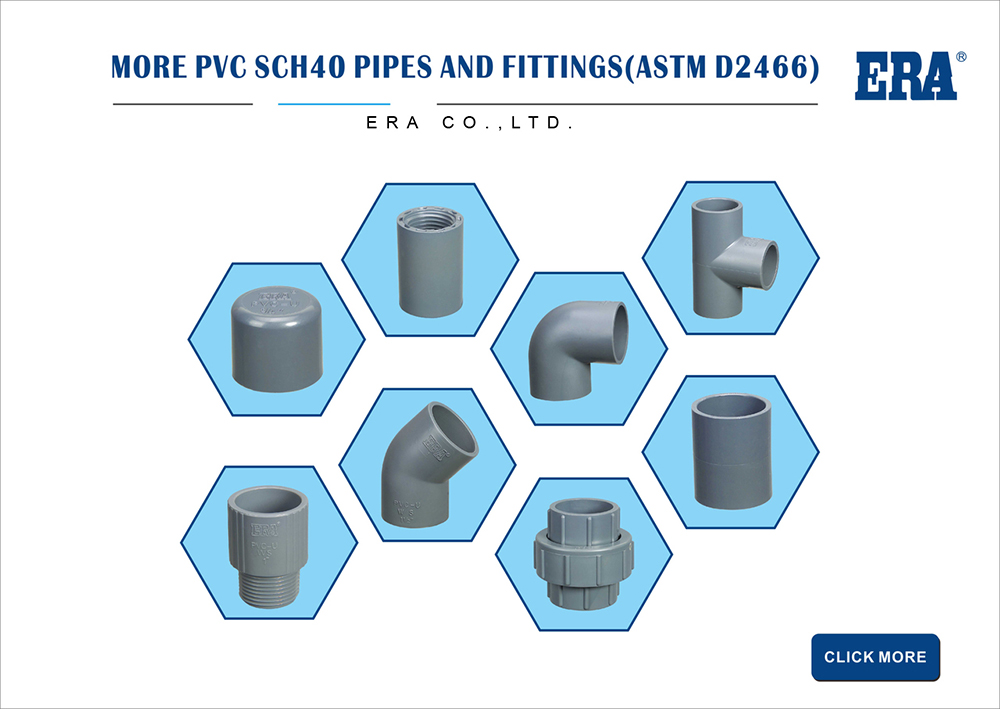
Referenced Standards: ASTM D 2466 / PVC Plastic Fittings,Schedule 40
PVC Schedule 40 pipe shall be Iron Pipe Size (IPS) conforming to ASTM D 1785. Injection molded PVC Schedule 40 fittings shall conform to ASTM D 2466. Pipe and fittings shall be manufactured as a system and be the product of one manufacturer.
PVC(polyvinyl chloride) vinyl compounds.
This specification covers poly(vinyl chloride) (PVC) Schedule 40 pipe fittings made from four PVC plastic compounds and intended for use with Iron Pipe Size outside-diameter plastic pipe.
Fittings fabricated by welding are not included in this specification. Included are requirements for materials, workmanship, dimensions, and burst pressure.
Main Products:
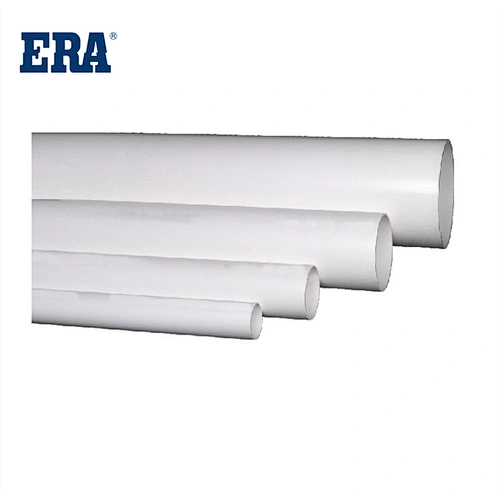
PVC Pipe: A Practical and Environmentally-Friendly Building Material
In modern architecture and home renovation, PVC pipe has become a very popular and practical building material. It has many advantages, such as corrosion resistance, low cost, easy installation, diverse styles, simple maintenance, and environmental performance. This article will detail the benefits of PVC pipe to showcase its outstanding performance in the construction industry.
Firstly, PVC pipe has excellent corrosion resistance. It can resist the erosion of common chemicals in daily life, making the service life of PVC pipe longer. This means that consumers do not need to replace pipes frequently, saving time and money. In addition, PVC pipe does not pollute water quality, ensuring the safety and hygiene of water supply.
Secondly, PVC pipe is relatively low-cost, providing consumers with an affordable option. Compared with pipes made of other materials, PVC pipe is more budget-friendly, reducing the purchase cost for consumers. This makes PVC pipe an ideal choice for many homes and construction projects.
Thirdly, installing PVC pipe is very convenient. Due to its lightweight nature, complex tools or skills are not required during installation, allowing consumers to install it themselves and save on installation costs. In addition, the connection method of PVC pipe is simple and reliable, making leaks less likely and ensuring the stable operation of the piping system.
PVC pipe also comes in a wide range of styles and colors to meet the aesthetic needs and decorating styles of different consumers. Whether it's a minimalist modern style or a retro European style, PVC pipe can add a touch of brightness to both residential and engineering spaces.
Furthermore, maintaining PVC pipe is very simple. Due to its smooth surface, it is not easy to accumulate dirt, making cleaning very convenient. At the same time, PVC material is not prone to aging, and there is basically no maintenance required during use. This saves consumers a lot of time and energy, making PVC pipe an ideal choice for many homes and construction projects.
Finally, PVC pipe has excellent environmental performance. As a recyclable material, PVC pipe has a small impact on the environment. In the production process, the energy consumption of PVC pipe is also relatively low, conforming to the concept of modern home green environmental protection. Therefore, choosing PVC pipe is not only beneficial to individuals but also helps protect our shared planet Earth.
In conclusion, PVC pipe has won widespread praise in the construction industry due to its corrosion resistance, low cost, easy installation, diverse styles, simple maintenance, and environmental performance. Whether it's for home renovation or construction projects, PVC pipe is a trustworthy and dependable choice.
PVC elbow is a type of pipe fitting that is commonly used to connect pipes at bends and change their direction. In piping systems, elbows are an essential component as they serve the purpose of changing the direction of the pipeline. Based on production processes, elbows can be classified into welded elbows, pressed elbows, and swaged elbows.
PVC elbows have multiple applications:
1. In water treatment systems, PVC elbows are used to connect main pipes and branch pipes so that water can flow in different directions.
2. They can also be used to connect pipes in a floor heating system, allowing the pipes to follow the curved shape of the room.
3. In addition, PVC elbows are often used to connect pipes in drainage systems, enabling wastewater to flow smoothly towards the sewer.
4. In agricultural irrigation systems, PVC elbows are used to connect pipes and ensure that irrigation water can flow smoothly towards the fields.
5. In chemical production systems, PVC elbows are used to connect pipes and allow chemicals to flow through them.
The installation of PVC elbow requires the following steps:
1. Prepare the necessary tools and materials, including PVC elbow, pipe cutter, ruler, pencil, screwdriver, etc.
2. Use a pipe cutter to cut the pipe to the desired length and mark the location where the bend is needed on the pipe with a pencil.
3. Place the pipe in a pipe bender or manual bender and bend it at the desired angle. Be careful not to bend it too much to avoid damaging the pipe.
4. Insert the PVC elbow into the bent part of the pipe, making sure it fits tightly against the pipe. If necessary, you can gently tap the elbow with a screwdriver to make it fit better.
5. Check if the connection is secure. If it feels loose, you can reinforce it with glue or tape.
6. Finally, flush the pipe with water to ensure that there are no residues blocking the pipe.
PVC elbow is an accessory used for connecting PVC pipes. Its main function is to provide a smooth and safe transition where the pipe needs to change direction. This type of elbow is widely used in various fields, including construction, water conservancy, chemical industry, pharmaceuticals, and light industry.
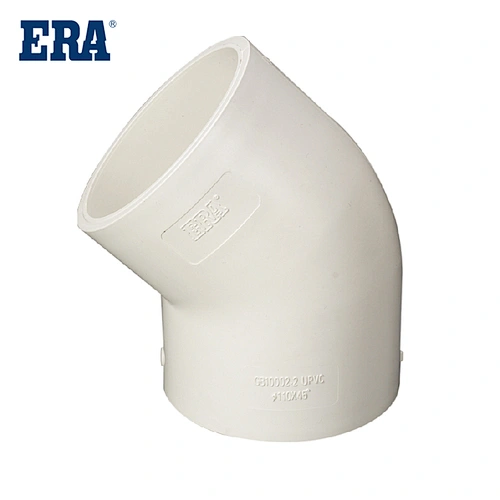
According to its shape and purpose, PVC elbows can be classified into grooved elbows, ferrule elbows, double-bearing elbows, flange elbows, reducing elbows, stationary seats, internal and external tooth elbows, stamping elbows, push-fit elbows, socket elbows, butt welding elbows, and internal threaded elbows. In daily applications, such as a 45°elbow, it is basically made of PVC material because of its good quality and convenience of use. The ways to connect the pipe include direct welding (common method), flange connection, hot melt connection, electric fusion connection, threaded connection, and socket connection.
The American standard 40 PVC pipe has an outer diameter of 40mm. This type of pipe is made from a customized mixture of PVC compounds and has unique physical properties, making it particularly suitable for piping applications. In addition, the hard PVC material used in this PVC pipe ensures that the pipe system has good corrosion resistance throughout its service life, solving the problem of leakage caused by corrosion.
In terms of pressure and temperature, the Schedule 40 system uses hard PVC material that exhibits good pressure resistance and can withstand temperatures up to 140°F (60°C). It is worth mentioning that the connection process is also quite simple and can be easily completed through a mature two-step solvent fusion process.
Regarding specification sizes, PVC pipes come in different sizes depending on their intended use. For example, there are 15 different specifications ranging from the smallest diameter of 10mm to the largest of 300mm; there are also 14 different American standards ranging from 1/2 inch to 12 inches. The number "40" represents the outer diameter of the water pipe, specifically, it is 40mm.
Overall, due to its specific physical properties and applicable scope, American standard 40 PVC pipes are widely used in various piping systems.
When choosing a PVC pipe that is more suitable for you, there are several factors to consider:
1. Purpose: Firstly, you need to clarify how you intend to use this PVC pipe. Different applications require different types and specifications of PVC pipes. For example, the PVC pipe used for drainage systems and the one used for wire protection are quite different.
2. Specification size: There are various sizes of PVC pipes available for selection. You need to choose the right size according to your specific needs. For example, if you need to connect two large devices, you may need a larger diameter PVC pipe.
3. Quality of material: The quality of the PVC pipe directly affects its durability and performance. You should choose a PVC pipe produced by a reliable manufacturer that meets relevant standards and certifications.
4. Price: Although price should not be the only factor in your choice of PVC pipe, it is still an important consideration. You should choose a reasonably priced PVC pipe while ensuring its quality.
5. Installation and maintenance: When selecting a PVC pipe, you also need to consider its ease of installation and maintenance. Some PVC pipes are designed to be more user-friendly, making installation and maintenance easier.
6. Color: If appearance is important to you, then you may need to consider the color of the PVC pipe. Most PVC pipes come in white, gray, and other colors for selection.
When a PVC pipe breaks, you can follow these steps to handle the situation:
1. Turn off the water supply: Firstly, you need to immediately turn off all water sources related to the broken pipe. This can prevent further leakage and minimize damage.
2. Assess the extent of the damage: Check the location and size of the break to determine whether professional repair is necessary. If the break is small, it may only require simple repairs; however, if the break is large or in a hard-to-reach location, professional repair may be required.
3. Clean the area around the break: Use appropriate tools (such as scissors or scrapers) to clean up debris and fragments from the area around the break. Ensure that the surrounding area is clean for the next step of repair.
4. Choose an appropriate repair method: Select a suitable repair method based on the size and location of the break. For minor breaks, you can use PVC fittings or specialized PVC repair agents; for larger breaks, you may need to use a heat gun to connect two sections of pipe together.
5. Carry out the repair: Follow the instructions for the chosen repair method. Ensure that the work area remains dry and clean during the repair process to prevent further damage.
6. Test the repair: After completing the repair, turn on the water supply and test to ensure that the break has been successfully repaired and there are no leaks. If there is still a leak, you may need to repeat the repair or seek professional help.
7. Preventive measures: To prevent future breaks, it's important to regularly inspect and maintain your PVC piping system. Ensure that the system is in good working condition and address any potential issues promptly.
The methods and processes for connecting PVC pipes vary depending on their purpose and diameter. Here are some common connection methods and their steps:
1. Sealing ring connection method**: This method is mainly suitable for large-diameter pipes, especially those with a diameter of 100 mm or more. The specific steps are as follows:
- Chamfer the pipe's insertion part and check the quality of the sealing ring.
- Use an elastic sealing ring for connection, ensuring that the expanded part of the selected pipe or fitting is an R-shaped expansion.
- Put the rubber ring in the expanded R-shaped opening, and apply a layer of lubricant to its edge.
- Finally, insert the water pipe into the insertion part.
2.Adhesive bonding connection method**: This method is suitable for PVC pipes with a diameter less than 100 mm. The important components are adhesive, namely PVC glue and joints. For small-diameter pipes, if solvent bonding is used, the insertion part should be chamfered to form a bevel, ensuring that the cut end is flat and perpendicular to the axis, so that it can bond firmly and avoid leakage.
3.Flange connection: When pipes cross sewers or other pipes, plastic pipes and metal pipes often use this method. For example, valves before and after the connection also use flange connections. In addition, flange connections are also suitable for connecting metal pipes to plastic pipes.
4.Adhesive bonding connection: This is the most commonly used PVC pipe connection method and the simplest and most convenient way. First, cut the pipe to the required length. Then, use PVC glue to bond the pipe and joint together.
When connecting PVC pipes, it is essential to ensure the correctness and safety of the operation, ensuring the sealing and stability of the connection to prevent leakage and accidents.
Basic knowledge of elbows
Elbow is a pipe fitting that changes the direction of a pipeline in a piping system. According to angles, there are three most commonly used types: 45~and 90180. In addition, according to engineering needs, there are also other abnormal angle elbows such as 60. The materials of elbows include cast iron, stainless steel, alloy steel, malleable cast iron, carbon steel, non-ferrous metals, and plastics. The methods of connecting with pipes include: direct welding (the most commonly used method) flange connection, hot flame connection, electric fusion connection, threaded connection, and socket connection. According to production processes, it can be divided into welded elbows, stamped elbows, push made elbows, cast elbows, etc. Other names: 90 degree elbow, right angle bend, love bend, etc.
1. Divide carbon steel, alloy steel, carbon steel, stainless steel, copper, aluminum alloy, plastic, argon grease, PVC, PPR, etc. by material.
According to the production methods, it can be divided into pushing, pressing, forging, casting, etc.
According to manufacturing standards, it can be divided into national standards, electrical standards, water standards, American standards, German standards, Japanese standards, Russian standards, etc.
4. According to its curvature radius, it can be divided into long radius elbows and short radius elbows. A long radius elbow refers to a pipe with a curvature radius equal to 1.5 times the outer diameter of the pipe, i.e. R=1.5D. A short radius elbow refers to a curvature radius equal to the outer diameter of the pipe, i.e. R=1.0D. (D is the diameter of the elbow and is the radius of curvature).
5. If divided by pressure level: there are approximately seventeen types, which are the same as the American pipe standards, including: Sch5s, Sch10s, Sch10, Sch20, Sch30, Sch40s, STD, Sch40, Sch60, Sch80s, XS; Sch80, SCH100, Sch120, Sch140, Sch160, XKS: Among them, the most commonly used are sTD and XS.
6. According to different shapes and uses, it can be divided into: groove type elbow, sleeve type elbow, double socket elbow, flange elbow, reducing elbow, socket elbow, inner and outer threaded elbow, stamped elbow, socket elbow, butt welding elbow, inner threaded elbow, etc
Seamless elbow: An elbow is a type of pipe fitting used at bends in pipelines. Among all the fittings used in the pipeline system, they account for the largest proportion, about 80%. Usually, different forming processes are chosen for elbows with different materials or wall thicknesses. At present, the commonly used seamless elbow forming processes in manufacturing plants include hot pressing, stamping, extrusion, etc.
A. Hot push forming
The hot push elbow forming process uses a dedicated elbow pushing machine, core mold, and heating device to make the billet on the mold move forward under the push of the pushing machine, and is heated, expanded, and bent into shape during the movement. The deformation characteristics of hot pushed elbows are determined based on the law that the volume of the metal material remains unchanged before and after plastic deformation. The diameter of the pipe blank used is smaller than the diameter of the elbow. The deformation process of the blank is controlled by the core mold, allowing the compressed metal at the inner arc to flow and compensate for the thinning of other parts due to expansion, thus obtaining an elbow with uniform wall thickness.
The hot push elbow forming process has the characteristics of beautiful appearance, uniform wall thickness, and continuous operation, which is suitable for large-scale production. Therefore, it has become the main forming method for carbon steel and alloy steel elbows, and is also applied in the forming of certain specifications of stainless steel elbows.
The heating methods used in the forming process include medium frequency or high frequency induction heating (heating coils can be multiple or single coils), flame heating, and reflection furnace heating. The choice of heating method depends on the requirements of the formed product and the energy situation.
b. Stamping forming
Stamping forming elbow is the earliest forming process used for mass production of seamless elbows. Currently, it has been replaced by hot extrusion or other forming processes in the production of commonly used specifications of elbows. However, in some specifications of elbows, the production quantity is small, and the wall thickness is too thick or too thin.
Still in use when there are special requirements for the product. The stamping forming of the elbow adopts a pipe blank that is equal to the outer diameter of the elbow, and is directly pressed into shape in the mold using a press.
Before stamping, the tube blank is placed on the lower mold, and the inner core and end mold are loaded into the tube blank. The upper mold moves downward to start pressing, and the elbow is formed by the constraint of the outer mold and the support of the inner mold.
Compared with hot pressing technology, the appearance quality of stamping forming is not as good as the former; the outer arc of the stamped elbow is in a stretched state during forming, and there is no extra metal in other parts to compensate, so the wall thickness at the outer arc is reduced by about 10%. However, due to its suitability for single piece production and low cost, the stamping elbow process is often used for the manufacturing of small batch, thick walled elbows.
Stamped elbows are divided into two types: cold stamping and hot stamping, which are usually selected based on material properties and equipment capabilities.
The forming process of cold extrusion elbows involves using a dedicated elbow forming machine to place the pipe blank into the outer mold. After the upper and lower molds are closed, the pipe blank moves along the gap reserved by the inner and outer molds under the push of the push rod to complete the forming process.
The elbow manufactured by internal and external cold extrusion technology has a beautiful appearance, uniform wall thickness, and small size deviation. Therefore, this process is often used for the formation of stainless steel elbows, especially thin-walled stainless steel elbows. The precision requirements for the inner and outer molds used in this process are high; The requirements for wall thickness deviation of the pipe blank are also quite strict.
Provided by experts in HVAC on the air couple network.
FAQ:
1.What is your MOQ?
Our MOQ is usually 5 CTNS.
2.What is your delievery time?
The time of delievery is around 30-45days.
3.What is the shipping port?
We ship the goods via Ningbo or Shanghai port.
4.What is your payment terms?
We accept 30% T/T in advance,70% in the period of shipment or 100% L/C.
5.How should I contact you?
You can contact us with Trade Manager or send us an email by click Contact Supplier bottom.
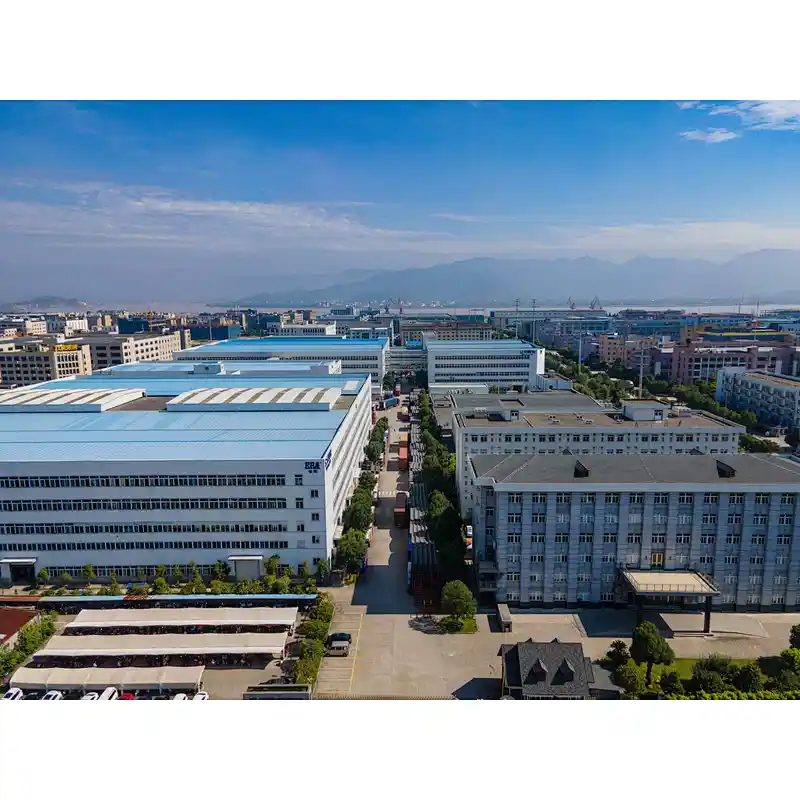
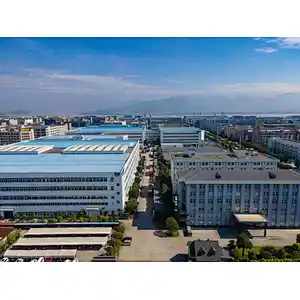
6.What is the location of your company?
Our company is located in the Taizhou Zhejiang Province,China.
If you would like to have a visit, you are much welcome.
7.How about the samples?
We could send you the samples ,most samples are free to send to most places in China.If sent to other countries,transport fee shoule be paid by you.
8.Why choose us?
1 Genuine produces with excellent quality and competitive price.
2 Cooperating with the customers all over the world and knowing the markets very well.
3 ERA is a listed company. Everything can be rest assured working with us.
4 After- Services will be highly-satisfied. Any problems and feedbacks will be answered in a short of time.
Our Services:
1. Any inquiries will be replied within 24 hours
2. Professional manufacturer.
3. OEM is available.
4. High quality, standard designs, reasonable&competitive price, fast lead time.
5. Faster delivery: Sample will be prepared in 2-3days.
6. Shipping: We have strong cooperation with DHL, TNT, UPS, MSK, China Shipping, etc.
7. You can also choose your own shipping forwarder.


 English