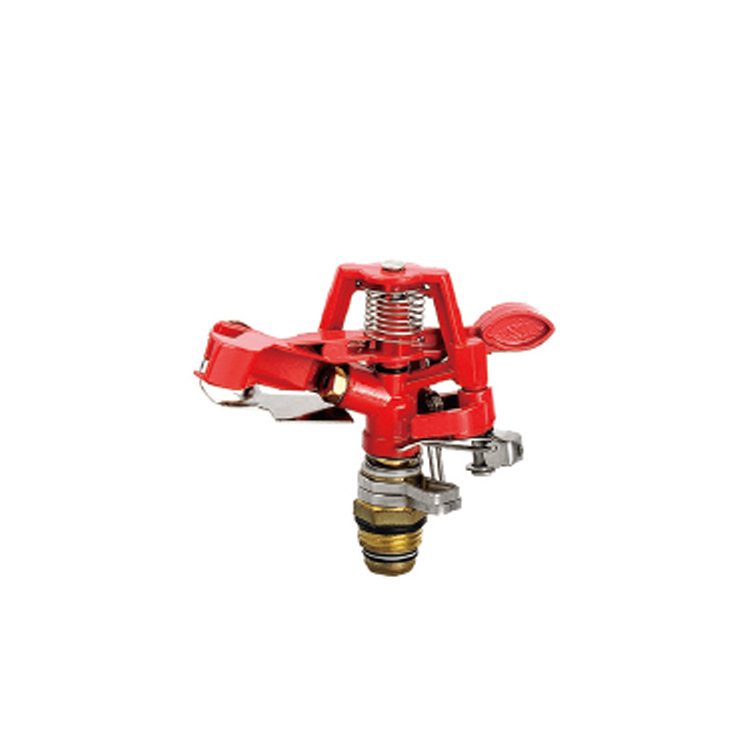
Protective measures for agricultural irrigation equipment
In modern agricultural production, irrigation equipment is an important tool to ensure crop growth and yield increase. It is crucial to take a series of protective measures to ensure the normal operation of these devices and extend their service life. This article will explore how to ensure the efficient operation of agricultural irrigation equipment through regular inspections and maintenance.
1、 Prevent blockage
The diameter of the drip irrigation pipe's drip head is small, making it easy to be blocked by impurities, mineral deposits, or microorganisms in the water. Therefore, it is necessary to ensure that the water entering the drip irrigation system is strictly filtered. Select appropriate filters based on the water quality of the source, such as filter mesh filters, sand filters, and disc filters, for combination use. Regularly flushing drip irrigation pipes is also an effective means of preventing blockages. During the operation of the irrigation system, the drainage outlet at the end of the drip irrigation pipe can be opened to allow water to flush at high speed for a period of time, or specialized flushing equipment can be used for flushing. This can effectively remove impurities and sediments from the pipeline, keeping the dripper unobstructed.
2、 Check for damage
Regularly inspect the walls of drip irrigation pipes for any damage, cracks, or holes. These issues may lead to water leakage and affect irrigation efficiency. Inspection can be carried out by observing whether there are water stains on the surface of the drip irrigation pipe and whether the wet area is abnormal. If any damage is found, the damaged drip irrigation pipe section should be replaced in a timely manner. In addition, the connection of the drip irrigation pipe should be checked for firmness to prevent water leakage caused by loose connections.
3、 Reasonable use of pressure
The operating pressure of the drip irrigation system should be maintained within an appropriate range. Excessive pressure may cause damage to the dripper or leakage at the connection, while insufficient pressure can affect the uniformity of drip irrigation. Install a pressure regulating valve and adjust it to the appropriate working pressure according to the specifications and design requirements of the drip irrigation pipe. Reasonable pressure can not only ensure irrigation effectiveness, but also extend the service life of equipment.
4、 Daily cleaning and inspection
After each use of the drip irrigation pipe, the residual liquid inside and outside should be cleaned in a timely manner to prevent the liquid from corroding the drip irrigation pipe. For example, for manual drip irrigation pipes, it is necessary to check whether the spray rod and nozzle are blocked by debris, whether the suction filter is dirty, and whether there are debris in the bucket; For electric drip irrigation pipes, attention should be paid to checking whether the battery connection is normal and whether there are any abnormal sounds from the motor. When cleaning the surface and components of drip irrigation pipes, first apply detergent, then use a soft brush to scrub, and then use a hose to rinse on the tap. Avoid soaking and cleaning parts with laundry detergent, as this can exacerbate the corrosion of drip irrigation pipes. After drying (avoid direct sunlight exposure), apply high-quality lubricating grease to metal parts (not plastic parts).
5、 Regular maintenance
Regularly replace vulnerable parts such as drip irrigation nozzles, hoses, seals, etc. These components are prone to wear or aging after long-term use, affecting the effectiveness of drip irrigation. Lubricate and maintain key parts of drip irrigation pipes, such as the pressure rod and moving parts of manual drip irrigation pipes, and the motor bearings of electric drip irrigation pipes. At the same time, clean the inside of the pipeline to prevent residual drugs and impurities from blocking the pipeline.
6、 Safety maintenance
Avoid using and storing drip irrigation pipes in environments with high temperatures and fire sources to prevent safety accidents such as explosions or fires. Meanwhile, be careful to avoid collisions, especially for drip irrigation pipes with plastic shells, as collisions may cause the shells to break. Establishing maintenance records to record the usage time, maintenance status, and other information of drip irrigation pipes can help identify and solve problems in a timely manner. For electric drip irrigation pipes, maintenance should also be carried out during the off-season. Generally, they should be charged and discharged once every one to two months. It is necessary to first fill the electric drip irrigation device with water to let it work until it runs out of electricity, and then charge it again. This can prolong the service life of the battery.
In summary, regular inspection and maintenance of agricultural irrigation equipment can effectively ensure its normal operation, extend its service life, and thus improve the efficiency and benefits of agricultural production. I hope every farmer friend can take it seriously and work together to protect this green land that nourishes life.
Advanced Technologies and Development Trends of Agricultural Irrigation Equipment
The application of intelligent technology
Precision irrigation: Utilizing sensor technology such as soil moisture sensors, meteorological sensors, etc., real-time monitoring of soil moisture content, meteorological conditions (temperature, humidity, wind speed, rainfall, etc.), combined with crop water demand models, precise control of irrigation time, water volume, and frequency through intelligent control systems. For example, when the soil moisture sensor detects that the soil moisture is below the critical value required for crop growth, the intelligent control system automatically starts the irrigation equipment, and stops irrigation when the soil moisture reaches the appropriate range. This can maximize the efficiency of water resource utilization, reduce water waste, and meet the water requirements of crops at different growth stages.
Remote monitoring and automatic operation: With the help of Internet of Things technology, connect irrigation equipment to the Internet to achieve remote monitoring and automatic operation. Farmers or managers can view the operation status of irrigation equipment (such as the working status of water pumps, the opening and closing of valves, the spraying of nozzles, etc.) anytime and anywhere through mobile apps or computer web pages, and remotely control the start, stop, and adjustment of irrigation parameters of the equipment. This remote monitoring and automated operation method greatly improves the convenience and efficiency of irrigation management, reducing the workload and errors of manual operations.
Continuous innovation of water-saving technology
The development of micro irrigation technology: Micro irrigation technology (including drip irrigation, micro sprinkler irrigation, etc.), as a representative of efficient water-saving irrigation technology, will continue to be developed and improved. For example, developing more precise droppers and micro nozzles to improve irrigation uniformity and water utilization efficiency; Develop new filtration equipment to further improve its adaptability to water quality and reduce the risk of droplet clogging; Explore integrated technologies such as micro irrigation, fertilization, and pesticide application to achieve precise fertilization and pest control, and improve the comprehensive benefits of agricultural production.
Recycling water resources: In agricultural irrigation, there is an increasing emphasis on the recycling of water resources. For example, collecting rainwater, treating farmland drainage and sewage, etc., and purifying them before reusing them for irrigation. This can not only alleviate the situation of water scarcity, but also reduce agriculture's dependence on fresh water resources and lower agricultural production costs.
Integration with other agricultural technologies
The combination of irrigation with soil health and crop nutrition: In the future, agricultural irrigation will no longer be just about providing water, but will be closely integrated with soil health management and crop nutrition supply. For example, by adjusting the amount and frequency of irrigation, soil aeration, temperature, and microbial activity can be affected, thereby improving soil structure and fertility; At the same time, adding appropriate amounts of nutrients (such as nitrogen, phosphorus, potassium, etc.) to irrigation water, precise fertilization according to the growth needs of crops, improving fertilizer utilization efficiency, and promoting crop growth and yield increase.
The integration of agricultural irrigation, agricultural Internet of Things, and big data: Utilizing the large amount of irrigation data collected by the agricultural Internet of Things (such as irrigation time, water volume, soil moisture, crop yield, etc.), combined with big data analysis technology, to explore the patterns and information behind the data. These data can be used to optimize irrigation decisions, predict crop water requirements and yields, and provide more scientific guidance for agricultural production. For example, by analyzing years of irrigation data and crop yield data, a relationship model between crop yield, irrigation water volume, and irrigation time can be established to develop optimal irrigation plans for different crops.
New progress in water-saving technology for agricultural irrigation equipment
In recent years, with the increasing scarcity of water resources and the continuous development of agricultural technology, significant progress has been made in water-saving technologies in the field of agricultural irrigation. Here are some important new technologies and trends:
1. Precise irrigation technology
1.1 Application of Sensor Technology
Soil moisture sensor: By real-time monitoring of soil moisture content, it accurately controls irrigation time and water volume. When the soil moisture is below the set threshold, the irrigation system will automatically start; When the soil moisture reaches a suitable level, irrigation will automatically stop. This not only saves water resources, but also improves crop growth efficiency
Meteorological sensors: monitor meteorological parameters such as temperature, humidity, wind speed, and rainfall, and dynamically adjust irrigation strategies based on crop water demand models. For example, when rainfall is forecasted, irrigation can be reduced in advance to avoid waste
1.2 Intelligent Control System
Internet of Things technology: connect irrigation equipment to the Internet to realize remote monitoring and automatic operation. Farmers can check the operation status of irrigation equipment anytime and anywhere through mobile apps or computer web pages, and remotely control the start, stop, and adjustment of irrigation parameters
Artificial Intelligence Algorithm: Utilizing machine learning and artificial intelligence algorithms to analyze historical and real-time data, predict crop water demand, optimize irrigation plans, and improve water resource utilization efficiency
2. Innovation in Micro Irrigation Technology
2.1 Drip irrigation technology
New type of dropper: Developing more precise droppers to improve irrigation uniformity and water utilization efficiency. For example, using variable flow drippers to dynamically adjust drip irrigation rates based on soil moisture and crop water requirements
Filtering equipment: Develop new types of filtering equipment to further improve adaptability to water quality and reduce the risk of droplet clogging. For example, using a multi-stage filtration system, including pre filtration, sand filtration, and fine filtration, ensures that the water entering the drip irrigation system is clean.
2.2 Micro sprinkler irrigation technology
Intelligent micro nozzle: Design a micro nozzle with self-cleaning function to reduce the risk of clogging and improve spray uniformity. For example, using rotary and pulse nozzles to improve irrigation efficiency by changing the spraying mode
Integrated Fertilization System: Combining drip irrigation and fertilization systems to achieve precise fertilization and irrigation integration, improve fertilizer utilization efficiency, and reduce environmental pollution
3. Water resource recycling
3.1 Rainwater Collection and Utilization
Rainwater collection system: Set up rainwater collection tanks around farmland to collect rainwater and use it for irrigation after preliminary treatment. This not only saves groundwater, but also reduces dependence on fresh water resources
Rainwater filtration and purification: Using filtration and purification equipment to remove impurities and pollutants from rainwater, ensuring that water quality meets irrigation standards
3.2 Farmland Drainage and Sewage Treatment
Farmland drainage treatment: Collect farmland drainage, treat it through physical, chemical, and biological methods, and reuse it for irrigation. For example, using biofilters and artificial wetlands to remove nutrients such as nitrogen and phosphorus from water and reduce eutrophication
Wastewater treatment and reuse: After treating domestic and industrial wastewater to meet irrigation water quality standards, it is used for agricultural irrigation and achieves the recycling of water resources
4. Other innovative technologies
4.1 Solar irrigation system
Solar water pump: Using solar photovoltaic panels to power the water pump, reducing dependence on traditional energy and lowering irrigation costs. Especially in remote areas and areas with insufficient power supply, solar irrigation systems have significant advantages
Energy storage system: Combining solar photovoltaic panels and energy storage batteries to achieve all-weather irrigation. Even on cloudy days or at night, it can ensure the normal operation of the irrigation system
4.2 Drones and Satellite Remote Sensing Technology
Drone inspection: Use drones to conduct regular inspections of farmland, monitor crop growth and irrigation effectiveness, and promptly identify and solve problems. For example, by using high-resolution cameras and multispectral sensors, identify water stress areas in crops and optimize irrigation plans
Satellite remote sensing: Using satellite remote sensing technology to obtain data on soil moisture, vegetation indices, and other aspects of large-scale farmland, providing scientific basis for precise irrigation. For example, combine satellite images and meteorological data to predict irrigation demand in the next few days and adjust irrigation plans in advance
5. Policy support and promotion
Government subsidies: Many countries and regions have introduced policies to provide financial subsidies and technical support to farmers who adopt water-saving irrigation technology, encouraging them to use advanced irrigation equipment and technology
Training and Demonstration: By organizing training courses and demonstration projects, we aim to enhance farmers' understanding and application ability of water-saving irrigation technology, and promote successful experiences and practices
Through these new technologies and innovations, the water-saving effect in the field of agricultural irrigation has been significantly improved, not only saving valuable water resources, but also improving crop yield and quality, providing strong support for sustainable agricultural development.
Ground irrigation has its own advantages
At present, surface irrigation is still a common irrigation method in China's irrigated agriculture, accounting for over 95% of the total irrigated area in the country. Border irrigation has low investment costs, simple and easy to operate field engineering facilities. However, for a long time, people have had a misconception that 'surface irrigation is equivalent to flood irrigation'. In fact, surface irrigation includes horizontal furrow irrigation, surge irrigation, and controlled alternating irrigation. With the development and promotion of precision surface irrigation technology, the quality and efficiency of surface irrigation have also been greatly improved.
Horizontal border irrigation is a ground irrigation technique based on laser fine leveling technology, which has the advantages of low technical requirements, high irrigation utilization rate, and high productivity. It can improve irrigation uniformity by more than 15%. By combining laser leveling of land and optimizing the specifications of ridges, such as changing long ridges to short ridges and wide ridges to narrow ridges, and adopting scientifically reasonable inflow rates, the water use efficiency of farmland can be significantly improved.
Surge irrigation is different. It is a ground irrigation method that uses high flow, rapid advance, and intermittent water supply to release water into the ditch and furrow, in order to improve irrigation efficiency and field water utilization.
Controlled alternation irrigation technology is a new type of surface irrigation technology based on traditional surface irrigation, which can improve soil permeability and enhance crop absorption efficiency of water and nutrients through technological improvements. Compared with conventional furrow irrigation, its water use efficiency can be increased by 10% to 15%.
In addition, the drainage facilities in the fields can be improved, such as using siphon pipes for open channel water supply or moving gate holes on the ground for pipeline water supply and discharge. In this way, the utilization rate of field water is 5% to 10% higher than that of manually opening water.
Each water-saving irrigation has its own advantages
Sprinkler irrigation and drip irrigation are currently the most common water-saving irrigation methods. By using pipeline water delivery, sprinkler irrigation and drip irrigation can greatly reduce the evaporation and leakage of irrigation water.
Sprinkler irrigation uses pressurized water delivery, so the water pressure at the nozzle is relatively high, and its range is generally over 10 meters. Fixed sprinkler irrigation is the most common sprinkler irrigation method, with most of the main and branch pipes buried underground, which is convenient for saving manpower, high reliability, and long service life. But in terms of equipment investment, the cost of this irrigation method is relatively high. The main pipe of semi mobile sprinkler irrigation is fixed, while the branch pipe can be moved. Due to the small amount of branch pipe used, the investment is relatively small, with an investment amount of about 50% to 70% of that of fixed sprinkler irrigation.
However, whether it is fixed sprinkler irrigation or semi mobile sprinkler irrigation, the water flow during the spraying process is easily affected by wind force, which accelerates water loss. Therefore, it is not suitable to use sprinkler irrigation in windy areas. The center pivot sprinkler is the most automated sprinkler equipment. The central branch axis sprinkler irrigation machine is applied in agricultural and animal husbandry areas in northwest, northeast, north China and the Yunnan-Guizhou Plateau, almost applicable to all kinds of soil and field crops, vegetables, cash crops and pastures.
Drip irrigation is an irrigation technology that enables precise and automated control of water and fertilizer integration. With the reduction of production costs for drip irrigation belts and pipes, their application has been extended from economic crops to field grain crops. Drip irrigation uses plastic pipes for water delivery, which are lightweight, structurally simple, and easy to install, and can adapt to complex terrains; Different droppers can also adapt to soil conditions and irrigation needs for crop growth. Drip irrigation is easier to achieve automated control and refined management of agricultural water use. However, drip irrigation cannot achieve perfection. Due to the small cross-sectional area of the drip head, it is easy to be blocked by impurities in the water, and automated drip irrigation systems have high requirements for management personnel.
Accelerate the development of efficient water-saving irrigation
China is a country with extremely scarce water resources, and a key aspect of agricultural water use is water conservation. At present, the effective utilization coefficient of irrigation water in China's farmland is only 0.536, far below the world's advanced level of 0.7 to 0.8. The decision of the Central Committee of the Communist Party of China and the State Council on accelerating the reform and development of water conservancy pointed out that efforts should be made to vigorously develop water-saving irrigation, promote technologies such as channel anti-seepage, pipeline water transmission, sprinkler irrigation, and drip irrigation, and expand the scope of subsidies for water-saving and drought resistant equipment. Actively developing dryland agriculture, adopting techniques such as plastic film covering, deep tillage, and conservation tillage. Steadily develop water conservancy in pastoral areas and build water-saving and efficient irrigation and forage fields.
When reporting to the inspection team, the relevant person in charge of the Ministry of Water Resources pointed out that China earnestly implements the fundamental principle of prioritizing water conservation and promotes large-scale and efficient water-saving irrigation in different regions. We have successively launched the construction of large-scale and efficient water-saving irrigation projects in Northeast China, Northwest China, North China, and Southern China. Since 2011, a total of over 93 million mu of high-efficiency water-saving irrigation area has been added nationwide. Promote different development models according to local conditions, through project promotion, policy support, and the establishment of national efficient water-saving irrigation demonstration counties, some key areas have explored different replicable and promotable technological models according to local conditions.


 English